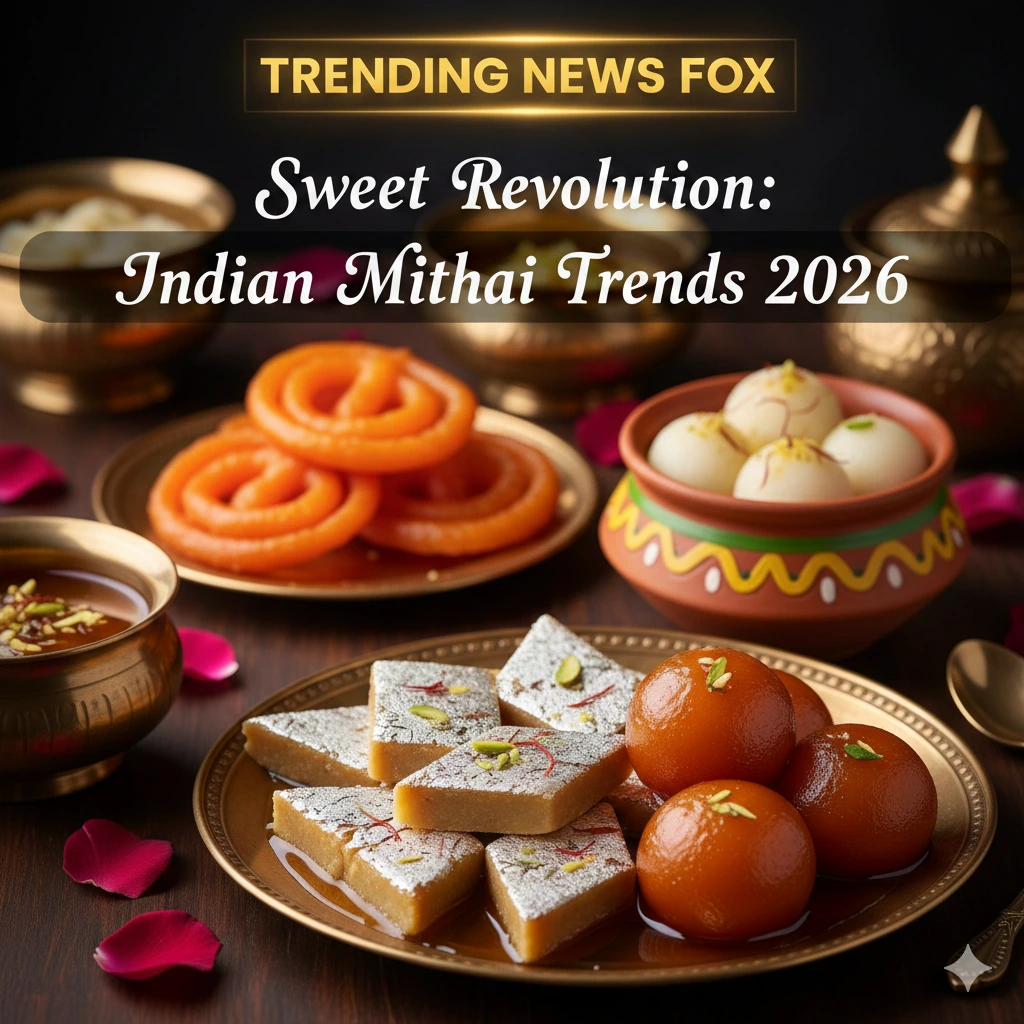
Explore the rich world of Indian sweets! From classic Gulab Jamun to healthy, sugar-free Mithai trends, discover the best regional desserts and modern fusion recipes taking the world by storm in 2026.
By Trending News Fox News & Media Team Published: February 3, 2026 | 10:45 PM IST
Sweet Revolution: How Indian Mithai is Conquering the Global Palate in 2026
The world of Indian sweets, or Mithai, is undergoing a seismic shift. Once reserved for grand weddings and religious festivals, these decadent treats are now breaking into the mainstream as daily indulgences and luxury gifts. From the streets of Kolkata to the high-end patisseries of London and New York, the “Sweet Revolution” of 2026 is blending ancient traditions with futuristic food trends.
In this deep dive, we explore the evolution of the Indian confectionery market, the rise of health-conscious “guilt-free” sweets, and why regional favorites are becoming the new global superstars of the dessert world.
1. The Global Mithai Boom: A Market in Overdrive
The Indian confectionery market is no longer a localized industry. According to recent market reports, the sector is projected to reach an astounding INR 618.1 Billion by 2034, with a steady growth rate fueled by urban demand and international exports.
What’s driving this growth?
- Premiumization: Consumers are moving away from mass-produced sweets toward artisanal, handcrafted mithai. High-end brands are now offering gold-leaf-topped Kaju Katli and saffron-infused Laddus packaged in velvet boxes that rival luxury jewelry.
- E-commerce Expansion: With the rise of specialized delivery apps, authentic Bengali Rasgulla or Mysore Pak can be shipped across the globe, arriving fresh at your doorstep.
- Gifting Culture: Mithai has reclaimed its throne as the ultimate gift. In 2025-2026, we’ve seen a trend of corporate “Mithai hampers” replacing the traditional chocolate boxes.
2. From Ancient Roots to Modern Fusion
To understand the future, we must look at the past. Indian sweets have a history dating back to 500 BCE. Ancient texts like the Rigveda mention Apūpa (a predecessor to the modern Malpua), while the Mughal era introduced Persian influences like rose water, saffron, and nuts.
Indian Sweets: The Iconic Classics
Every region in India offers a unique sugary signature:
- North India: Famous for Gulab Jamun (deep-fried milk solids in syrup) and Jalebi (crispy fermented batter swirls).
- East India: The kings of milk-based sweets, including Rasgulla and the creamy, fermented Mishti Doi.
- South India: Known for the rich, ghee-laden Mysore Pak and the comforting rice-and-lentil Payasam.
- West India: Home to the citrusy Shrikhand and the festive Modak.
Indian Sweets: The 2026 Fusion Twist
Modern chefs are taking these classics and giving them a “global makeover.” Some of the most trending fusion desserts this year include:
- Motichoor Cheesecake: A layer of tiny gram flour pearls atop a creamy New York-style cheesecake.
- Gulab Jamun Tiramisu: Replacing ladyfingers with syrup-soaked jamuns for a coffee-infused Indian delight.
- Rasmalai Tres Leches: A “four-milk” cake that uses the saffron-milk of Rasmalai as its soaking liquid.
3. The “Healthy Mithai” Paradox: Can Sweets Be Good for You?
One of the most significant trends in 2026 is the rise of health-conscious Indian sweets. As wellness takes center stage, the industry is innovating to keep the flavor while ditching the “empty calories.”
Natural Sweeteners and Superfoods
The refined sugar of the past is being replaced by:
- Jaggery (Gur) and Dates: Used in Laddus and Halwa for a lower glycemic index.
- Millet-Based Sweets: Ragi (finger millet) and Bajra are being used to create gluten-free Barfis.
- Vegan Adaptations: Coconut milk and almond butter are replacing traditional Ghee and Khoya to cater to the growing plant-based population.
Pro Tip: Look for “Functional Mithai”—sweets infused with Ayurvedic herbs like Ashwagandha or Turmeric for an added immunity boost.
4. Regional Superstars: The Sweets You Need to Know
If you’re looking to explore beyond the standard menu, keep an eye on these regional treasures that are trending in 2026:
| Sweet Name | Origin | Primary Ingredients | Why It’s Trending |
| Chhena Poda | Odisha | Burnt Cheese, Sugar | Known as India’s “Basque Cheesecake,” it’s a hit for its smoky flavor. |
| Dharwad Pedha | Karnataka | Caramelized Milk | Its unique brown color and rich texture make it a gourmet favorite. |
| Ghevar | Rajasthan | Flour, Ghee, Syrup | This honeycomb-style cake is a visual masterpiece on Instagram. |
| Bal Mithai | Uttarakhand | Roasted Khoya, White Sugar Balls | Its chocolate-like appearance and crunch are winning over young foodies. |
5. How to Find the Best Mithai Online
To ensure you’re getting the most authentic experience, use these trending search terms when looking for your next sugar fix:
- Best artisanal Indian sweets near me
- Sugar-free Mithai gift boxes 2026
- Authentic Bengali sweets home delivery
- Gourmet Indian dessert recipes for parties
6. The Verdict: Why the Future is Sweet
Indian sweets are more than just food; they are “edible heritage.” In 2026, the industry is successfully balancing the nostalgia of grandma’s kitchen with the demands of a fast-paced, health-aware world. Whether it’s a single-serving “Mithai Jar” for a quick snack or a 24-karat gold Kaju Katli for a celebration, Indian sweets are proving that tradition never goes out of style.
As we move further into the year, expect to see more AI-driven personalization in the Mithai industry, where brands will offer custom-sweetness levels and ingredient swaps tailored to your DNA. The world is finally realizing what India has known for centuries: there is always room for one more piece of Mithai.
Also, read Master Google Trends Products in 2026: The Ultimate Guide for Newsrooms
Frequently Asked Questions (FAQ) About Indian Sweets
1. Which is the most popular Indian sweet in the world?
While popularity varies by region, Gulab Jamun is widely considered the most famous Indian sweet globally. Close runners-up include Kaju Katli (cashew fudge) and Rasgulla, especially in international markets like the US, UK, and UAE.
2. Are there any healthy or sugar-free Indian sweets?
Yes! In 2026, the demand for healthy Mithai has surged. Many shops now offer sweets made with:
- Natural Sweeteners: Stevia, monk fruit, or dates.
- Alternative Flours: Almond flour or millet (Ragi/Jowar) instead of refined flour.
- Low-Fat Options: Using skimmed milk and reduced ghee content.
3. What is the difference between Mithai and Halwa?
Mithai is a broad umbrella term for all Indian confectionery. Halwa, however, refers to a specific category of dense, moist pudding-like sweets made from flour, semolina, or grated vegetables (like carrots or moong dal), typically sautéed in ghee and sugar.
4. How long do Indian sweets stay fresh?
The shelf life depends on the ingredients:
- Milk-based (Rasgulla, Rasmalai): 1–2 days (must be refrigerated).
- Flour/Nut-based (Kaju Katli, Besan Laddu): 2–4 weeks if stored in an airtight container.
- Syrup-based (Gulab Jamun, Jalebi): 3–5 days when refrigerated.
5. Why are Indian sweets often covered in silver or gold foil?
The thin metallic leaf, known as Chandi ka Vark (Silver) or Sone ka Vark (Gold), is used primarily for decoration and to signify luxury. Historically, silver was also believed to have antimicrobial properties that helped preserve the sweets.
6. Are Indian sweets vegan-friendly?
Traditionally, most Indian sweets use dairy (milk, khoya, or ghee). However, with the rise of plant-based diets in 2026, many brands now offer vegan versions using coconut milk, cashew cream, and vegan butter (interesterified fats) to recreate the classic taste.
7. What is the “Basque Cheesecake” of India?
That would be Chhena Poda from the state of Odisha. It is made by kneading fresh cottage cheese (chhena) with sugar and baking it until the outer layer caramelizes, giving it a smoky, “burnt” flavor similar to a Basque cheesecake.
Also, read India US Trade Deal: US Slays Tariffs to 18% in Historic Pact