Discover the spiritual significance, history, and travel guide for Gangasagar Mela, the world’s second-largest human congregation at the confluence of the Ganges and the Bay of Bengal.
By Trending News Fox Editorial Team Published: January 4, 2026
How to Prepare for Gangasagar Mela: A Complete Guide
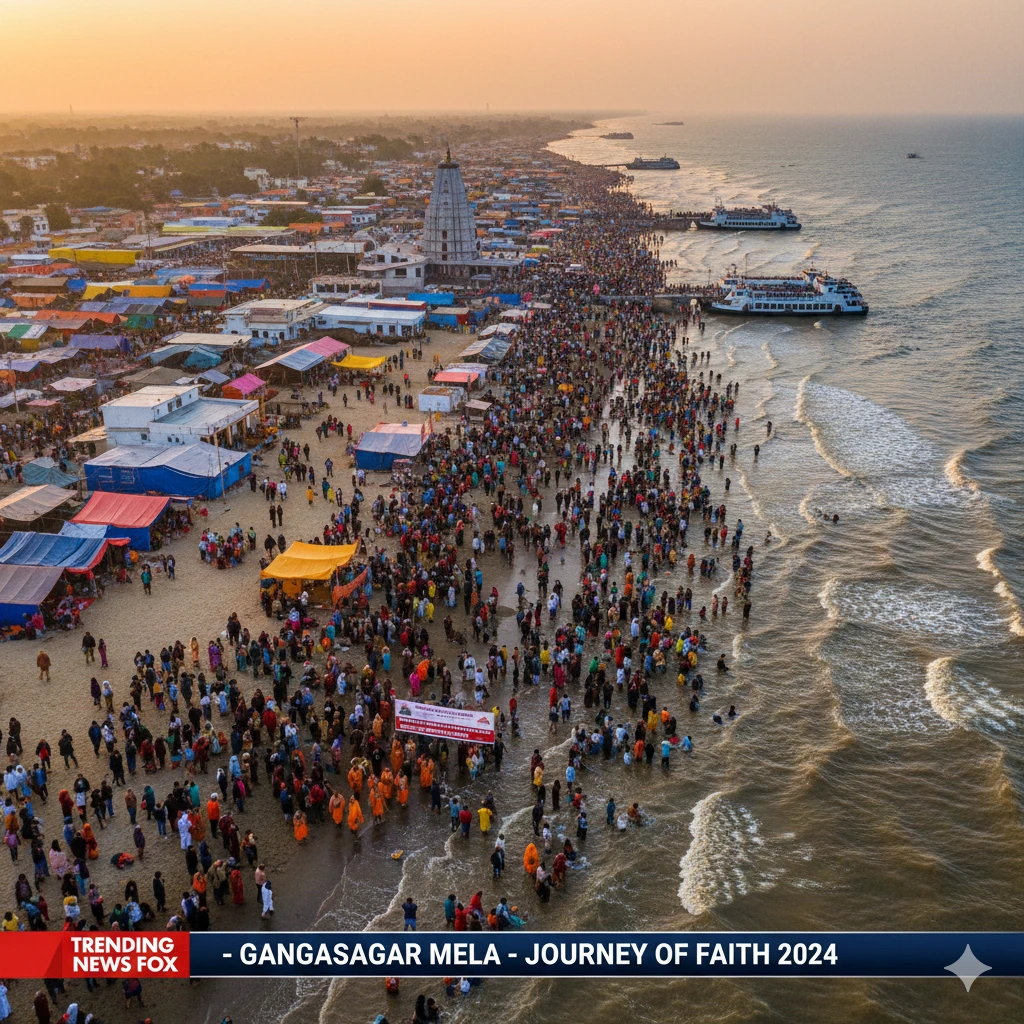
The mist rises off the silver waters of the Bay of Bengal as millions of voices chant in unison, “Sab thirth bar bar, Gangasagar ekbar” (All other pilgrimages many times, but Gangasagar once). This ancient proverb captures the essence of the Gangasagar Mela, a spiritual phenomenon that transforms the quiet Sagar Island in West Bengal into the second-largest human gathering on Earth, surpassed only by the Kumbh Mela.



Held annually during Makar Sankranti, this festival is more than just a religious gathering; it is a profound testament to the endurance of faith, the cleansing of the soul, and the timeless pull of the sacred River Ganges.
The Spiritual Significance: Why Gangasagar?
To understand the Mela, one must understand the geography of the spirit. Gangasagar marks the Mohana, the point where the Holy Ganga finally meets the sea. According to Hindu belief, a dip at this specific confluence on the day of Makar Sankranti washes away a lifetime of sins and paves the way for Moksha (liberation from the cycle of rebirth).
Gangasagar Mela: The Legend of King Bhagirath and the 60,000 Sons
The roots of the Mela lie in the Puranic legend of King Sagara. The King performed an Ashwamedha Yagna to establish his supremacy. Indra, fearing the King’s power, stole the sacrificial horse and tied it near the hermitage of Sage Kapila. The King’s 60,000 sons found the horse and accused the meditating sage of theft. In his wrath, Sage Kapila turned them all to ashes.
Generations later, King Bhagirath—a descendant of Sagara—undertook intense penance to bring the Goddess Ganga down from the heavens to earth. He sought to use her holy waters to liberate the souls of his ancestors. The river flowed across India, finally reaching the spot where the ancestors lay in ashes: Sagar Island.
When and Where: The Timing of the Mela
The Gangasagar Mela is intrinsically tied to the solar calendar. It occurs during Makar Sankranti, typically falling on January 14th or 15th. This marks the transition of the Sun into the zodiac sign of Capricorn (Makara) and the beginning of Uttarayan, the six-month auspicious period of the sun’s northward journey.
Also, read Nationwide Pet Insurance: Peace of Mind for Pet Owners
The festival takes place on Sagar Island, located in the South 24 Parganas district of West Bengal. The island sits at the mouth of the Hooghly River, approximately 100 kilometers south of Kolkata.
The Experience: Rituals and Traditions
The atmosphere at Gangasagar is electric, filled with the scent of incense, the sound of conch shells, and the sight of saffron-clad Naga Sadhus.
1. The Holy Dip (Snan)
The primary ritual begins at dawn. Despite the biting January cold, pilgrims wade into the cold waters of the Bay of Bengal. They offer prayers to the Sun God and perform Tarpan (offerings to ancestors). The belief is that on this day, the water becomes nectar-like, possessing extraordinary purifying powers.
2. Worship at the Kapil Muni Temple
After the bath, every pilgrim heads to the Kapil Muni Temple. The current temple is a modern structure, as previous ones were claimed by the encroaching sea over centuries. Inside, devotees offer prayers to the deity of the sage who, according to legend, granted salvation to the sons of Sagara.
3. The Naga Sadhus
One of the most striking sights at the Mela is the presence of the Naga Sadhus—ascetics who remain naked, their bodies smeared with ash, representing the renunciation of worldly desires. They travel from the farthest corners of the Himalayas to camp at Sagar Island, offering blessings to the pilgrims.
The Logistics: How to Reach Gangasagar
Reaching Sagar Island is a pilgrimage in itself, involving a mix of road and water transport.
Gangasagar Mela: From Kolkata to Harwood Point/Namkhana
The journey usually begins at Babughat or Esplanade in Kolkata. From here, you can take a bus or a private vehicle to Lot No. 8 (Harwood Point) or Namkhana. The drive takes about 3 to 4 hours.
Gangasagar Mela: The Ferry Crossing
Since Sagar is an island, there are no bridges. Pilgrims must board large ferries to cross the Muriganga River. During the Mela, the government deploys hundreds of vessels to manage the massive influx of people.
Gangasagar Mela: On the Island
Once you reach the Kachuberia jetty on the island, a 30-kilometer bus or van ride takes you to the southern tip where the Mela grounds and the temple are located.
The Massive Scale: Governance and Safety
The West Bengal government manages the Gangasagar Mela with the precision of a military operation. Given the fragile ecosystem of the Sundarbans and the sheer volume of people, several measures are implemented:
- Mega Camps: Temporary townships are built with thousands of tents to house pilgrims.
- Safety & Surveillance: Thousands of CCTV cameras, drones, and police personnel ensure crowd control and safety.
- Healthcare: Fully equipped temporary hospitals and water ambulances are stationed across the island.
- Eco-Initiatives: As the island is part of a sensitive coastal zone, there is a heavy emphasis on “Green Mela” initiatives to reduce plastic waste and pollution.
Gangasagar Mela: Travel Tips for First-Time Visitors
If you are planning to attend the Gangasagar Mela, preparation is key. This is not a luxury trip; it is an immersion into the heart of Indian spirituality.
- Book in Advance: Accommodation on the island is limited. Most pilgrims stay in temporary tents or ashrams.
- Carry Warm Clothing: January in West Bengal is chilly, especially near the open sea.
- Stay Hydrated & Carry Meds: With millions of people, queues can be long. Carry basic first-aid and hydration salts.
- Identity Proof: Always keep your ID and emergency contact numbers handy.
- Respect the Environment: Avoid using plastic and dispose of waste only in designated bins.
Beyond the Ritual: The Beauty of Sagar Island
While the Mela is the main draw, Sagar Island offers a rugged, coastal beauty that is worth exploring.
- The Lighthouse: Near the beach, there is a lighthouse that offers a panoramic view of the vast Bay of Bengal and the Mela grounds.
- The Beaches: Outside of the peak Mela days, the beaches of Sagar are serene and pristine, perfect for those seeking solitude.
- The Mangroves: Being at the edge of the Sundarbans, the area is rich in biodiversity, though the core tiger reserve is further east.
Why Gangasagar Mela Matters in the 21st Century
In an increasingly digital and fragmented world, the Gangasagar Mela stands as a reminder of the power of collective faith. It brings together people from different castes, languages, and economic backgrounds, all united by a singular purpose. It is a living museum of Indian culture, showing that ancient traditions can thrive alongside modern technology and logistics.
Also, read Pradosh Vrat Katha: A Path to Inner Peace and Blessings
The Mela is also a focal point for environmental discussions. As sea levels rise, Sagar Island faces the threat of erosion. The gathering serves as a poignant reminder of our connection to nature and the rivers that sustain us.
Gangasagar Mela: Conclusion
The Gangasagar Mela is more than a festival; it is a spiritual milestone. Whether you go for the religious merit, the photographic opportunities of the Naga Sadhus, or the sheer awe of seeing millions of people in one place, the experience stays with you long after the sand has been washed from your feet.
As the sun sets over the confluence, casting a golden glow over the thousands of flickering oil lamps floating on the waves, you realize why they say: “All other pilgrimages many times, but Gangasagar once.”
Also, read Rishra Mela: A Celebration of Culture and Community
Gangasagar Mela – FAQs
1. What is Gangasagar Mela?
Gangasagar Mela is one of India’s largest spiritual gatherings held annually on Sagar Island, where devotees take a holy dip at the confluence of the Ganga River and the Bay of Bengal and visit the Kapil Muni Temple.
2. When is Gangasagar Mela celebrated?
The mela takes place every year during Makar Sankranti in January, when the Sun enters Capricorn.
3. Where does Gangasagar Mela happen?
It is held at Sagar Island, located about 100 km from Kolkata in the Indian state of West Bengal.
4. Why is Gangasagar Mela important?
Devotees believe that taking a dip at the confluence washes away sins and brings spiritual purification. Visiting the Kapil Muni Temple is considered highly auspicious.
5. How can I reach Gangasagar Mela?
Visitors usually travel from Kolkata to Harwood Point / Lot 8, then take a ferry to Kachuberia, followed by road transport to the mela grounds.
6. Is there any entry fee for Gangasagar Mela?
No, entry to the mela area, beach, and temple is completely free.
7. What safety measures are available for visitors?
The West Bengal government deploys police, volunteers, medical teams, disaster-response units, and surveillance systems to ensure crowd management and safety.
8. Are accommodations available near the mela?
Yes, temporary camps, cottages, dharamshalas, and government-run shelters are available on Sagar Island during the mela.
9. Is Gangasagar Mela suitable for elderly devotees?
Yes, but due to large crowds and walking distances, it is advisable for elderly visitors to arrange assistance and choose less-crowded timings.
10. Can I visit Gangasagar Mela with family?
Absolutely. The mela is family-friendly, and many visitors come with children and elders.
11. What should I carry when visiting the mela?
Warm clothes (January is cold), water, dry food, identity proof, and waterproof bags for belongings.
12. Is photography allowed at Gangasagar Mela?
Yes, photography is generally allowed, but visitors should be respectful of devotees’ privacy, especially during rituals.
13. What rituals are performed during the mela?
The main rituals include the holy dip, offering prayers at the Kapil Muni Temple, charity, and participating in various spiritual activities.
14. Is mobile network available at Sagar Island?
Most major networks work, but speeds may vary due to heavy crowds during peak days.
15. When is the best time to visit?
Early mornings during the mela period are ideal to avoid peak crowd levels and catch the sacred sunrise.
Disclaimer
The information provided about Gangasagar Mela is for general awareness and informational purposes only. Event dates, facilities, travel arrangements, and guidelines may change as per government or local authorities. Visitors are advised to verify details from official sources before planning their trip.
saibal.bose.how36@gmail.com, saibal.bose.how36@gmail.com, saibal.bose.how36@gmail.com, saibal.bose.how36@gmail.com, & saibal.bose.how36@gmail.com. (2026i, February 24). Gangasagar Mela: A journey of faith to the edge of the world. Trending News Fox. https://trendingnewsfox.com/gangasagar-mela-a-journey-of-faith-to-the-edge-of-the-world/