Uncover the essence of Pradosh Vrat Katha. Delve into its teachings, rituals, and the blessings it brings to devotees seeking spiritual growth.
Pradosh Vrat Katha: Significance, Rituals, and the Divine Story of Lord Shiva’s Grace
Discover the powerful Pradosh Vrat Katha, its spiritual significance, and benefits. Learn why observing this fast dedicated to Lord Shiva and Parvati brings peace and prosperity.
In the vast tapestry of Hindu traditions, few fasts are as spiritually potent and widely revered as the Pradosh Vrat. Dedicated to Lord Shiva and Goddess Parvati, this sacred observance occurs twice every lunar month on the Trayodashi Tithi (the 13th day). It is a day where devotion meets divine timing, specifically during the “Pradosh Kaal”—the mystical twilight period where the sun sets and the stars begin to emerge.
For the followers of Trending News Fox, we bring you an in-depth exploration of the Pradosh Vrat Katha, the rituals involved, and how this ancient practice can transform one’s life.
What is Pradosh Vrat?
The word Pradosh literally translates to “belonging to the evening” or “twilight.” According to the Skanda Purana, this is the time when Lord Shiva is in his most jubilant and benevolent state. It is believed that during this three-hour window (1.5 hours before and after sunset), the Supreme Lord performs his cosmic dance, the Ananda Tandava, on the peaks of Mount Kailash.
The fast is observed during both the Shukla Paksha (waxing phase) and the Krishna Paksha (waning phase). While it occurs 24 times a year, its name and specific benefits change depending on the day of the week it falls on.
The Sacred Pradosh Vrat Katha (The Story)
The primary legend associated with Pradosh Vrat is found in the ancient scriptures. There are two major stories that every devotee recites or listens to during the evening puja.
1. The Story of the Brahmin Widow and the Prince
Once, there was a poor Brahmin widow who lived in a small village. She survived by begging for alms and lived with her young son. One day, while returning from the river, she found a wounded boy lying on the bank. Out of compassion, she took him home and cared for him.
Unbeknownst to her, the boy was Dharmagupta, the Prince of Vidarbha, whose father had been killed in battle and whose kingdom had been usurped. One day, while the widow and the boys were at a temple, they met Sage Shandilya. The sage recognized the prince and advised the widow to observe the Pradosh Vrat to change their fortunes.
Following his advice, the widow and the two boys began fasting with deep devotion. Years later, while wandering in the forest, Prince Dharmagupta met a Gandharva princess named Anshumati. They fell in love, and with the help of the Gandharva King’s army, Dharmagupta fought back, reclaimed his kingdom, and restored the Brahmin widow and her son to positions of great honor. This story illustrates that no matter how dire the circumstances, the grace of Lord Shiva during Pradosh can restore lost glory and provide abundance.
2. The Legend of Samudra Manthan
Another significant legend links Pradosh to the Samudra Manthan (the churning of the cosmic ocean). When the gods and demons churned the ocean for the nectar of immortality, the first thing to emerge was the lethal poison, Halahala. The fumes were so toxic they threatened to destroy all of creation.
The Devas rushed to Lord Shiva for help during the twilight of Trayodashi. To save the universe, Mahadev consumed the poison, holding it in his throat, which turned blue—earning him the name Neelkantha. The Devas and Asuras then praised him during the Pradosh Kaal. Pleased by their devotion, Shiva danced with joy. Since then, this time has been marked as the most auspicious for seeking his protection.
Types of Pradosh Vrat and Their Benefits
The day of the week on which the Trayodashi falls adds a specific energy to the fast:
| Day | Name | Benefit |
| Monday | Som Pradosh | Bestows good health and fulfillment of all desires. |
| Tuesday | Bhauma Pradosh | Relief from debts and improvement in physical health. |
| Wednesday | Saumya Vara Pradosh | Knowledge, education, and success in business. |
| Thursday | Guru Pradosh | Blessings of ancestors and spiritual wisdom. |
| Friday | Bhrigu Vara Pradosh | Success, wealth, and happiness in married life. |
| Saturday | Shani Pradosh | Promotion in career and removal of Shani Dosha. |
| Sunday | Bhanu Pradosh | Longevity, peace, and auspiciousness. |
How to Observe Pradosh Vrat: Puja Vidhi
Observing the Pradosh Vrat requires discipline and a pure heart. Here is a step-by-step guide:
- Sankalp (Vow): Wake up before sunrise, take a bath, and take a vow to observe the fast with devotion.
- Fasting: Devotees usually observe a full-day fast. Some prefer a “Phalahar” (fruit-based) diet, while others opt for a strict water-only fast.
- Evening Preparation: About an hour before sunset, take another bath and wear clean, preferably white, clothes.
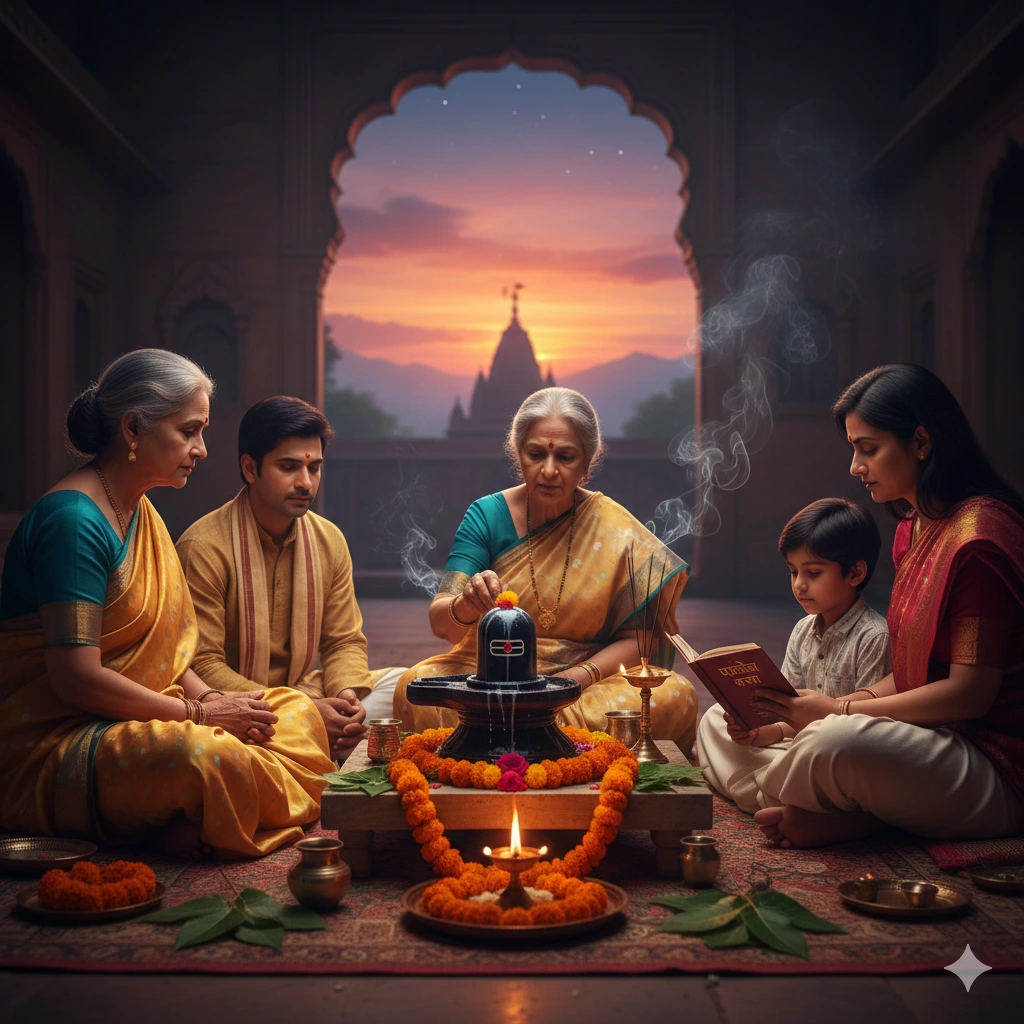
- The Puja: * Set up an altar with an image or Shiva Lingam.
- Perform the Abhishek (ritual bath) of the Lingam using water, milk, honey, curd, and ghee.
- Offer Bilva leaves (Bel Patra), which are especially dear to Lord Shiva.
- Light a ghee lamp and incense sticks.
- Recitation: Read or listen to the Pradosh Vrat Katha. Chanting the Maha Mrityunjaya Mantra 108 times is considered highly meritorious.
- Aarti: Conclude the puja with the Shiva Aarti and distribute Prasad.
- Breaking the Fast: The fast is typically broken after the evening puja and the sighting of the moon or stars.
Why Should You Observe Pradosh Vrat?
In today’s fast-paced world, Pradosh Vrat offers a spiritual anchor. Beyond the religious merits, the practice of fasting and meditation during twilight—a transition phase in nature—helps in:
- Mental Clarity: Chanting and silence during twilight calm the nervous system.
- Karmic Healing: It is believed that sincere prayer during Pradosh washes away the sins of many lifetimes.
- Astro-Remedy: It is often suggested by astrologers to mitigate the ill effects of planets like Saturn (Shani) and Mars (Mangal).
Conclusion
The Pradosh Vrat Katha is more than just an ancient story; it is a reminder of the infinite compassion of Lord Shiva. Whether you are seeking financial stability, health, or spiritual growth, the “twilight fast” serves as a bridge between the devotee and the Divine. By dedicating just a few hours twice a month to this practice, one can invite peace, prosperity, and protection into their home.