Discover the essence of Kalpataru Utsav, a vibrant celebration of culture and spirituality. Join us for an unforgettable experience filled with joy and tradition.
Kalpataru Utsav 2026: The Spiritual Significance of Sri Ramakrishna’s Day of Self-Revelation
Explore the history and spiritual depth of Kalpataru Utsav 2026. Discover how Sri Ramakrishna Paramhansa became the “Wish-Fulfilling Tree” and why millions gather at Cossipore and Dakshineswar every January 1st.
Every year, as the world rings in the New Year with parties and resolutions, a profound spiritual phenomenon unfolds across India and the globe. January 1st marks Kalpataru Utsav (or Kalpataru Day), a day dedicated to the 19th-century mystic Sri Ramakrishna Paramhansa. Unlike typical New Year celebrations, Kalpataru Utsav is a day of deep meditation, prayer, and the remembrance of a “divine transformation” that occurred in 1886.
For the followers of the Ramakrishna Mission and devotees of “Thakur,” this day is considered one of the most sacred festivals, symbolizing the moment God incarnate walked the earth to bless humanity with spiritual awakening.
The Origin: January 1, 1886
The history of Kalpataru Utsav is rooted in the final months of Sri Ramakrishna’s life. In late 1885, the Master was suffering from throat cancer and had been moved to the Cossipore Garden House (Udyanbati) in North Kolkata for treatment and better air.
On January 1, 1886, Sri Ramakrishna felt slightly better and decided to take a walk in the garden. It was a holiday, and many of his lay disciples—mostly householders who couldn’t visit during the workweek—had gathered under the trees.
Kalpataru Utsav: The Moment of Revelation
As the Master walked down the garden path, he saw his disciple, the famous playwright Girish Chandra Ghosh. Sri Ramakrishna asked him a question he had posed many times before: “Girish, what have you seen in me that you call me an Incarnation?”
Girish, moved by a sudden surge of devotion, knelt at the Master’s feet and replied, “What more can I say of Him whose glory Vyasa and Valmiki could not find words to express?”
Hearing this profound confession of faith, Sri Ramakrishna entered a state of spiritual ecstasy (Bhavasamadhi) and said:
“What more shall I say? I bless you all. May you all be spiritually awakened!”
Kalpataru Utsav: Becoming the Kalpataru
Following this declaration, the Master touched his disciples one by one. It is recorded that each person touched by him experienced a unique, blissful spiritual state. Some saw divine visions, others felt an overwhelming sense of peace, and many were moved to tears of joy.
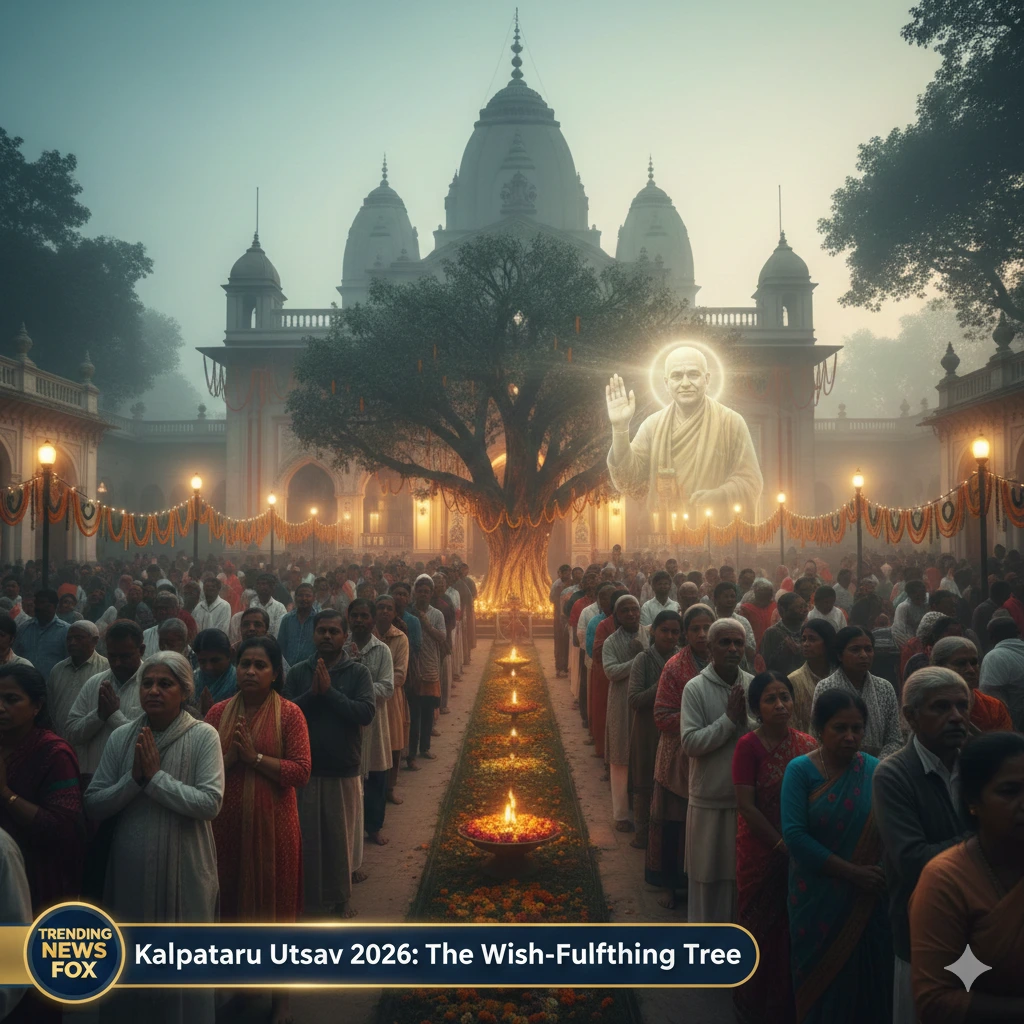
Ramachandra Dutta, another disciple, was the one who named this event Kalpataru Day. In Hindu mythology, the Kalpataru is a wish-fulfilling tree. On this day, the Master had become that mystical tree, granting not worldly riches, but the ultimate “wish” of spiritual liberation and consciousness.
Spiritual Significance: “May You Be Awakened”
The core message of Kalpataru Utsav is found in the Master’s blessing: “Tomader Chaitanya Hok” (May your consciousness be awakened).
Unlike the mythological Kalpataru, which grants both good and bad desires, Sri Ramakrishna’s “wish-fulfilling” was purely spiritual. He didn’t offer money or fame; he offered the removal of the veil of ignorance. This makes the festival a celebration of Grace over Effort. While spiritual life usually requires years of disciplined practice (Sadhana), Kalpataru Day commemorates a moment where the Divine reached out and gave the fruit of that practice freely to all who were present.
Kalpataru Utsav 2026: Celebrations Across the Globe
In 2026, the tradition remains as vibrant as ever. From the historic lanes of Kolkata to the Vedanta Societies in Hollywood and London, the day is observed with solemnity.
1. Cossipore Udyanbati (The Epicenter)
The Cossipore Garden House, now a branch of the Ramakrishna Math, remains the most significant site for the festival. Thousands of devotees queue up from the early hours of the morning to enter the garden where the event took place. The room where the Master spent his last days is a site of intense prayer.
2. Dakshineswar Kali Temple
Though the actual event happened at Cossipore, the Dakshineswar Kali Temple—where Sri Ramakrishna spent most of his life as a priest—witnesses a massive footfall. Devotees offer prayers to Bhavatarini (Goddess Kali) and visit the room of the Master, seeking the same “awakening” he promised his disciples over a century ago.
3. Belur Math and Global Centers
At Belur Math, the headquarters of the Ramakrishna Math and Mission, the day is marked with:
- Mangala Arati: Pre-dawn prayers.
- Special Puja and Havan: Vedic chants and fire rituals.
- Devotional Songs (Bhajans): Chanting of the names of Sri Ramakrishna and the Holy Mother Sarada Devi.
- Discourses: Senior monks speak on the significance of the Master’s life and the “Kalpataru” event.
Why Kalpataru Day is “Trending” in the Modern Age
In an era of high stress and material pursuit, Kalpataru Utsav offers a “reset button.” It aligns perfectly with the New Year, but instead of focusing on external changes, it encourages internal evolution.
- Universalism: Sri Ramakrishna’s teaching of “As many faiths, so many paths” resonates with a global audience looking for inclusive spirituality.
- Hope for the “Everyman”: The fact that the Master blessed householders—ordinary people with families and jobs—gives hope to modern seekers who cannot lead a monastic life.
- Mental Peace: The meditative atmosphere of the Utsav provides a sanctuary from the “hustle culture” of the 21st century.
How to Observe Kalpataru Day at Home
If you cannot visit a temple or a Ramakrishna Math center, you can still participate in the spirit of the Utsav:
- Meditation: Set aside time at 3:00 PM (the approximate time the Master walked into the garden) for silent meditation.
- Reading: Read a chapter from The Gospel of Sri Ramakrishna (Sri Sri Ramakrishna Kathamrita).
- Self-Reflection: Reflect on the Master’s blessing of “awakening.” Ask yourself what “consciousness” means in your daily life.
- Acts of Charity: Service to humanity is a core tenet of the Ramakrishna Mission. Helping someone in need is a beautiful way to honor the Master.
Conclusion
Kalpataru Utsav is more than just a religious anniversary; it is a reminder that the Divine is accessible and compassionate. As we navigate the uncertainties of 2026, the message of the “Wish-Fulfilling Tree” remains a beacon of light. It reminds us that while we may seek many things in the New Year, the greatest gift we can receive is the awakening of our own inner spirit.
Also, read What Are the Best Places to Visit Around the World?