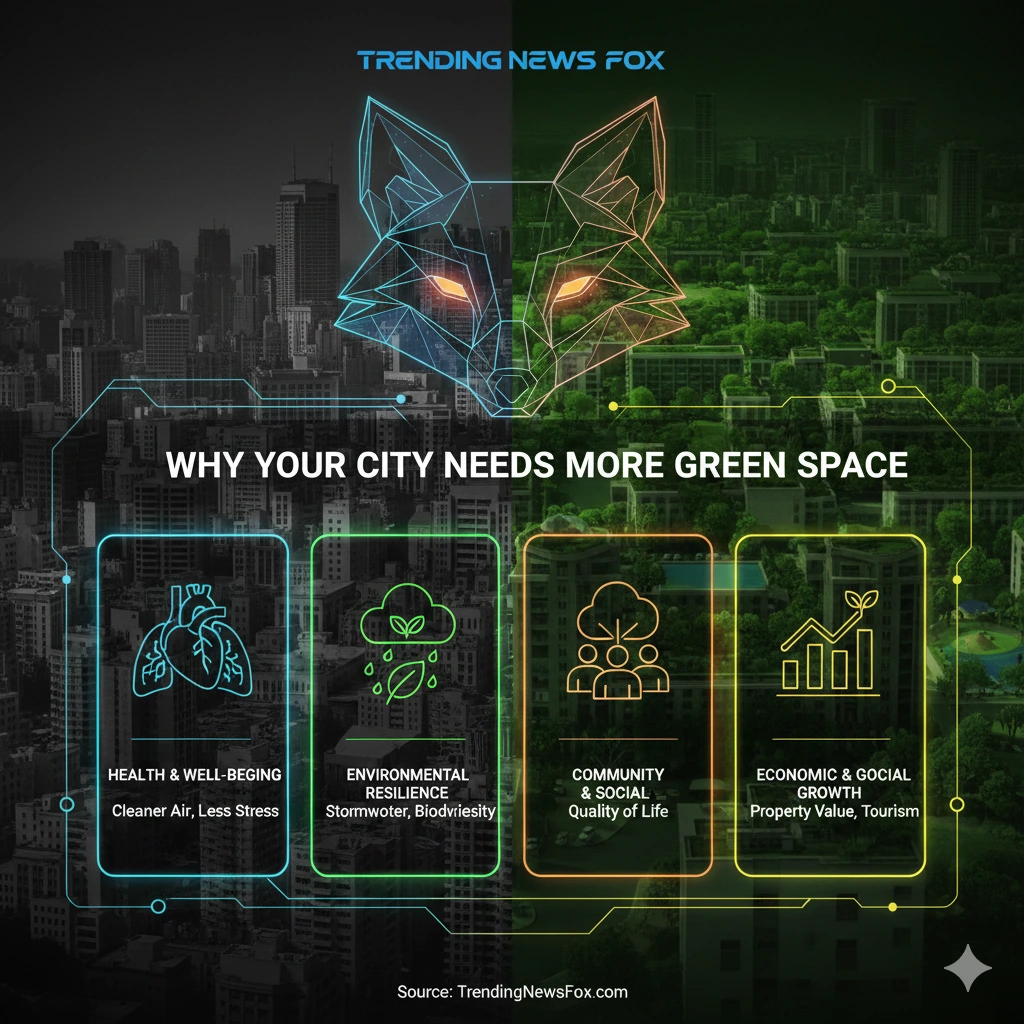
Uncover why your city needs more green space. Delve into the positive impacts on biodiversity, public health, and overall quality of life for residents.
Why Your City Needs More Green Space: A Breath of Fresh Air for Urban Living
Discover the profound benefits of urban green spaces, from improved public health and environmental resilience to economic growth and stronger communities. Learn why investing in parks, gardens, and natural areas is crucial for the future of your city.
In the relentless march of urbanization, concrete jungles often expand at the expense of verdant landscapes. Yet, as cities grow denser and faster, a crucial question emerges: are we sacrificing our well-being and the planet’s health for the sake of development?
Also, read 2026 Trend Forecast: AI, Urban Growth & The Global Economy
The answer, increasingly, points to a critical need for a re-evaluation of our urban planning priorities, with a resounding emphasis on integrating more green spaces. From bustling metropolises to burgeoning towns, every city stands to gain immensely from a greater embrace of parks, community gardens, tree-lined streets, and natural reserves.
The benefits of urban green spaces are multifaceted, touching upon public health, environmental sustainability, economic vitality, and social cohesion. Let’s delve into why your city urgently needs to invest in and expand its green infrastructure.
Why Your City Needs More Green Space: The Health and Well-being Dividend
Perhaps the most immediate and tangible impact of green spaces is on the physical and mental health of urban residents. In an era where chronic diseases, stress, and mental health challenges are on the rise, access to nature provides a powerful antidote.
Improved Physical Health:
Green spaces encourage physical activity. Parks with walking paths, cycling trails, and open fields invite people to run, play, and exercise. Studies consistently show that individuals living in close proximity to green areas are more likely to meet recommended physical activity levels, leading to lower rates of obesity, heart disease, diabetes, and other lifestyle-related illnesses. Playgrounds provide vital spaces for children to engage in active play, fostering healthy development.
Enhanced Mental Health:
The restorative power of nature is well-documented. Spending time in green environments has been shown to reduce stress, anxiety, and symptoms of depression. The mere sight of trees and plants can lower cortisol levels, blood pressure, and heart rate.
Urban parks offer a serene escape from the constant stimulation and noise of city life, providing spaces for mindfulness, relaxation, and contemplation. This “nature dose” is essential for mental well-being, fostering a sense of calm and improving cognitive function.
Better Air Quality:
Trees and plants act as natural air filters, absorbing pollutants like carbon monoxide, sulfur dioxide, and nitrogen dioxide, and releasing life-giving oxygen. They also trap particulate matter, significantly improving air quality in urban areas. This is particularly crucial in cities with high traffic and industrial activity, where respiratory illnesses are often prevalent.
Reduced Urban Heat Island Effect:
Concrete and asphalt absorb and re-emit the sun’s heat more than natural landscapes, leading to significantly higher temperatures in urban centers compared to surrounding rural areas – a phenomenon known as the Urban Heat Island (UHI) effect.
Trees provide shade, and evapotranspiration from plants cools the air, effectively mitigating the UHI effect. This not only makes cities more comfortable but also reduces energy consumption for air conditioning and prevents heat-related illnesses during extreme weather events.
Why Your City Needs More Green Space: Environmental Resilience and Sustainability
Beyond human health, green spaces are critical for the ecological health and sustainability of cities, offering vital ecosystem services.
Biodiversity Conservation:
Urban green spaces, even small ones, can serve as crucial habitats for a variety of plant and animal species, including insects, birds, and small mammals. They form ecological corridors, allowing species to move and thrive within the urban matrix, contributing to urban biodiversity conservation. This is vital for maintaining healthy ecosystems and supporting essential services like pollination.
Stormwater Management:
Impervious surfaces in cities lead to rapid stormwater runoff, overwhelming drainage systems and contributing to flooding and water pollution. Green spaces, with their permeable soils and vegetation, absorb rainwater, filter pollutants, and recharge groundwater.
Green roofs, rain gardens, and permeable pavements integrated into urban design can significantly improve stormwater management, reducing flood risks and protecting water quality.
Climate Change Adaptation and Mitigation: Why Your City Needs More Green Space
Trees sequester carbon dioxide from the atmosphere, acting as natural carbon sinks. By expanding urban forests, cities can play a role in mitigating climate change. Furthermore, the cooling effect and stormwater management capabilities of green spaces are vital adaptation strategies against the increasing frequency and intensity of extreme weather events, such as heatwaves and heavy rainfall.
Noise Reduction:
Vegetation acts as a natural sound barrier, absorbing and deflecting urban noise, creating quieter and more peaceful environments for residents.
Why Your City Needs More Green Space: Economic Vibrancy and Social Cohesion
Investing in green spaces isn’t just an expense; it’s an investment with significant economic and social returns.
Increased Property Values:
Homes and businesses located near well-maintained parks and greenways often command higher property values. The aesthetic appeal and recreational opportunities provided by green spaces make neighborhoods more desirable, attracting residents and businesses alike.
Tourism and Recreation:
Attractive parks, botanical gardens, and scenic trails can become major tourist attractions, drawing visitors and boosting the local economy through hospitality, retail, and recreational spending. They also provide invaluable recreational opportunities for local residents, enhancing their quality of life.
Community Building and Social Interaction: Why Your City Needs More Green Space
Green spaces serve as vital public commons where people can gather, socialize, and engage in community activities. Community gardens foster collaboration and provide fresh produce. Playgrounds bring families together. Events held in parks, from concerts to farmers’ markets, strengthen community bonds and create a sense of shared identity and belonging. This social capital is invaluable for a thriving city.
Crime Reduction:
Well-designed and maintained green spaces, contrary to some misconceptions, can actually contribute to crime reduction. When public spaces are actively used and cared for by the community, there is a greater sense of ownership and natural surveillance, deterring illicit activities.
Attracting Talent and Businesses:
In an increasingly competitive global landscape, cities with a high quality of life, including abundant green spaces, are more attractive to skilled professionals and businesses looking to relocate. A city that prioritizes green infrastructure signals a commitment to sustainability, health, and well-being, making it a more appealing place to live, work, and invest.
The Path Forward: Greening Your City
Transforming a concrete-heavy city into a green oasis requires a concerted effort from urban planners, policymakers, community leaders, and residents. This includes:
- Strategic Master Planning: Integrating green infrastructure into comprehensive urban master plans, identifying opportunities for new parks, greenways, and ecological corridors.
- Adaptive Reuse: Converting derelict or underutilized urban spaces, such as abandoned lots or industrial sites, into parks, community gardens, or urban farms.
- Green Building Codes: Encouraging or mandating green roofs, vertical gardens, and permeable surfaces in new developments.
- Tree Planting Initiatives: Launching ambitious tree planting programs along streets, in public spaces, and on private properties.
- Community Engagement: Involving residents in the design, development, and maintenance of green spaces to foster ownership and ensure they meet community needs.
- Funding and Investment: Allocating sufficient public and private funding for the acquisition, development, and long-term maintenance of green spaces.
The call for more green spaces in our cities is not merely an aesthetic preference; it is a fundamental requirement for building healthier, more resilient, and more equitable urban environments.
Also, read What is Urban Development? Definition, Importance & 2026 Trends
By recognizing the profound benefits that nature brings to our doorsteps, cities can move towards a future where human flourishing and ecological balance go hand-in-hand. It’s time to give our cities, and their inhabitants, the breath of fresh air they deserve.