Discover the benefits of smart meters for energy efficiency. Learn how they help you monitor usage, save money, and reduce your carbon footprint.
By Trending News Fox, News & Media Team, Kolkata
The Digital Grid Revolution: What Are Smart Meters and How Do They Work?
The global transition toward a modernized, sustainable energy infrastructure is accelerating. At the heart of this grid transformation lies a compact but highly intelligent device found on the exterior walls of homes and commercial buildings worldwide: the smart meter.
For decades, tracking utility usage relied on legacy analog or electromechanical meters. These traditional units recorded total historical consumption, requiring utility personnel to physically visit properties to perform manual readings. The result was a billing system often prone to manual transcription errors and built on monthly “estimated bills”.
As the world integrates internet-of-things (IoT) technology into daily life, these mechanical systems are being phased out. In their place, advanced smart metering infrastructure is reshaping how society tracks electricity, water, and natural gas.
But what exactly is a smart meter, how does it process data, and why are utility networks investing billions of dollars in their deployment? This comprehensive analysis explores the technical architecture, operational mechanisms, and consumer and grid benefits defining this technology.
What Is a Smart Meter?
A smart meter is an electronic device that records consumption metrics—such as electrical energy, voltage levels, gas volume, or water flow—and securely transmits that data to utility companies. Unlike its analog predecessor, a smart meter enables continuous, automated, two-way digital communication between the user’s premises and the utility provider’s central network.
┌─────────────────┐       Wireless / Wired       ┌──────────────────┐
│   Smart Meter   │ ───────────────────────────> │ Utility Provider │
│ (At Home/Biz)   │ <─────────────────────────── │ (Central System) │
└─────────────────┘      Two-Way Data Link       └──────────────────┘
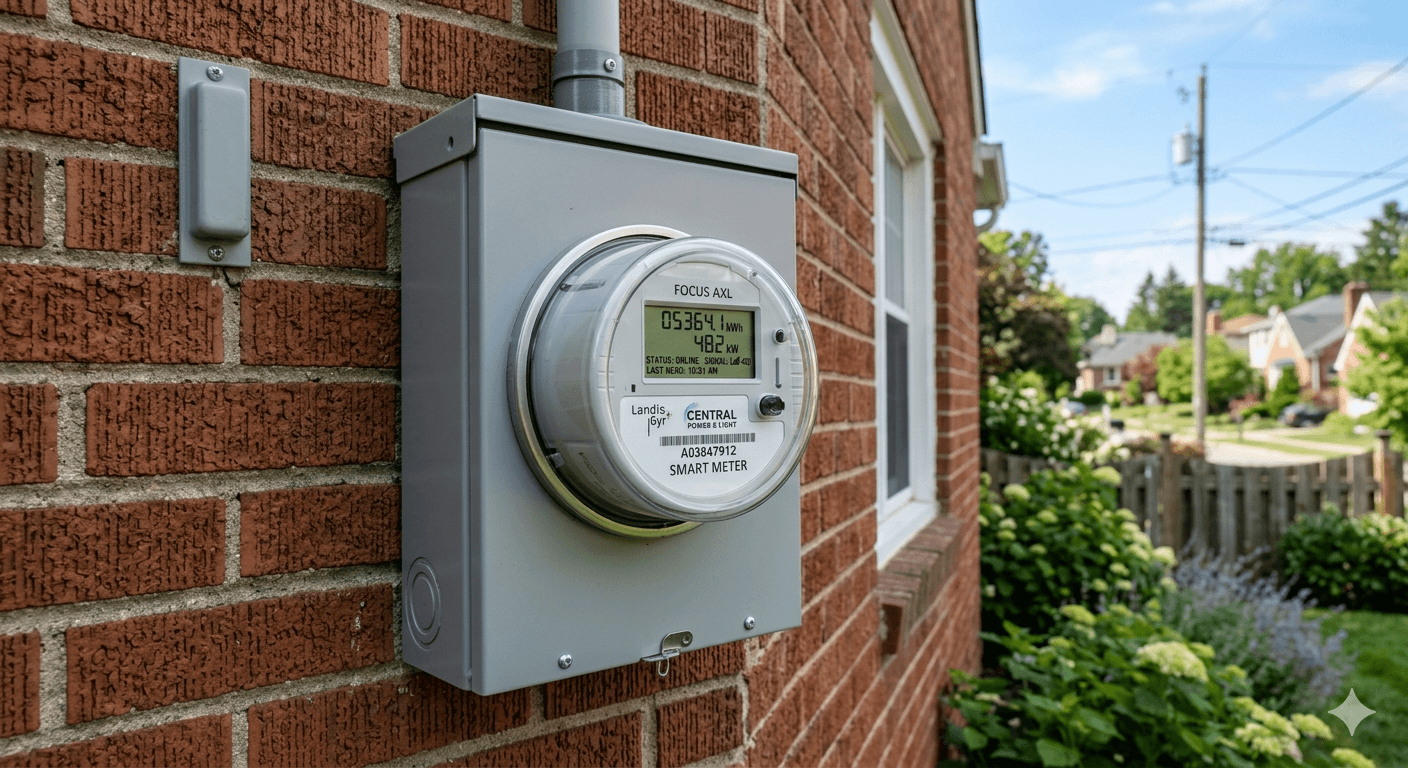
The physical assembly of a typical household unit is visible in the reference image: watermarked_img_3143407679909980956.png. As shown, these modern digital installations feature high-resolution liquid crystal displays (LCD) that display consumption numbers in real-time. Instead of spinning dials, they rely on digital solid-state circuitry.
Smart Meters: The Two Core Components
For residential consumers, a standard smart meter setup generally consists of two distinct hardware units:
- The Base Meter: Installed on the property exterior, this hardware measures utility draw at the service point and handles automated telemetry.
- The In-Home Display (IHD): A portable digital screen or integrated mobile application that connects to the base meter. It translates raw telemetry into a readable layout, allowing residents to view exactly how much energy they are drawing and what that usage costs in local currency.
How Do Smart Meters Work? The Technical Workflow
To understand how a smart meter functions, its operation can be broken down into three stages: measurement, processing, and communication.
1. High-Frequency Measurement
Traditional meters use mechanical induction to track consumption. Smart electric meters use solid-state sensors to constantly sample voltage and current waves. For gas and water models, ultrasonic pulses or electromagnetic sensors measure resource velocity and volume through the pipes.
Instead of aggregating data over a month, smart meters log usage at highly frequent intervals—typically every 30 minutes for natural gas and near real-time (or every 15 minutes) for electricity.
2. Advanced Metering Infrastructure (AMI) Processing
The data collected by the sensors is managed by internal microprocessors running secure firmware. This framework operates within an Advanced Metering Infrastructure (AMI) network. AMI allows the meter to do more than just count resource units; it gives the device edge intelligence to monitor power quality, log voltage spikes, and run self-diagnostic checks.
3. Encrypted Remote Transmission
Once processed, the data must travel back to the utility headquarters. Rather than using standard public Wi-Fi networks, smart meters rely on dedicated, secure communication technologies. The primary methods include:
- Radio Frequency (RF) Mesh Networks: Meters broadcast encrypted data wirelessly from home to home until it reaches a local data collector hub.
- Cellular IoT Networks: Utilizing dedicated machine-to-machine cellular bands (such as NB-IoT or LTE-M), meters communicate directly through commercial cellular towers, which is especially useful in rural or sparsely populated areas.
- Power Line Communication (PLC): The meter modulates high-frequency digital signals directly onto the existing copper electrical cables, feeding data straight back to utility substations.
Once transmission concludes, the utility’s automated systems ingest the metrics for immediate billing, load forecasting, and grid optimization.
The Core Benefits of Smart Meter Technology
The global push toward smart meter rollouts is driven by tangible benefits that improve experience, lower costs, and enhance grid reliability for both consumers and utility providers.
Smart Meters: Benefits for Consumers
- Elimination of Inaccurate, Estimated Bills: Because the hardware shares actual consumption metrics automatically, utility bills are calculated down to the exact kilowatt-hour, gallon, or cubic foot used.
- Real-Time Energy Insights: By checking their in-home displays or mobile apps, consumers can spot immediate consumption jumps when they turn on high-draw systems like space heaters, central air conditioning, or clothes dryers. This visibility helps users adjust their habits to cut waste.
- Access to Time-of-Use (ToU) Tariffs: Traditional meters charge flat pricing regardless of the time of day. Smart meters unlock variable pricing tariffs. Consumers can save money by shifting heavy electricity use—like charging an electric vehicle or running a dishwasher—to cheaper, off-peak hours.
Smart Meters: Benefits for Utility Providers
- Proactive Outage & Fault Detection: When a power line goes down or a localized surge happens, the smart meter notices the change instantly and sends a “last gasp” signal to the utility provider. This allows technicians to pinpoint and fix infrastructure issues quickly, often before customers call to report them.
- Reduced Operational Overheads: Automating telemetry collection eliminates the need for fleets of vehicles and manual meter readers. This lowers labor costs and minimizes transport emissions.
- Improved Cash Flow via Prepaid Billing: Utilities can deploy flexible prepaid structures. Customers buy energy credits beforehand, and the meter automatically halts service if the credit runs out, which reduces payment defaults and debt collection hurdles.
Smart Meters and the Environment: Building a Green Grid
Beyond financial and operational efficiency, smart meters serve as a crucial tool for reducing global carbon emissions and fighting climate change.
┌───────────────────────────┐      Real-Time Data      ┌───────────────────────────┐
│       Smart Meters        │ ───────────────────────> │  Renewable Grid Balancing │
│ (Monitors Demand Changes) │ <─────────────────────── │ (Solar & Wind Integration)│
└───────────────────────────┘     Dynamic Load Matching └───────────────────────────┘
1. Shaving Peak Demand
Power grids must maintain a constant balance between electricity supply and demand. During peak consumption windows (like a hot summer afternoon), utilities historically activate older, high-polluting backup power plants to keep up with demand.
By utilizing smart meter data and offering financial incentives through dynamic demand response programs, utilities can convince thousands of households to lower their usage during peak windows. This smooths out peak demand and reduces reliance on fossil-fuel backup plants.
2. Integrating Intermittent Renewable Energy
Clean energy options like solar and wind power fluctuate depending on weather conditions. Smart meters give grid operators the real-time visibility needed to balance these variations.
Furthermore, for households equipped with solar arrays, smart meters support bidirectional measurement. They track both the power pulled from the grid and the excess green energy sent back into it, making sure microgeneration payouts are handled fairly and accurately.
Addressing Common Concerns: Security and Privacy
While the benefits are clear, some consumers raise concerns during smart meter rollouts, primarily around data privacy and cybersecurity.
Smart Meters: Data Privacy and Encryption Standards
Critics often wonder if granular telemetry could expose details about their private daily routines. To address this, modern utility infrastructure handles smart meter data with strict cybersecurity protocols. Personal information—like names, addresses, and billing credentials—is kept entirely separate from consumption data transmission.
The usage data sent through the air is encrypted using advanced, government-approved standards, ensuring it can only be read by authorized utility systems.
Conclusion: The Future of Energy Management
The global smart meter market is expanding rapidly, with projections showing it will grow from an estimated $27.93 billion in 2025 to over $78.10 billion by 2036. This momentum highlights a broader shift: the age of passive utility consumption is ending.
Smart meters turn passive consumers into active managers of their own energy footprints. By replacing guesswork with clear data, this digital technology cuts down on billing surprises, lowers household costs, and helps build a cleaner, more resilient green energy grid for the future.