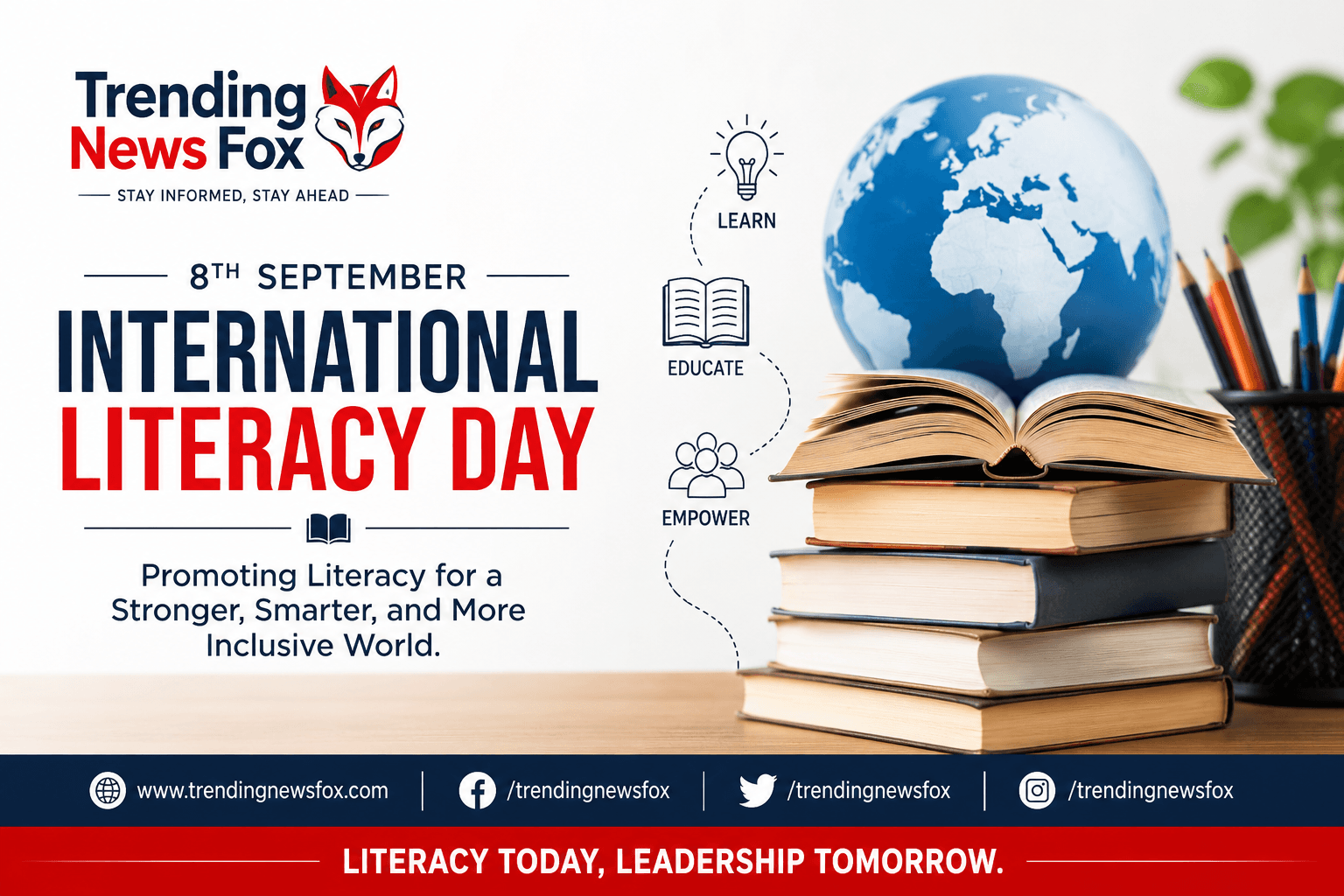
International Literacy Day 2026 highlights the importance of literacy, education and lifelong learning. Know the theme, history, significance, key facts and why literacy matters worldwide.
International Literacy Day: Why Reading and Digital Skills Are Vital for Our Global Future
Trending News Fox | Education & Global Trends Desk
International Literacy Day stands as a powerful reminder of how education shapes societies, drives economies, and empowers communities worldwide.Celebrated annually on September 8, this United Nations-backed observance goes beyond teaching people how to read and write.It addresses modern challenges—ranging from traditional illiteracy to equal access to digital technology—ensuring that every individual can participate in an increasingly connected global economy.

Below is an in-depth breakdown of the history, global impact, key themes, and actionable steps needed to bridge the global literacy gap.
Key Facts: International Literacy Day
| Detail | Information |
| Official Date | September 8 (Annually) |
| Establishing Body | UNESCO (Proclaimed in 1966, first observed in 1967) |
| Global Focus | Eradicating illiteracy, fostering equal education, and promoting digital literacy |
| Key Benchmark | UN Sustainable Development Goal 4 (SDG 4: Quality Education) |
| Target Audience | Out-of-school youth, non-literate adults, and marginalized communities |
History: How UNESCO Started the Global Movement
The foundation of International Literacy Day traces back to the World Congress of Ministers of Education on the Eradication of Illiteracy, held in Tehran, Iran, in 1965. The congress proposed establishing a single day each year to unify international efforts against illiteracy.
Also, read Krishna Janmashtami 2026: Date, Puja Timings, Rituals, Significance & Celebrations
The following year, on October 26, 1966, the United Nations Educational, Scientific, and Cultural Organization (UNESCO) officially proclaimed September 8 as International Literacy Day.The first official observance took place on September 8, 1967.
Also, read Ganesh Chaturthi 2026: Date, Puja Muhurat, Significance & Celebrations
Since its inception, the day has highlighted literacy as a matter of human dignity and fundamental rights.It forms an essential core of the UN’s Sustainable Development Goal 4 (SDG 4), which aims to ensure inclusive, equitable, and quality education for all by 2030.
Why International Literacy Matters in the Modern Era
Literacy is the foundation of individual growth and collective social progress. Lacking functional literacy creates barriers to employment, health awareness, and democratic participation.
- Economic Mobility and Poverty Reduction
Literacy directly influences earning potential. Individuals who can comfortably read, write, and process quantitative data are far more likely to secure sustainable employment, build businesses, and pull their families out of intergenerational poverty. - Healthcare and Public Well-being
Literate populations can better process public health warnings, understand medication instructions, and make informed choices about nutrition and disease prevention. Studies consistently reveal a direct link between high maternal literacy rates and lower child mortality rates. - Gender Equality
Globally, two-thirds of all non-literate adults are women. Closing the gender literacy gap yields immediate benefits: educated women marry later, raise healthier children, and contribute significantly to community economic output. - Civic Engagement and Media Literacy
Reading allows citizens to evaluate policy proposals, understand legal rights, and navigate online misinformation, building more resilient democratic institutions.
Evolution of the Theme: From Basic Reading to the Digital Era
The definition of literacy has expanded rapidly over the past few decades. While early UNESCO campaigns focused heavily on basic alphabetic comprehension, recent themes address modern digital realities:
- Basic Literacy: Decoding words, understanding basic grammar, and writing simple sentences.
- Functional Literacy:Applying reading and math skills to daily tasks, such as reading contracts, managing bank accounts, or following technical instructions.
- Digital and Tech Literacy:Navigating web browsers, evaluating online sources, maintaining privacy, and using software tools.
UNESCO’s evolving themes—ranging from “Literacy and Health” to “Promoting Literacy in the Digital Era”—reflect a world where digital inclusion is as critical as physical textbooks.Without computer access and internet fluency, individuals face a dynamic “digital divide” that limits economic mobility even if they possess traditional reading skills.
Current Global Literacy Challenges
Despite major progress over recent decades, systemic hurdles continue to leave millions behind:
- Regional Disparities:Sub-Saharan Africa and Southern Asia face the highest rates of non-literate adults, often due to underfunded public school systems, conflict, and rural isolation.
- The Digital Divide: Reliable internet access and hardware remain unaffordable for billions in developing regions, hindering digital skill building.
- Conflict and Displacement: Global conflicts interrupt formal schooling for millions of children, leading to multi-generational learning gaps.
International Literacy Day 2026: How to Support Literacy Initiatives
Achieving universal literacy requires active participation from governments, non-profits, local communities, and individuals.
Community Initiatives
- Book Donations: Partner with local libraries, shelters, and rural schools to supply age-appropriate reading materials.
- Adult Literacy Programs:Volunteer to tutor adult learners in reading comprehension, basic mathematics, or entry-level computer navigation.
- Early Childhood Reading: Encourage parents and caregivers to read aloud to young children daily to build early vocabulary and cognitive frameworks.
Policy & Institutional Action
- Public School Funding: Allocate resources to teacher training, modern learning tools, and accessible infrastructure.
- Broadband Expansion: Treat high-speed internet access as a public utility to support equitable digital learning.
- Multilingual Education Programs:Deliver early primary education in native mother-tongue languages to improve comprehension before transitioning to national or global languages.
How to Observe International Literacy Day
- Host a Local Book Drive: Gather unused children’s books and donate them to underserved schools or community centers.
- Organize Reading Workshops: Setup reading sessions at local libraries or community centers to encourage habit-building among young children.
- Support Literacy Organizations: Donate to global and regional non-profits—such as Room to Read, World Literacy Foundation, or UNESCO initiatives—working on the front lines.
- Engage on Social Media: Raise awareness by sharing literacy statistics, infographics, and book recommendations using official hashtags like #InternationalLiteracyDay and #LiteracyDay.
International Literacy Day 2026: The Path Forward
Literacy is the foundational key that unlocks human potential, bridges social inequalities, and drives economic stability. As technology changes how we communicate, work, and learn, ensuring universal access to both traditional and digital literacy remains one of the world’s most vital priorities. By supporting local education programs and advocating for digital access, societies everywhere can help build a more empowered and equitable world.
Stay tuned to Trending News Fox for the latest updates on global education, policy news, and international developments.
Also, read World Coconut Day 2026: Date, History, Importance, Theme & Health Benefits