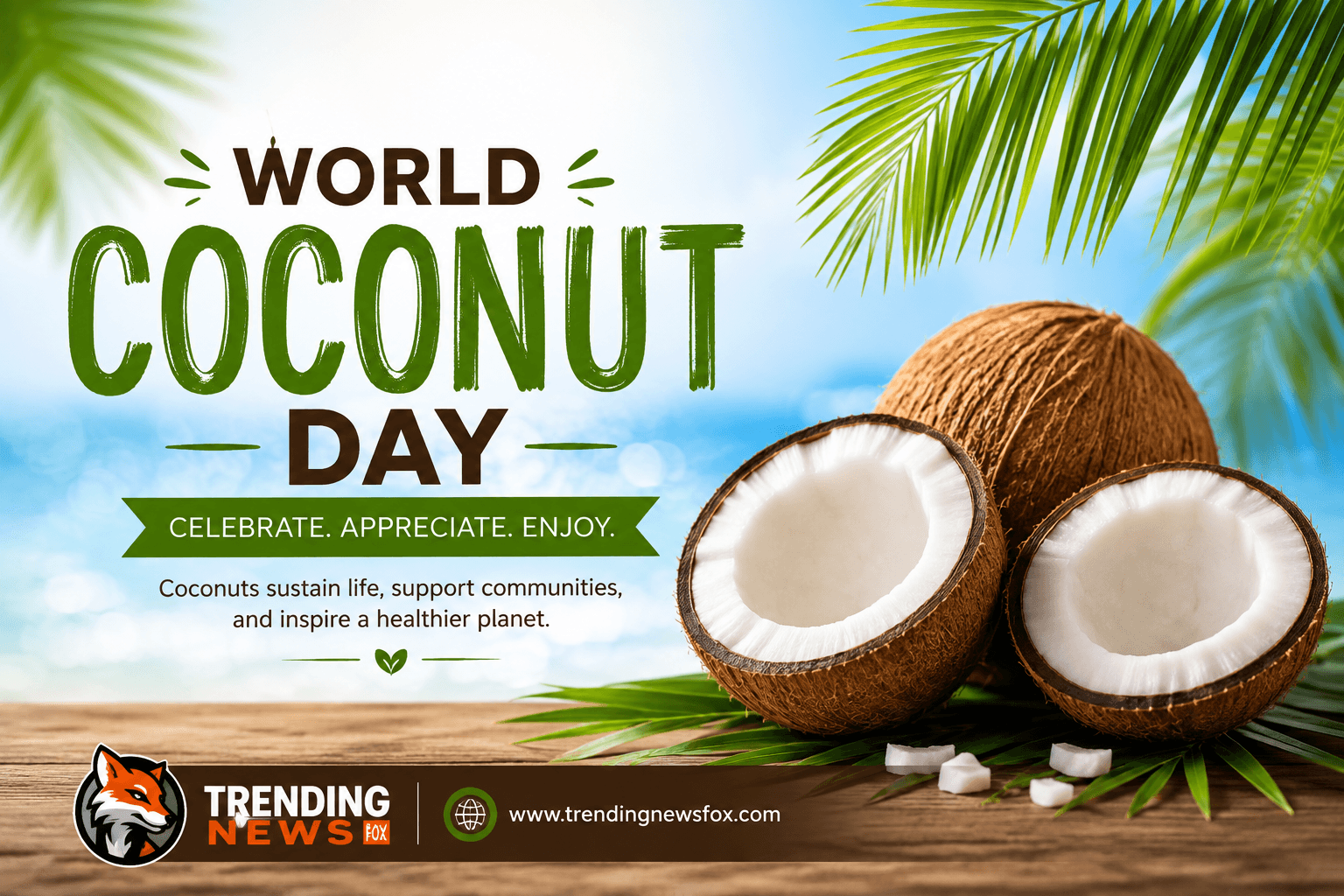
World Coconut Day 2026 is observed on September 2. Explore its history, significance, theme, coconut health benefits, nutritional value and importance worldwide.
World Coconut Day 2026: Unlocking the Power of the ‘Kalpavriksha’ for Health, Wealth, and Global Sustainability
Every year on September 2, nations around the globe unite to observe World Coconut Day.Known reverently in India as the Kalpavriksha (the divine tree that fulfills all desires) and globally as the “Tree of Life,” the humble coconut palm provides food, hydration, shelter, fuel, and livelihood to millions across tropical ecosystems.
Also, read Krishna Janmashtami 2026: Date, Puja Timings, Rituals, Significance & Celebrations
As the global population shifts toward plant-based living, natural wellness, and zero-waste sustainable agriculture, the coconut industry is witnessing a massive revival. World Coconut Day is not merely a celebration of a tropical fruit; it is a dedicated global campaign to bolster sustainable farming, empower smallholder farmers, promote superfood health benefits, and drive innovation across multi-billion-dollar green industries.
The History and Origins of World Coconut Day
World Coconut Day was first established in 2009. The day commemorates the official founding of the Asian and Pacific Coconut Community (APCC), which was established on September 2, 1969, under the auspices of the United Nations Economic and Social Commission for Asia and the Pacific (UN-ESCAP).
Headquartered in Jakarta, Indonesia, the APCC—now known as the International Coconut Community (ICC)—functions as an intergovernmental platform for coconut-producing nations.Its core mission is to promote, coordinate, and harmonize all activities of the coconut industry to sustain the livelihoods of smallholder farmers and boost global exports.
               +----------------------------------------+
               |  Asian & Pacific Coconut Community     |
               |        (APCC / ICC Founded 1969)       |
               +-------------------+--------------------+
                                   |
                                   v
               +----------------------------------------+
               |      World Coconut Day Established     |
               |             (September 2, 2009)        |
               +-------------------+--------------------+
                                   |
         +-------------------------+-------------------------+
         |                                                   |
         v                                                   v
+---------------------------------+                 +---------------------------------+
|     Agricultural Awareness      |                 |    Economic & Farmer Empowerment |
| - Sustainable cultivation       |                 | - Poverty alleviation           |
| - Climate resilience            |                 | - Value-added exports           |
+---------------------------------+                 +---------------------------------+
Global Agricultural Impact: Top Producers
Coconut cultivation is a primary economic engine for equatorial regions, supporting small farm owners and coastal micro-economies. Over 80% of global production originates from the Asia-Pacific region.
| Country / Region | Global Production Share | Primary Coconut Products | Key Focus Areas |
| Indonesia | ~30% | Crude Oil, Copra, Activated Carbon | Industrial export & shell processing |
| Philippines | ~28% | Virgin Coconut Oil (VCO), Desiccated Coconut | Organic certified exports & cosmetics |
| India | ~21% | Fresh Tender Water, Coir Products, Copra | Domestic consumption & coir geo-textiles |
| Sri Lanka & Vietnam | ~10% | Coconut Milk/Cream, Substrate (Coir Pith) | Urban gardening peat & culinary markets |
In India, coconut production is predominantly concentrated in the southern coastal belt—Kerala, Karnataka, Tamil Nadu, and Andhra Pradesh—alongside emerging cultivation zones in West Bengal and the Andaman Islands.
Scientific Profile: Why the Coconut is a Modern Superfood
Biologically classified as a drupe (a one-seeded fruit containing flesh and a hard inner shell), the coconut offers an exceptional nutritional profile. From its isotonic water to its healthy fats, every constituent serves a clear functional purpose for human health.
1. Natural Isotonic Hydration
Tender coconut water is packed with key electrolytes, including potassium, magnesium, sodium, and calcium. Because its osmotic pressure mirrors human blood plasma, it acts as an immediate natural rehydration fluid, replenishing lost minerals post-workout or during heat exhaustion.
2. Medium-Chain Triglycerides (MCTs)
Unlike long-chain saturated fats found in processed foods, the primary fats in coconut meat and oil are Medium-Chain Triglycerides (MCTs), most notably Lauric Acid.
- Rapid Metabolism: MCTs bypass typical fat digestion and go directly to the liver, where they are converted into clean, accessible energy or ketones.
- Antimicrobial Protection: Lauric acid converts into monolaurin inside the body, which exhibits potent antiviral, antibacterial, and antifungal properties that support gut immunity.
3. Blood Sugar Management & Gut Health
Coconut meat provides a rich supply of dietary fiber and healthy fats. Replacing refined carbohydrate thickeners with coconut flour or grated coconut slows down digestion, curbing sudden spikes in blood glucose levels.
The Zero-Waste Wonder: Industrial Applications of the Palm
Few natural resources match the industrial versatility of the coconut tree. The global effort toward a circular economy relies heavily on industrial value-addition from every part of the tree.
                     +-----------------------+
                     |    THE COCONUT PALM   |
                     +-----------+-----------+
                                 |
     +-----------------+---------+---------+-----------------+
     |                 |                   |                 |
     v                 v                   v                 v
+----------+     +-----------+       +-----------+     +-----------+
|  FLUID   |     |   MEAT    |       |   HUSK    |     |   SHELL   |
| (Water)  |     | (Copra)   |       |  (Coir)   |     |  (Wood)   |
+----+-----+     +-----+-----+       +-----+-----+     +-----+-----+
     |                 |                   |                 |
     v                 v                   v                 v
 Isotonic          Virgin Oil,          Geo-Textiles,    Activated Carbon,
 Sports Drinks    Coconut Milk,         Hydroponic       Eco-Cookware,
 & Vinegar        Flour & Cream         Coir Peat        Bio-Char Fuel
- Coir Fiber & Coir Pith: The fibrous outer husk is converted into durable coir ropes, erosion-control matting, door mats, and coco-peat substrates. Coco-peat has transformed modern urban agriculture and commercial hydroponics as a sustainable alternative to soil.
- Activated Carbon from Coconut Shells: Burning the hard coconut shell creates high-grade activated carbon. This material features microscopic pores that trap contaminants, making it essential for water filtration plants, industrial air purification, air masks, and teeth-whitening cosmetics.
- Coconut Neera & Palm Sugar: Tapped unopened flower buds yield Neera, a nutrient-dense sap. When processed without synthetic additives, it forms low-glycemic palm sugar, a healthier alternative to refined sugar for diabetic consumers.
World Coconut Day 2026: Key Challenges Facing the Global Coconut Industry
Despite surging consumer demand for virgin coconut oil, coconut water, and organic cosmetics, coconut farmers face several operational roadblocks:
- Aging Palm Populations: A significant portion of Asia’s coconut palms were planted decades ago and have passed their peak productivity age, resulting in declining crop yields.
- Climate Vulnerability: Rising sea levels, prolonged droughts, and severe tropical cyclones frequently damage coastal plantations.
- Pests and Pathogens: Destructive pests like the Rhinoceros Beetle and widespread diseases like Lethal Yellowing threaten entire plantations if unchecked.
- Supply Chain Exploitation: Smallholder farmers often receive low returns for raw coconuts while middle agencies capture most of the retail profits from value-added end products.
World Coconut Day 2026: Celebrations, Initiatives, and Future Outlook
On World Coconut Day 2026, agricultural institutes, state coconut development boards, and sustainable farming advocacy groups organize training workshops, seed-sapling distribution drives, and culinary expos worldwide.
                                WORKSHOP AGENDA
 09:00 AM - Modern Replanting Strategies: High-Yield Hybrid Palms
 11:30 AM - Small-Scale Processing: Setting Up Virgin Oil Units
 02:00 PM - Circular Farming: Utilizing Husks for Carbon Credits
 04:30 PM - Global Export Market Trends & Direct-to-Consumer Branding
Governments across major producing hubs are rolling out financial subsidies to encourage high-yielding hybrid varieties, fund pest control research, and support young agro-entrepreneurs in setting up localized processing units.
How You Can Celebrate World Coconut Day
- Support Fair-Trade Brands: Purchase ethical, direct-from-farmer coconut oils, raw water, and artisanal coir products.
- Switch to Natural Personal Care: Replace synthetic skin moisturizers and hair serums with pure, cold-pressed virgin coconut oil.
- Plant a Sapling: If you live in a compatible tropical or coastal zone, plant a dwarf hybrid palm to contribute to local green cover.
- Adopt Zero-Waste Products: Swap plastic household brushes and kitchen sponges for biodegradable coir alternatives.
World Coconut Day serves as a powerful reminder that sustainable development, health, and economic growth can thrive together. By investing in coconut farming and choosing eco-friendly coconut products, we nourish our bodies while supporting millions of farm workers who sustain the “Tree of Life.”
Also, read Ganesh Chaturthi 2026: Date, Puja Muhurat, Significance & Celebrations