Discover the sacred Jaya Ekadashi Vrat Katha. Learn about the 2026 date, Shubh Muhurat, and the miraculous story of how Lord Vishnu liberates souls from sins.
By Trending News Fox News Desk Published: January 29, 2026
Jaya Ekadashi Vrat Katha 2026: Date, Significance, and the Story of Liberation
Jaya Ekadashi, occurring in the auspicious Hindu month of Magha, is one of the most significant days in the Vedic calendar. Dedicated to Lord Vishnu, this sacred fast is believed to cleanse the soul, remove past sins, and grant liberation from the cycle of birth and death. In 2026, devotees are preparing to observe this powerful day with deep devotion.
Whether you are looking for the Jaya Ekadashi 2026 date, the detailed Vrat Katha (legend), or the specific Puja Vidhi (rituals), this comprehensive guide covers everything you need to know to perform the fast effectively and receive the blessings of Lord Shri Hari.
Jaya Ekadashi 2026: Date and Shubh Muhurat
According to the Hindu Panchang, Jaya Ekadashi falls on the Ekadashi Tithi of Shukla Paksha (the waxing phase of the moon) in the month of Magha. In 2026, the fast will be observed on Thursday, January 29, 2026.
| Event | Date & Time |
| Ekadashi Tithi Begins | January 28, 2026, at 04:35 PM |
| Ekadashi Tithi Ends | January 29, 2026, at 01:55 PM |
| Fast Observation Date | January 29, 2026 |
| Parana Time (Breaking the Fast) | January 30, 07:10 AM to 09:20 AM |
| Dwadashi End Moment | January 30, 2026, at 11:09 AM |
Observing the fast on Thursday adds extra spiritual merit, as Thursday (Brihaspativar) is also a day traditionally dedicated to Lord Vishnu.
The Sacred Jaya Ekadashi Vrat Katha (The Story)
The legend of Jaya Ekadashi is found in the Padma Purana and the Bhavishya Uttar Purana. It was first narrated by Lord Krishna to King Yudhishthira to explain the immense power of this specific fast.
Jaya Ekadashi Vrat Katha: The Celestial Celebration in Nandanvan
The story takes us to the heavenly realm of Indra Loka, where King Indra ruled. In the beautiful garden of Nandanvan, a grand festival was underway. Celestial singers known as Gandharvas were performing, and beautiful Apsaras (nymphs) were dancing to the divine music.
Among the performers were a talented Gandharva named Malyavan and a stunning Apsara named Pushpavati.
Jaya Ekadashi Vrat Katha: The Mistake and the Curse
As they performed before Lord Indra, Malyavan and Pushpavati became deeply infatuated with each other. Their mutual attraction became so overwhelming that they lost focus on their performance. Malyavan began to miss the rhythm of his singing, and Pushpavati’s dance steps faltered.
This lack of discipline and the display of earthly desires in the divine assembly enraged King Indra. He saw it as an insult to the gods and the sanctity of the court. In his fury, Indra cursed them:
“Since you have behaved like mortals driven by lust in the presence of the gods, you shall fall from heaven. You are cursed to live on Earth in the wretched form of Pishachas (vampires/ghosts) and suffer the miseries of the mortal world.”
Jaya Ekadashi Vrat Katha: The Suffering of the Pishacha Form
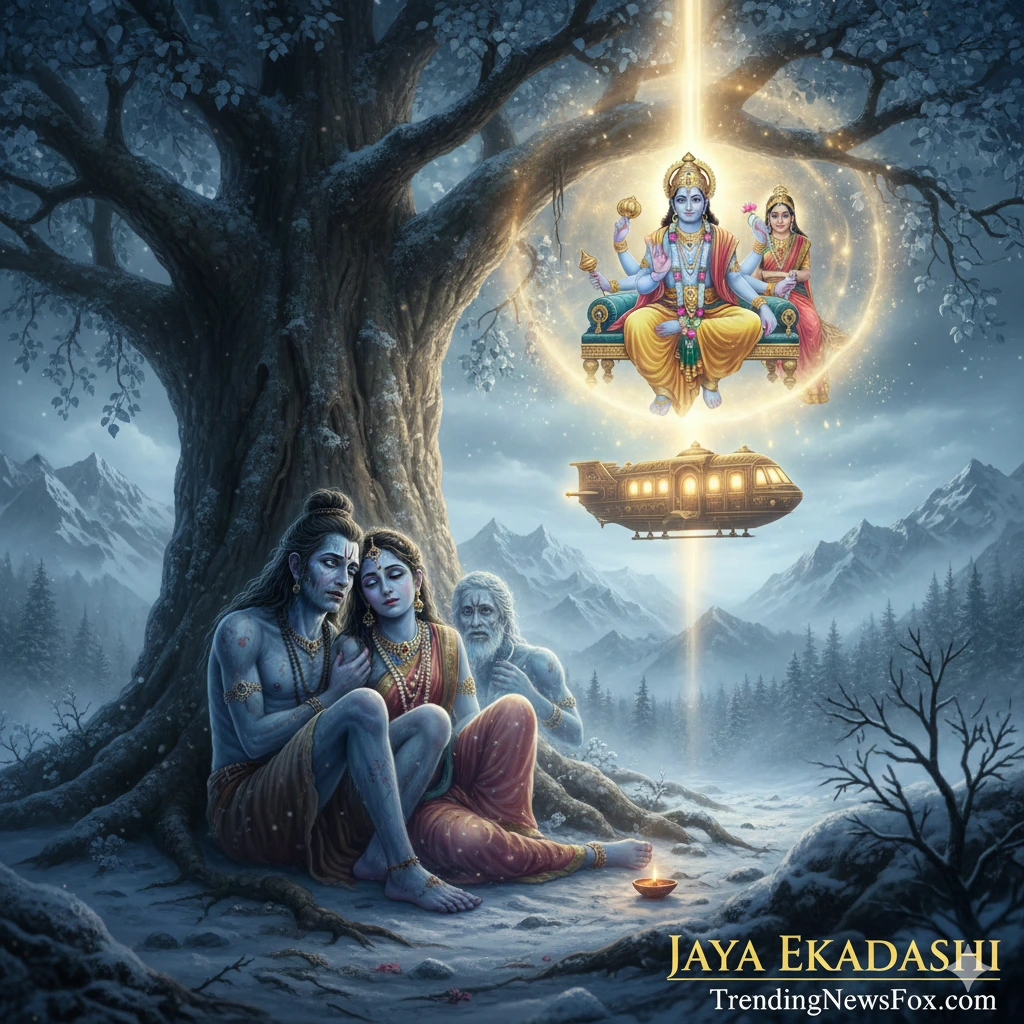
Immediately, the couple fell to Earth and landed in the harsh, freezing forests of the Himalayas. Their beautiful celestial bodies were transformed into hideous, terrifying forms. They suffered immensely from the extreme cold, hunger, and the constant mental agony of their fallen state. They could neither sleep nor find peace, living a life of utter misery.
The Miraculous Jaya Ekadashi
One day, which happened to be the Ekadashi of Magha Shukla Paksha, the couple was so distressed by their condition that they could not eat or drink anything. They spent the entire day in grief, repenting for their sins and unknowingly observing a strict Nirjala (waterless) fast.
That night was exceptionally cold. Driven by their suffering, they remained awake throughout the night, huddled under a Peepal tree, chanting the names of the Divine in their hearts.
Jaya Ekadashi Vrat Katha: Restoration and Return to Heaven
Because they had unknowingly observed the Jaya Ekadashi Vrat with full discipline—fasting and staying awake (Jagran)—Lord Vishnu was pleased. By the morning of Dwadashi (the twelfth day), the merit of the fast had washed away their sins.
Their hideous Pishacha forms vanished, and they regained their original celestial beauty. A divine aircraft descended from heaven to take them back to Indra Loka. When they arrived, King Indra was astonished to see them purified. Upon hearing that they were saved by the power of Jaya Ekadashi, Indra praised the glory of the fast and welcomed them back.
Significance of Jaya Ekadashi
The primary takeaway from the Jaya Ekadashi Katha is that this vrat has the power to free a soul from the lower realms of existence.
- Liberation from “Pret Yoni”: It is believed that those who observe this fast will never have to face the suffering of becoming a ghost or a “Pishacha” after death.
- Atonement for Sins: It helps in purifying the mind and body from past karmic burdens.
- Equivalent to Sacrifices: Lord Krishna mentioned that the merit gained from this fast is equal to performing the Agnishtoma Yagya.
- Blessings of Prosperity: Devotees are blessed with mental peace, family harmony, and spiritual growth.
Jaya Ekadashi Puja Vidhi: How to Perform the Rituals
To gain the full benefits of the Jaya Ekadashi fast, one should follow these traditional rituals:
- Sankalp (Vow): Wake up during Brahma Muhurta (early morning), take a holy bath, and take a vow to observe the fast with honesty.
- Clean the Altar: Clean your puja room and place an idol or picture of Lord Vishnu or Shri Krishna.
- Offerings: Offer yellow flowers, fruits, incense, and a ghee lamp. Yellow is the favorite color of Lord Vishnu.
- The Importance of Tulsi: Offer Tulsi leaves to the Lord. Remember, Lord Vishnu does not accept offerings (Bhog) without Tulsi. Note: Do not pluck Tulsi leaves on the day of Ekadashi; pluck them a day earlier.
- Recite the Katha: Read or listen to the Jaya Ekadashi Vrat Katha mentioned above.
- Chanting: Throughout the day, chant the mantra:“Om Namo Bhagavate Vasudevaya”
- Night Vigil (Jagran): If possible, stay awake during the night singing bhajans or reciting the Vishnu Sahasranama.
- Parana (Breaking the Fast): The fast must be broken the next day (Dwadashi) during the specific Parana time. Offer food and charity to the needy or Brahmins before breaking your fast.
Jaya Ekadashi Vrat Katha: Important Rules and Fasting Guidelines
- No Grains: Consuming rice, wheat, pulses, and grains is strictly prohibited on Ekadashi.
- Satvik Diet: If you cannot observe a full fast, you may have Phalahar (fruits, milk, and nuts).
- Behavioral Purity: Avoid anger, lying, and criticizing others. The fast is as much about mental discipline as it is about food.
- Abstain from Certain Foods: Avoid onion, garlic, and heavy spices on the day of Dashami (the day before) and Ekadashi.
Jaya Ekadashi Vrat Katha: Conclusion
Jaya Ekadashi is a divine opportunity to reset your spiritual clock. The story of Malyavan and Pushpavanti serves as a reminder that no matter how far we fall, sincere repentance and the grace of Lord Vishnu can restore our purity. By observing this fast on January 29, 2026, you can invite “Jaya” (victory) over your inner struggles and negative energies.
Also, read IND vs NZ Live Score Today: India Opt to Bowl; Arshdeep Returns
Jaya Ekadashi Vrat Katha: Frequently Asked Questions (FAQs)
1. When is Jaya Ekadashi 2026?
Jaya Ekadashi will be observed on Thursday, January 29, 2026. The Ekadashi Tithi begins at 04:35 PM on January 28 and ends at 01:55 PM on January 29. Since Hindu festivals follow the Udayatithi (sunrise timing), the fast is kept on the 29th.
2. What are the benefits of Jaya Ekadashi Vrat?
According to the Padma Purana, observing this fast helps devotees:
- Wash away past sins and karmic debts.
- Gain liberation from the fear of ghosts, spirits, or lower realms (Pret Yoni).
- Attain mental peace, prosperity, and ultimate salvation (Moksha).
- Gain merits equivalent to performing the Agnishtoma Yagya.
3. Why is rice not eaten on Jaya Ekadashi?
In Hindu mythology, it is believed that a demon took refuge in the rice plant to escape Lord Vishnu. Consuming rice on Ekadashi is said to attract negative energies and stimulate earthly desires, which hinders the spiritual purpose of the fast.
4. Can I drink water during the Jaya Ekadashi fast?
There are three ways to observe the fast:
- Nirjala: Without water or food (strict).
- Sajal: With water but no food.
- Phalahar: Consuming only fruits, milk, and nuts (recommended for beginners or those with health concerns).
5. Who should not fast on Jaya Ekadashi?
While the fast is open to all, the scriptures provide exemptions for children under 8, the elderly, pregnant women, and those with serious medical conditions. These individuals can still receive blessings by praying and avoiding grains without a strict fast.
6. What is the legend (Katha) of Jaya Ekadashi?
The story tells of a celestial singer, Malyavan, and a dancer, Pushpavati, who were cursed to become forest demons (Pishachas) after an undisciplined performance in Indra’s court. They were restored to their divine forms only after unknowingly fasting and staying awake on the day of Jaya Ekadashi.
7. When is the best time to break the Jaya Ekadashi fast?
The fast should be broken (Parana) on the Dwadashi day. For 2026, the Parana time is between 07:10 AM and 09:20 AM on January 30. It is best to break the fast after offering food or charity to the needy.
Also, read Breaking News India Today: Ajit Pawar Dies in Crash, India-EU Trade Deal Signed