
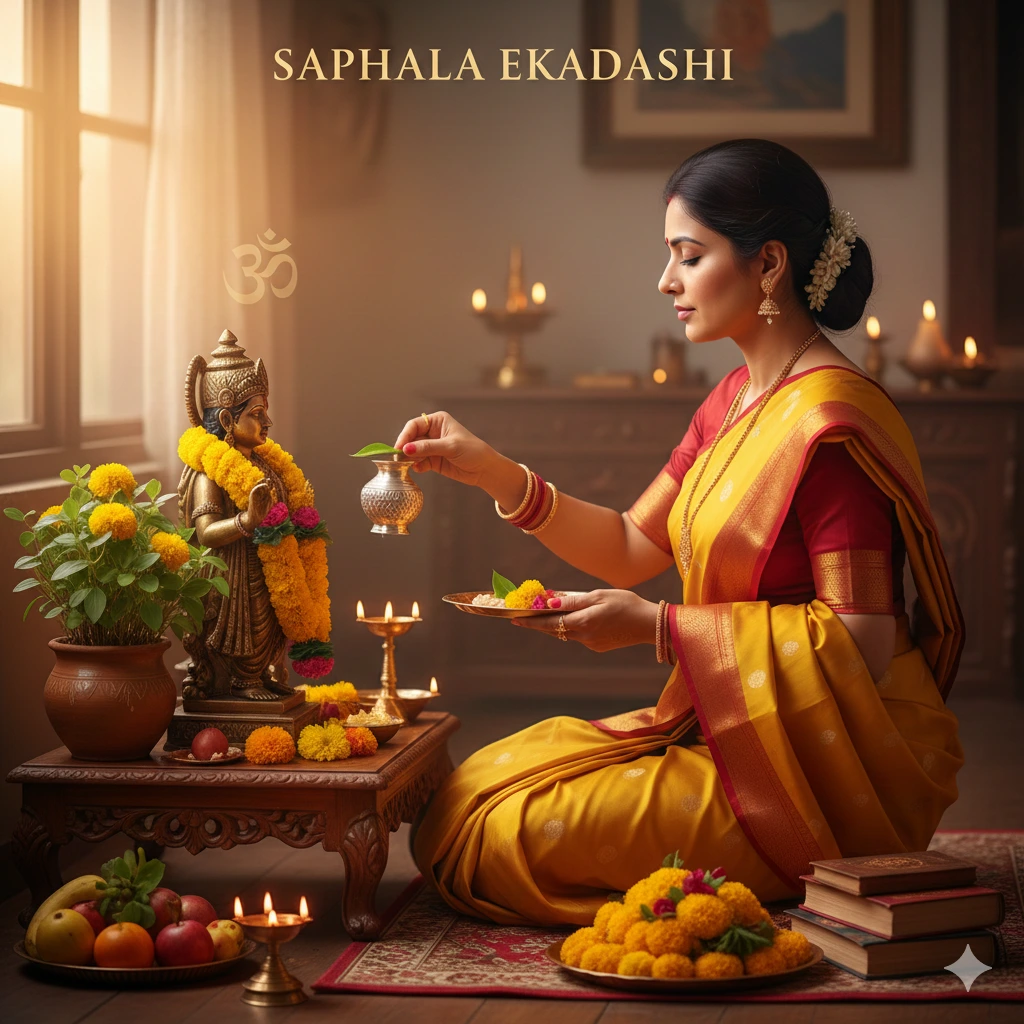
Discover the significance of Saphala Ekadashi, its rituals, and the spiritual benefits of observing this sacred day in the Hindu calendar.
🕉️ Saphala Ekadashi 2025: The Vrat of Fulfillment and Redemption
The sacred observance of Saphala Ekadashi is once again at the forefront of the Hindu calendar, marking a day dedicated to Lord Vishnu that promises “Saphala” (success and fulfillment) to its sincere devotees. Falling on the eleventh day (Ekadashi Tithi) of the Krishna Paksha (waning moon phase) in the auspicious Hindu month of Pausha, this Vrat is one of the most powerful for cleansing past sins and achieving both spiritual and material success.
🌟 Key Observance Updates for 2025
For devotees observing the fast this year, here are the critical dates and timings:
| Detail | Date/Time (IST) |
| Saphala Ekadashi Date (Main Vrat Day) | Monday, December 15, 2025 |
| Ekadashi Tithi Begins | December 14, 2025, at 06:49 PM |
| Ekadashi Tithi Ends | December 15, 2025, at 09:19 PM |
| Parana Time (Time to Break the Fast) | December 16, 2025, 07:07 AM to 09:11 AM |
📖 The Timeless Saphala Ekadashi Vrat Katha
The heart of the observance lies in listening to the Saphala Ekadashi Vrat Katha, a tale of deep redemption, as described in the ancient scriptures.
The Story of Prince Lumbaka
The Katha is narrated by Lord Krishna to King Yudhishthira, emphasizing the glory of this Ekadashi.
- The Wicked Prince: In the city of Champavati, King Mahishmana had four sons, the eldest of whom, Lumbaka, was notoriously wicked. He indulged in sinful activities, wasted his father’s wealth, and condemned Brahmins and deities.
- Exile and Suffering: Enraged by his son’s misdeeds, the King banished Lumbaka from the kingdom. Exiled to a dense forest, Lumbaka sustained himself by stealing and surviving under an ancient Peepal Tree (considered an abode of Lord Vishnu).
- Unintentional Observance: On the night before Saphala Ekadashi (the Dashami Tithi of Pausha Krishna Paksha), Lumbaka was forced to stay awake due to the harsh cold and hunger. The next day, he remained weak, unable to hunt. In the afternoon, he gathered some fallen fruits and, purely out of distress and without any clear intention of worship, placed them at the root of the Peepal tree, uttering, “May Lord Vishnu be pleased with these fruits.”
- Divine Redemption: This simple, unintentional act of fasting (abstaining from grains and meat) and the offering, born out of a moment of true hardship, satisfied Lord Vishnu. An Aakashvani (celestial announcement) declared that the merit of this Saphala Ekadashi Vrat had cleansed him of all sins and would restore his kingdom.
- A Righteous Life: Lumbaka immediately transformed, becoming a devout follower of Lord Vishnu. He was reinstated in the kingdom, where he ruled with righteousness and piety, eventually entrusting the kingdom to his son, Manojña, and dedicating the rest of his life to devotion.
Significance: The story beautifully illustrates that the Saphala Ekadashi Vrat is so potent that even an unknowingly performed observance, when followed by sincere repentance and devotion, can grant success, forgiveness, and ultimately, liberation (Moksha).
✨ Rituals and Significance: What Devotees Are Doing
Devotees across the world are preparing to observe the Vrat with utmost sincerity:
- Puja Vidhi: The worship of Lord Achyuta (a form of Lord Vishnu) is central. Rituals include taking a purifying bath early morning, taking the Sankalpa (vow) to observe the fast, and performing Abhishek (ritual bathing) of the deity.
- Key Offerings: Tulsi leaves are an absolute essential, along with yellow flowers, sandalwood paste, and Panchamrit. Offering Deep Daan (lighting lamps) near a Tulsi plant is considered highly meritorious on this day, especially since it falls in the winter month of Pausha.
- Vrat Niyam (Fasting Rules): The strict avoidance of all grains (rice, wheat, lentils) and tamasic foods (onion, garlic) is mandatory. Many observe a Phalahari Vrat (fasting on fruits and dairy) or a full fast without water (Nirjala Vrat) based on health.
- Spiritual Practice: The day is spent chanting the “Om Namo Bhagavate Vasudevaya” mantra, reciting the Vishnu Sahasranama, and listening to or reading the Saphala Ekadashi Vrat Katha. Ratri Jagran (night vigil) with bhajans and Kirtans is a cherished part of the observance.
Saphala Ekadashi stands as a powerful reminder that with sincere devotion, every human endeavor can be blessed with success and fulfillment, paving the way for spiritual growth and peace.