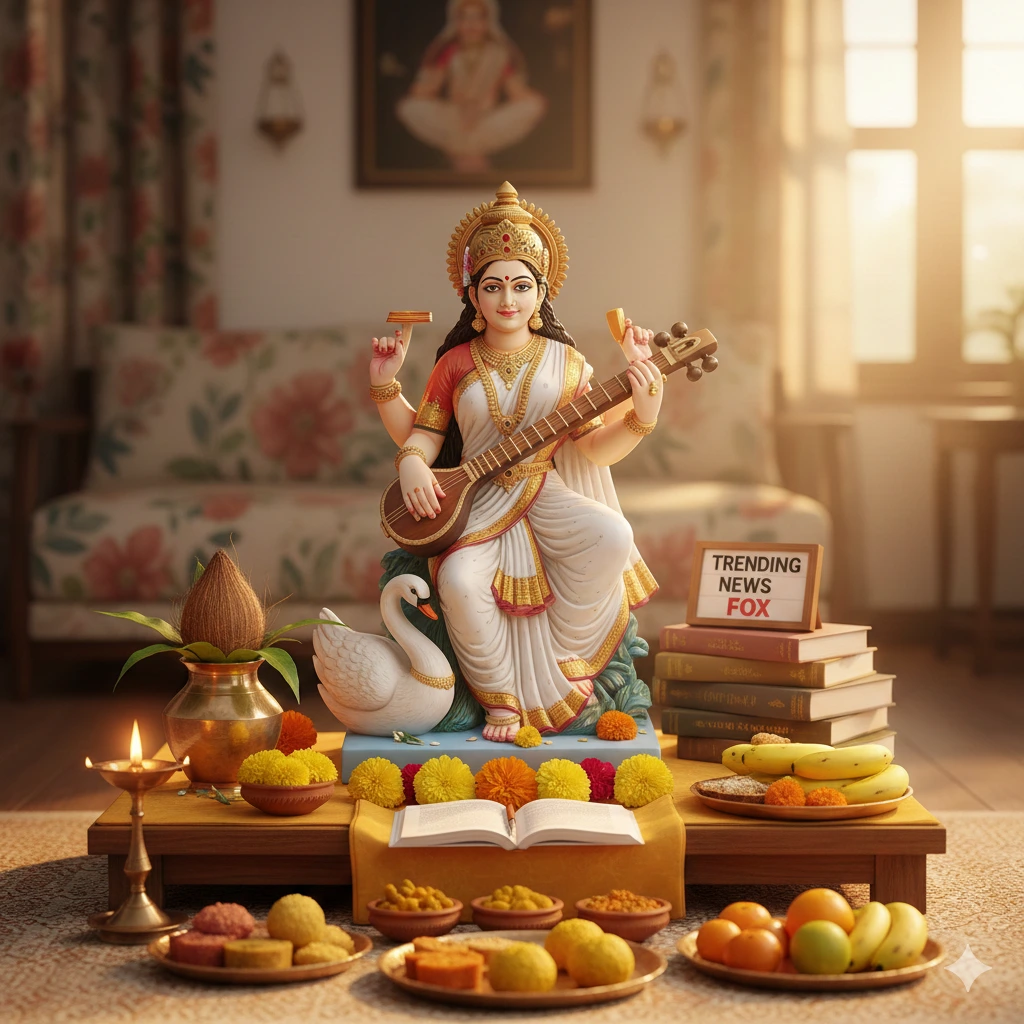
Discover the significance of Saraswati Puja, its rituals, and how to celebrate this auspicious occasion dedicated to the goddess of knowledge and arts.
By The Trending News Fox, Web News & Media Team, Thursday 8th January, 2026
The Joy of Learning: Saraswati Puja Celebrations
As the winter chill begins to fade and the golden hue of blooming mustard fields takes over the landscape, India prepares for one of its most intellectually and spiritually vibrant festivals: Saraswati Puja.
Also known as Vasant Panchami, this festival is more than just a religious ritual; it is a celebration of the human spirit’s quest for knowledge, the refinement of arts, and the joyous arrival of spring. For students, artists, and scholars, it is the most anticipated day of the year—a time to lay down their tools and seek the blessings of the Divine Mother.
In this comprehensive guide, we explore the Saraswati Puja 2026 date, the auspicious muhurat, the deep-rooted traditions, and why this festival continues to be a cornerstone of Indian culture.
Saraswati Puja 2026: Date and Auspicious Muhurat
For those planning their celebrations, marking the calendar correctly is essential. In 2026, Saraswati Puja will be celebrated on Friday, January 23.
The festival is observed on the Panchami Tithi (the fifth day) of the Shukla Paksha in the Hindu month of Magha. Because the lunar calendar shifts slightly each year, the muhurat for performing the puja is crucial for those following traditional Vedic practices.
Important Timings for Saraswati Puja 2026
| Event | Date & Time |
| Saraswati Puja Day | Friday, January 23, 2026 |
| Panchami Tithi Begins | 02:28 AM on January 23, 2026 |
| Panchami Tithi Ends | 01:46 AM on January 24, 2026 |
| Auspicious Puja Muhurat | 07:13 AM to 12:33 PM |
The most sacred window for the puja lasts approximately 5 hours and 20 minutes, making the morning hours the ideal time for offerings and prayers.
The Significance of Goddess Saraswati: The Mother of Wisdom
In the Hindu pantheon, Goddess Saraswati is the personification of Vidya (knowledge), Kala (arts), and Vani (speech). Unlike other deities who may represent material wealth or power, Saraswati embodies the wealth of the mind and soul.
The Symbolism of Her Iconography
Every element of the Goddess’s appearance carries a profound spiritual meaning:
- The White Saree: Represents purity, peace, and the transcendence of worldly desires.
- The Veena: A musical instrument that symbolizes the harmony of the mind and the vibration of the universe.
- The Book: Represents the Vedas and the eternal nature of true knowledge.
- The Swan (Hamsa): A symbol of “Viveka” or the ability to discriminate between the real and the unreal, the good and the bad.
- The White Lotus: Symbolizing supreme reality and light.
Why is Yellow the Color of Vasant Panchami?
If you walk through the streets of West Bengal, Bihar, or Uttar Pradesh during this festival, you will be met with a sea of yellow. Known as Basanti, this bright color is the signature of the season.
The significance of yellow is twofold:
- Nature’s Transition: It mirrors the mustard fields (Sarson) that reach full bloom during this period, signaling the peak of spring.
- Spiritual Vibrancy: Yellow represents energy, optimism, and the “Sattvic” quality of knowledge.
Devotees wear yellow clothes, offer yellow flowers (like marigolds and Palash), and prepare yellow-hued foods like Kesari Halwa, Boondi, and Khichuri with saffron.
Saraswati Puja: Rituals and Traditions Across India
While the core essence of the festival remains the same, the way it is celebrated varies beautifully across different regions.
1. West Bengal: The “Valentine’s Day” of the East
In Bengal, Saraswati Pujo is an emotion. Schools and colleges turn into vibrant hubs of celebration. A unique tradition here is that students refrain from reading or writing on this day. Instead, they place their textbooks and pens at the feet of the Goddess, believing that she will bless their intellect while they take a day off. It is also famously called the “Bong’s Valentine’s Day,” as young men and women dress in traditional Basanti sarees and kurtas to visit pandals together.
2. Bihar and Uttar Pradesh: Spiritual Fervor
In these states, the day is marked by grand community feasts. Families gather to perform the Saraswati Vandana. The offering of Boondi and Malpua is a staple, and the air is filled with the scent of incense and fresh spring air.
3. South India: Vidya Arambham
In the southern states, this day is often chosen for Vidya Arambham or Aksharabhyasam. This is the ceremony where young children are introduced to the world of formal education. A child is guided to write their first letters—usually in a tray of rice or sand—seeking the Goddess’s grace for a successful academic journey.
4. Punjab and Haryana: The Kite Festival
In North India, the arrival of spring is celebrated with high-flying energy. The skies are dotted with colorful kites, a tradition that signifies freedom and the soaring of the human spirit.
How to Perform Saraswati Puja at Home
You don’t need a grand pandal to seek the Goddess’s blessings. Here is a simple step-by-step Saraswati Puja Vidhi for your home:
- Purification: Wake up early, take a bath, and wear clean yellow or white clothes.
- Set the Altar: Place a clean cloth (preferably yellow) on a raised platform. Install the idol or a picture of Goddess Saraswati facing East or North.
- The “Ghat” Sthapana: Place a small pot (Kalash) with water, mango leaves, and a coconut near the idol.
- Offerings: Place your books, musical instruments, or art tools near the Goddess. Offer yellow flowers, sandalwood paste, and fruits.
- Chant the Mantras: Recite the Saraswati Vandana to invoke her presence. Ya Kundendu Tusharahara Dhavala, Ya Shubhra Vastra Avrita Ya Veena Vara Danda Manditakara, Ya Shveta Padmasana
- Aarti and Prasad: Perform the Aarti with a diya and distribute the Bhog (food offering) to your family.
Saraswati Puja: The Educational and Artistic Connection
In an era dominated by digital distractions, Saraswati Puja serves as a vital reminder of the sanctity of learning. It is a day to:
- Renew Concentration: Students pray for the “Siddha” (achievement) of their studies before the upcoming exam season.
- Seek Creative Inspiration: Musicians and artists seek the “divine spark” to create works that reflect truth and beauty.
- Honoring Teachers: It is a traditional day to show gratitude to gurus and mentors who provide the light of knowledge.
Trending News Fox: Why We Celebrate
At Trending News Fox, we believe that culture is the thread that binds us. Saraswati Puja is not just a date on the calendar; it is a celebration of the “Enlightened Mind.” As we transition from the darkness of winter to the light of spring, let us embrace the curiosity and creativity that Goddess Saraswati represents.
Whether you are a student preparing for boards, an artist looking for a new masterpiece, or simply a lover of Indian traditions, Saraswati Puja 2026 is your opportunity for a fresh start.
Frequently Asked Questions (FAQs)
Q1. Can we study on Saraswati Puja?
In many traditions, especially in Eastern India, students avoid reading or writing on this day as a mark of respect to the Goddess, who is said to be “resting” in the books.
Q2. What should I offer as Bhog?
Yellow-colored foods are preferred. Khichdi with vegetables, Labra (mixed veg), Kesari Bhaat, and sweets like Laddu or Soan Papdi are popular choices.
Q3. Is Saraswati Puja and Vasant Panchami the same?
Yes. Vasant Panchami marks the fifth day of spring, and the primary deity worshipped on this day is Goddess Saraswati, making the names interchangeable in most contexts.
Q4. What is the significance of the “Palash” flower?
The Palash (Flame of the Forest) is considered the Goddess’s favorite flower. Its vibrant orange-red color symbolizes the fire of knowledge.
Also, read World Hindi Day: A Celebration of Language and Culture
saibal.bose.how36@gmail.com. (2026ak, January 23). How is Saraswati Puja Celebrated in Different Regions? Trending News Fox. https://trendingnewsfox.com/how-is-saraswati-puja-celebrated-in-different-regions/