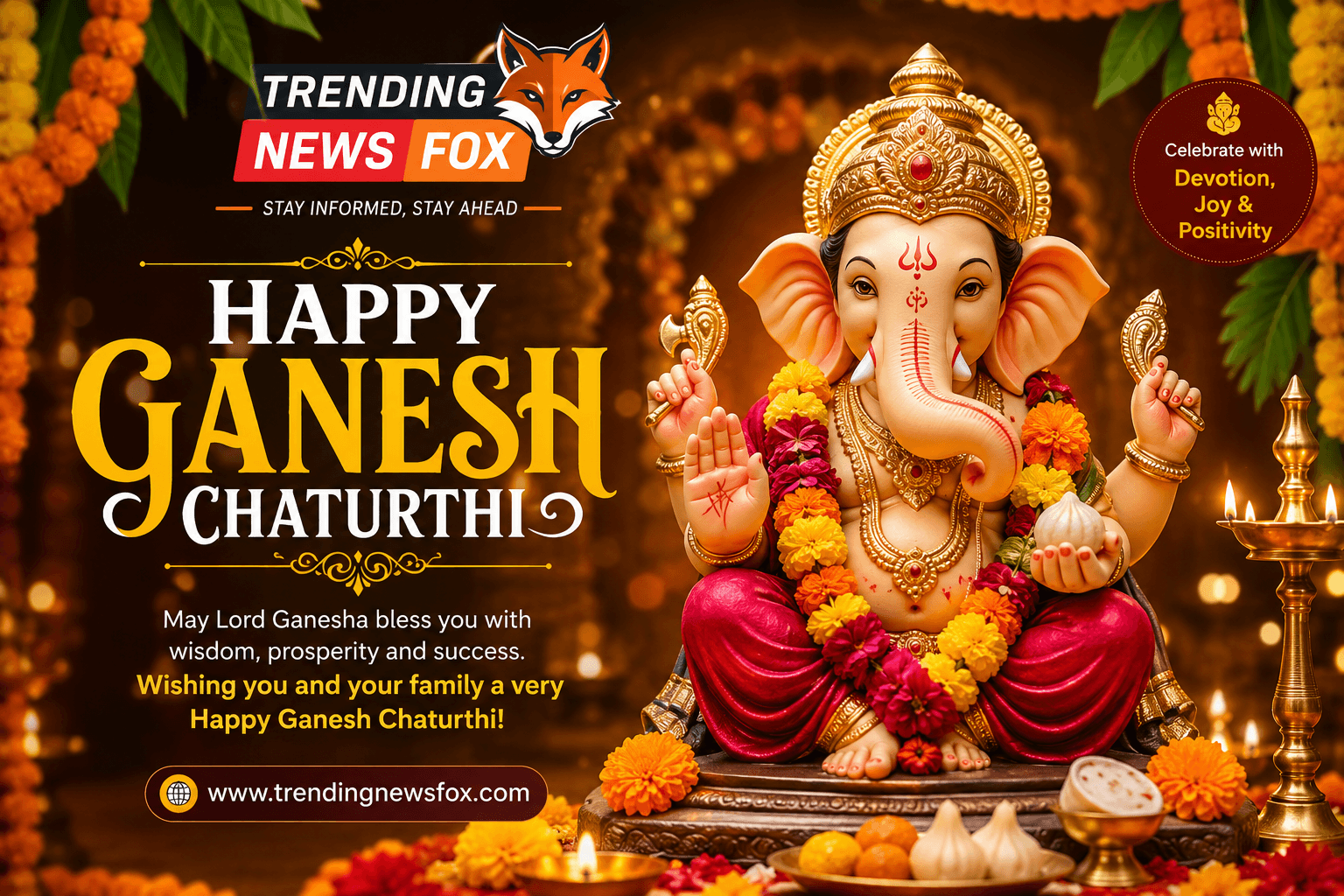
Ganesh Chaturthi 2026: Check the festival date, Puja Muhurat, Ganesh Puja rituals, significance, wishes and celebrations across India.
Ganesh Chaturthi 2026: Complete Date, Madhyahna Muhurat, Puja Vidhi & Eco-Friendly Celebration Guide
Trending News Fox brings you an exhaustive guide to Ganesh Chaturthi 2026 (Vinayaka Chaturthi). Below, find key astronomical dates, exact shubh muhurat timings, authentic Vedic rituals, step-by-step puja vidhi, and sustainable celebration practices to welcome Lord Ganesha into your home.

Key Dates & Shubh Muhurat for Ganesh Chaturthi 2026
Ganesh Chaturthi is celebrated on the Chaturthi Tithi of Shukla Paksha in the Hindu month of Bhadrapada.The 10-day grand festival (Ganeshotsav) culminates on Anant Chaturdashi with Ganesh Visarjan.
- Ganesh Chaturthi Date:Monday, September 14, 2026
- Chaturthi Tithi Begins:September 14, 2026, at 07:06 AM IST
- Chaturthi Tithi Ends:September 15, 2026, at 07:44 AM IST
- Madhyahna Ganesha Puja Muhurat:11:02 AM to 01:31 PM (Duration: 2 Hours 29 Minutes)
- Moon Sighting Avoidance Window (Mithya Dosh):09:01 AM to 08:09 PM
- Ganesh Visarjan (Anant Chaturdashi):Friday, September 25, 2026
Important Note on Chandradarshan: Viewing the moon on Chaturthi is believed to cause Mithya Dosh (false accusations). Avoid looking directly at the moon between 09:01 AM and 08:09 PM on September 14, 2026.
Significance & Mythological Origins of Ganeshotsav
Lord Ganesha—revered as Vighnaharta (remover of obstacles) and Riddhidata (bestower of prosperity)—is worshipped before initiating any new venture, ritual, or business.
               +---------------------------------------+
               |         Parvati Creates Ganesha       |
               |       (Formed from turmeric paste)     |
               +---------------------------------------+
                                   |
                                   v
               +---------------------------------------+
               |        Confrontation with Shiva       |
               |     (Defending Parvati's chamber)     |
               +---------------------------------------+
                                   |
                                   v
               +---------------------------------------+
               |     Restoration with Elephant Head    |
               |   (Granted status as Pratham Pujya)   |
               +---------------------------------------+
The Divine Origin Story
According to the Shiva Purana, Goddess Parvati created Ganesha from turmeric paste to guard her privacy while she bathed. When Lord Shiva returned and was denied entry, an intense battle ensued, culminating in Shiva severing the boy’s head.
Upon realizing Parvati’s grief, Shiva dispatched his Ganas to fetch the head of the first living creature facing north.They returned with an elephant head, which Shiva attached to the boy’s body, bringing him back to life. Shiva designated him as Ganapati (leader of the Ganas) and blessed him to be worshipped first (Pratham Pujya) before all deities.
Symbolic Attributes of Lord Ganesha
| Feature | Symbolism | Spiritual & Practical Meaning |
| Elephant Head | Wisdom & Strength | High intellect, supreme consciousness, and resilience. |
| Large Ears | Deep Listening | Absorbing knowledge patiently; listening more than speaking. |
| Trunk | Adaptability | Flexibility to manage both delicate tasks and massive obstacles. |
| Large Belly | Acceptance | Digesting and containing both positive and negative life experiences. |
| Single Tusk (Ekadanta) | Focus & Sacrifice | Single-minded dedication (used his broken tusk to scribe the Mahabharata). |
| Mouse (Mooshak) | Control over Desire | Mastering ego and unbridled worldly cravings. |
Step-by-Step Puja Vidhi & Rituals for Home Sthapana
Performing Ganesh Sthapana during the Madhyahna Muhurat (11:02 AM to 01:31 PM) aligns the worship with peak sun energy for planetary harmony.
Step 1: Puja Samagri Checklist
Before starting, organize the following traditional items:
- Clay/Eco-friendly Ganesha Idol
- Wooden platform (Chowki) and clean red/yellow satin cloth
- Copper Kalash, water, 5 mango leaves, and 1 whole coconut
- Durva grass (21 blades), fresh red hibiscus flowers, and Bilva leaves
- Sandalwood paste (Chandan), Kumkum, Haldi, and raw unbroken rice (Akshata)
- Pure Ghee diya, camphor, incense sticks (Agarbatti), and bell
- Offerings (Bhog): 21 Modaks, laddus, bananas, panchamrit, betel leaves, and supari
Step 2: The Core Ritual Flow
1.Purification & Space Preparation:Perform before 11:00 AM on September 14.
Clean the entire home, take a bath, and put on clean red or yellow traditional attire. Set up the wooden chowki facing North or East, drape it with a red cloth, and decorate the altar with rangoli and flowers.
2.Kalash & Idol Installation:During Madhyahna Muhurat (11:02 AM – 01:31 PM).
Place the copper Kalash filled with water, mango leaves, and a coconut to the right of the platform. Carefully seat the Ganesha idol on the center of the platform over a bed of uncooked rice grains.
3.Prana Pratishtha Ritual:Invoking Divine Life Energy.
Chant the Prana Pratishtha mantra while touching the idol with a blade of Durva grass dipped in holy water to invoke divine consciousness into the deity:
$$\text{Om Asunīte Punarasmāsu Cakṣuḥ Punaḥ Prāṇam-Iha No Dehi Bhogam}$$
Recite: “Om Gam Ganapataye Namah, Prana Pratishtha Siddhirastu” 108 times.
4.Shodashopachara Worship (16 Offerings):Sequential Vedic Offerings.
Offer Padya (water for feet), Arghya (water for hands), Panchamrit Snan (five-fold bath), Vastra (garments), Janeu (sacred thread), Chandan, Kumkum, and Akshata. Decorate with red hibiscus and offer 21 blades of Durva grass.
5.Nivedyam & Ganesha Aarti:Final Consecration.
Present 21 fresh Modaks alongside fruits, dry fruits, and betel leaves. Light the ghee diya and camphor. Ring the bell continuously while reciting the Shri Ganesh Aarti (“Jai Ganesh Jai Ganesh Deva”) with your family.
Daily 10-Day Festival Schedule & Ritual Themes
| Festival Day | Date | Spiritual Theme | Recommended Practice & Offering |
| Day 1 | Sep 14 (Mon) | Sthapana & New Beginnings | Prana Pratishtha & Modak Naivedyam |
| Day 2 | Sep 15 (Tue) | Health & Courage | Offer red flowers; chant Ganesha Ashtottara |
| Day 3 | Sep 16 (Wed) | Wisdom & Clarity | Recite Sankata Nashanam Ganesha Stotra |
| Day 4 | Sep 17 (Thu) | Abundance & Wealth | Offer 21 Modaks; pray for financial stability |
| Day 5 | Sep 18 (Fri) | Family Harmony | Offer jasmine/rose flowers; host family aarti |
| Day 6 | Sep 19 (Sat) | Karma Purification | Perform Maha Ganapati Mantra Japa (108 times) |
| Day 7 | Sep 20 (Sun) | Creativity & Growth | Offer yellow flowers & durva; light evening ghee diyas |
| Day 8 | Sep 21 (Mon) | Divine Protection | Recite Ganapati Atharvashirsha |
| Day 9 | Sep 22 (Tue) | Fulfillment of Desires | Special chapan bhog; express personal vows |
| Day 10 | Sep 25 (Fri) | Visarjan & Gratitude | Perform Uttarpuja & immersion ritual |
Eco-Friendly Celebrations & Environmental Responsibility
Over the past decade, public and household celebrations have shifted toward eco-friendly Ganeshotsav practices to protect natural water bodies from chemical pollutants and non-biodegradable plaster of Paris (PoP).
               +---------------------------------------+
               |        Clay / Eco-Friendly Idol       |
               +---------------------------------------+
                                   |
                                   v
               +---------------------------------------+
               |        Home Bucket / Tank Visarjan    |
               +---------------------------------------+
                                   |
                                   v
               +---------------------------------------+
               |    Dissolved Soil Returned to Earth   |
               |      (Used to nourish house plants)   |
               +---------------------------------------+
Ganesh Chaturthi 2026: Essential Eco-Friendly Steps
- Clay (Shadalu/M मिट्टी) Idols: Opt for idols crafted from natural river clay painted with organic food colors or turmeric. Avoid synthetic metallic paints and PoP idols.
- Plant Ganesha: Use idols embedded with seeds (tulsi, tomato, or marigold). Upon immersion in a flowerpot at home, the clay dissolves into soil, growing into a new plant.
- Biodegradable Mandap Decor:Replace plastic flowers and thermocol backdrops with fresh marigold garlands, mango leaves, banana bark, and natural fabrics (cotton/jute).
- Home Immersion (Bucket Visarjan): Immersion does not require large lakes or ocean waters. Immerse your clay idol inside a large container of water at home. Within hours, the clay dissolves completely; use the water to irrigate your garden.
Ganesh Chaturthi 2026: The Meaning of Ganesh Visarjan
On Anant Chaturdashi (September 25, 2026), devotees perform Uttarpuja—a formal concluding worship—before carrying Lord Ganesha for immersion while chanting “Ganapati Bappa Morya, Pudhchya Varshi Lavkar Ya” (“O Lord Ganesha, come back early next year!”).
Visarjan serves as a profound spiritual reminder of Samsara (the cycle of creation and dissolution). Ganesha is crafted from the earth (clay), temporarily invoked with divine consciousness, and returned to the water element, symbolizing that physical forms are temporary while the divine supreme consciousness remains eternal.
Stay tuned to Trending News Fox for live city-by-city shubh muhurat updates, recipe ideas for sugar-free festive modaks, and real-time coverage of Ganeshotsav 2026!