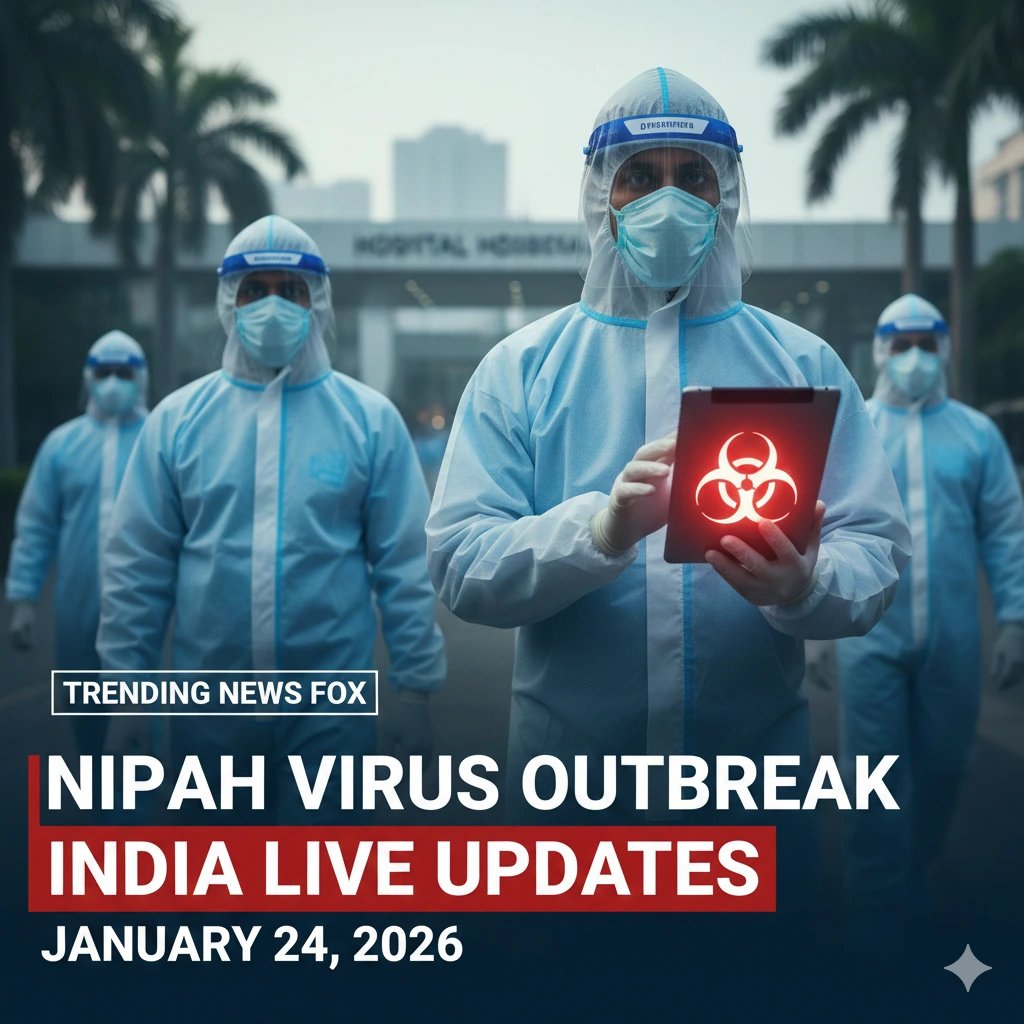
Stay informed on the 2026 Nipah virus outbreak India. Learn the key symptoms of NiV, how it spreads from fruit bats, and the latest containment measures in West Bengal and Kolkata.
By The Trending News Fox, Web News & Media Team, Saturday 24th January, 2026
Nipah Virus Outbreak India: Latest Updates, Symptoms, and Containment Measures (January 2026)
The Indian health ministry is currently on high alert following a fresh outbreak of the deadly Nipah Virus (NiV) in West Bengal. As of January 24, 2026, authorities are racing to contain a cluster of infections centered near the state capital, Kolkata. With a high case fatality rate and no existing vaccine, the situation has sparked national concern and international monitoring.
In this comprehensive report, we break down the latest updates, the current number of cases, symptoms to watch for, and the government’s response to prevent a wider epidemic.
Nipah Virus Outbreak India Latest Updates: West Bengal Under High Alert
The 2026 Nipah outbreak was first identified in mid-January when two healthcare workers in Barasat, North 24 Parganas, tested positive for the virus. Since then, the cluster has expanded.
Nipah Virus Outbreak India: Current Case Count and Locations
As of the latest reports on January 23, 2026:
- Confirmed Cases: 5 individuals have tested positive.
- Casualties: While several patients remain in critical condition, intensive efforts are being made to prevent fatalities.
- Geographic Focus: The outbreak is concentrated in West Bengal, specifically in Barasat (North 24 Parganas) and surrounding areas like Nadia and Purba Bardhaman.
- Quarantine Status: Nearly 100 individuals have been placed under strict home quarantine. These are high-risk contacts, including family members and colleagues of the infected.
The latest three cases involve a doctor, a nurse, and a health staff member, all linked to the same private hospital where the initial cases were detected. This suggests a potential nosocomial (hospital-acquired) transmission route, which is a major concern for frontline workers.
What is the Nipah Virus?
Nipah virus is a zoonotic pathogen, meaning it spreads from animals to humans. It is classified by the World Health Organization (WHO) as a priority pathogen due to its potential to cause a public health emergency.
Nipah Virus Outbreak India: How it Spreads
- Fruit Bats (Pteropus): The natural reservoir of the virus. Transmission often occurs when humans consume fruits or raw date palm sap contaminated by bat saliva or urine.
- Animal-to-Human: Contact with infected pigs or other domestic animals.
- Human-to-Human: Direct contact with the bodily fluids (saliva, blood, or urine) of an infected person. This is currently the primary focus of containment in West Bengal.
Nipah Virus Outbreak India: Symptoms to Watch Out For
Nipah virus symptoms can range from asymptomatic to severe neurological distress. Early detection is vital for survival.
| Stage | Common Symptoms |
| Initial (3-14 days) | Fever, Headache, Myalgia (muscle pain), Vomiting, and Sore Throat. |
| Respiratory Phase | Acute respiratory infection, including atypical pneumonia and severe breathing distress. |
| Neurological Phase | Dizziness, drowsiness, altered consciousness, and signs of encephalitis (inflammation of the brain). |
| Critical Stage | Seizures, coma, and personality changes. |
Note: The incubation period—the time from infection to the onset of symptoms—usually ranges from 4 to 14 days, though it can extend up to 45 days in rare cases.
Nipah Virus Outbreak India: Government and Medical Response
The Union Health Ministry and the West Bengal State Government have activated a multi-layered response strategy.
1. National Joint Outbreak Response Team (NJORT)
A specialized team comprising experts from the National Institute of Virology (NIV), Pune, and AIIMS Kalyani has been deployed to Kolkata. They are providing technical and logistical support to local authorities to manage the isolation wards and laboratory testing.
2. Specialized Treatment Centers
Patients confirmed with the virus have been moved to the Infectious Diseases Hospital in Beleghata, Kolkata. This facility is equipped with specialized isolation units to prevent further transmission.
3. Contact Tracing and Surveillance
Health workers are conducting door-to-door surveillance in the affected districts of North 24 Parganas and Nadia. Over 120 secondary contacts are being monitored daily for any signs of fever or respiratory illness.
4. Public Helplines
The West Bengal government has launched dedicated helplines for citizens to report suspected cases or seek guidance:
- Helpline 1: 033 2333-0180
- Helpline 2: 9874708858
Is There a Vaccine or Cure?
Currently, there is no licensed vaccine or specific antiviral treatment for Nipah virus. Management of the disease is limited to intensive supportive care.
However, there is a glimmer of hope on the research front. The University of Oxford launched Phase II trials for a Nipah vaccine in late 2025. In India, experimental monoclonal antibody therapies—developed through an Australian collaboration—are sometimes used under “compassionate use” protocols, though their efficacy in large outbreaks is still being studied.
Prevention: How to Stay Safe
During an outbreak, public awareness is the best defense. Health authorities recommend the following:
- Avoid Raw Date Palm Sap: During winter months, raw sap is a delicacy in West Bengal, but it is also a high-risk source of infection from bats.
- Wash Fruits Thoroughly: Do not eat fruits that show signs of bird or bat bites.
- Practice Hand Hygiene: Frequent handwashing with soap and water is essential, especially after visiting hospitals or caring for the sick.
- Wear PPE: If you are a healthcare worker or caregiver, ensure you use masks, gloves, and protective gear when handling suspected cases.
Historical Context: Nipah in India
India has a history of battling Nipah. West Bengal previously recorded outbreaks in 2001 (Siliguri) and 2007 (Nadia). More recently, the state of Kerala has seen multiple sporadic outbreaks (2018, 2021, 2023, and 2025), which helped Indian scientists develop some of the fastest contact-tracing protocols in the world.
The current 2026 outbreak is a reminder of the persistent threat posed by zoonotic diseases in regions where human habitats overlap with wildlife.
Nipah Virus Outbreak India: Summary for Trending News Fox Readers
The Nipah virus outbreak in West Bengal is a developing situation. While the number of confirmed cases remains low (5), the high criticality of the patients and the involvement of medical staff have put the entire region on high alert.
Trending News Fox will continue to monitor updates from the Ministry of Health and local authorities. If you reside in West Bengal or neighboring states, follow local health advisories and avoid unpasteurized fruit juices or partially eaten fruits.
To help combat panic and misinformation on Trending News Fox, here is a clear “Myth vs. Fact” section. This format is highly shareable on social media and helps establish our site as a credible source of truth.
Nipah Virus: Myth vs. Fact
In the wake of the West Bengal outbreak, several rumors have begun circulating online. Here are the facts backed by the World Health Organization (WHO) and the Indian Ministry of Health.
Myth 1: Nipah is as contagious as COVID-19.
- Fact: No. While COVID-19 is highly airborne and spreads rapidly through casual contact, Nipah virus is much harder to catch. Transmission typically requires close, direct contact with the bodily fluids (saliva, blood, or urine) of an infected person or animal. It does not stay suspended in the air over long distances like some respiratory viruses.
Myth 2: You can get Nipah just by being near a bat.
- Fact: Simply seeing a bat in your neighborhood is not a cause for panic. The risk comes from ingesting food (like raw date palm sap or fallen fruits) that has been contaminated by bat secretions, or by handling a sick/dead bat. Bats are essential to our ecosystem; the key is avoiding contact, not eliminating the animals.
Myth 3: Eating any fruit in India right now is dangerous.
- Fact: Most fruits sold in markets are safe. The risk is specific to fruits with visible bite marks or those picked up from the ground in affected areas. To be safe, always wash fruits thoroughly under running water and peel them before consumption. Avoiding raw, open-air date palm sap (Tari) during an outbreak is highly recommended.
Myth 4: Antibiotics can cure a Nipah infection.
- Fact: Antibiotics do not work against viruses. They are only effective against bacterial infections. Since Nipah is a viral pathogen, antibiotics will not cure it. Treatment is focused on “supportive care,” which means managing the patient’s symptoms while their body fights the virus.
Myth 5: Everyone who gets Nipah virus dies.
- Fact: While Nipah has a high case fatality rate (estimated between 40% to 75%), it is not 100% fatal. Early hospitalization and intensive supportive care significantly improve the chances of survival. Many survivors go on to recover fully, though some may experience long-term neurological side effects.
Myth 6: Only people in West Bengal need to worry.
- Fact: While the current cluster is in West Bengal, healthcare providers across India—especially in neighboring states like Odisha, Bihar, and Jharkhand—are on high alert. Vigilance is necessary for anyone who has recently traveled to the affected districts and shows symptoms of fever or respiratory distress.
To help our readers stay informed and safe during this developing situation in West Bengal, here is a comprehensive, SEO-optimized FAQ section. This is designed to capture “People Also Ask” (PAA) traffic on Google.
Nipah Virus India Outbreak: Frequently Asked Questions (FAQ)
1. What is the latest update on the Nipah virus in India (January 2026)?
As of January 24, 2026, a Nipah virus (NiV) outbreak has been confirmed in West Bengal. Health authorities have confirmed 5 cases so far, centered around a private hospital in Barasat (North 24 Parganas). The infected include healthcare workers (a doctor and nurses). Nearly 100 people are currently under observation in home quarantine.
2. Where exactly is the 2026 Nipah outbreak located?
The primary cluster is in the North 24 Parganas district near Kolkata. However, surveillance and contact tracing have been extended to Nadia and Purba Bardhaman districts due to the travel history of the infected individuals.
3. How does the Nipah virus spread to humans?
Nipah is a zoonotic virus, meaning it spreads from animals to humans. The primary routes are:
- Fruit Bats: Consuming fruits or raw date palm sap contaminated by the saliva or urine of infected fruit bats (Pteropus).
- Infected Animals: Close contact with infected pigs, goats, or horses.
- Human-to-Human: Direct contact with the bodily fluids (respiratory droplets, blood, or urine) of an infected person, often occurring in hospital or caregiving settings.
4. What are the early symptoms of Nipah virus?
Symptoms usually appear within 4 to 14 days of exposure. Early signs often mimic the flu:
- High fever and persistent headache.
- Muscle pain (myalgia) and sore throat.
- Vomiting and dizziness.
- Respiratory issues like a dry cough or shortness of breath.
5. Can Nipah virus cause brain damage?
Yes. In severe cases, the virus leads to encephalitis (inflammation of the brain). This can cause disorientation, drowsiness, mental confusion, seizures, and can progress to a coma within 24 to 48 hours.
6. Is there a vaccine or cure for Nipah virus in 2026?
Currently, there is no licensed vaccine or specific antiviral cure for Nipah virus. Treatment is primarily supportive care, focusing on managing symptoms, maintaining hydration, and treating respiratory or neurological complications as they arise.
7. How can I protect myself from infection?
Public health experts recommend these safety measures:
- Avoid raw date palm sap: This is a major source of transmission in West Bengal and Bangladesh.
- Wash and peel fruits: Do not eat fruits that have bite marks or appear to have been fallen on the ground.
- Practice hand hygiene: Wash hands frequently with soap and water, especially after visiting a hospital.
- Use PPE: If you are a caregiver, wear masks and gloves and avoid contact with the patient’s fluids.
8. Who should I contact if I show symptoms?
If you have a fever and have recently been in the affected districts of West Bengal, isolate yourself immediately.
- West Bengal Health Helpline: 033 2333-0180
- Emergency Services: Dial 102 for an ambulance equipped for infectious diseases.
saibal.bose.how36@gmail.com. (2026an, January 24). Nipah virus outbreak India live updates: 5 cases confirmed in West Bengal. Trending News Fox. https://trendingnewsfox.com/nipah-virus-outbreak-india-live-updates-wb-5-cases-confirmed/