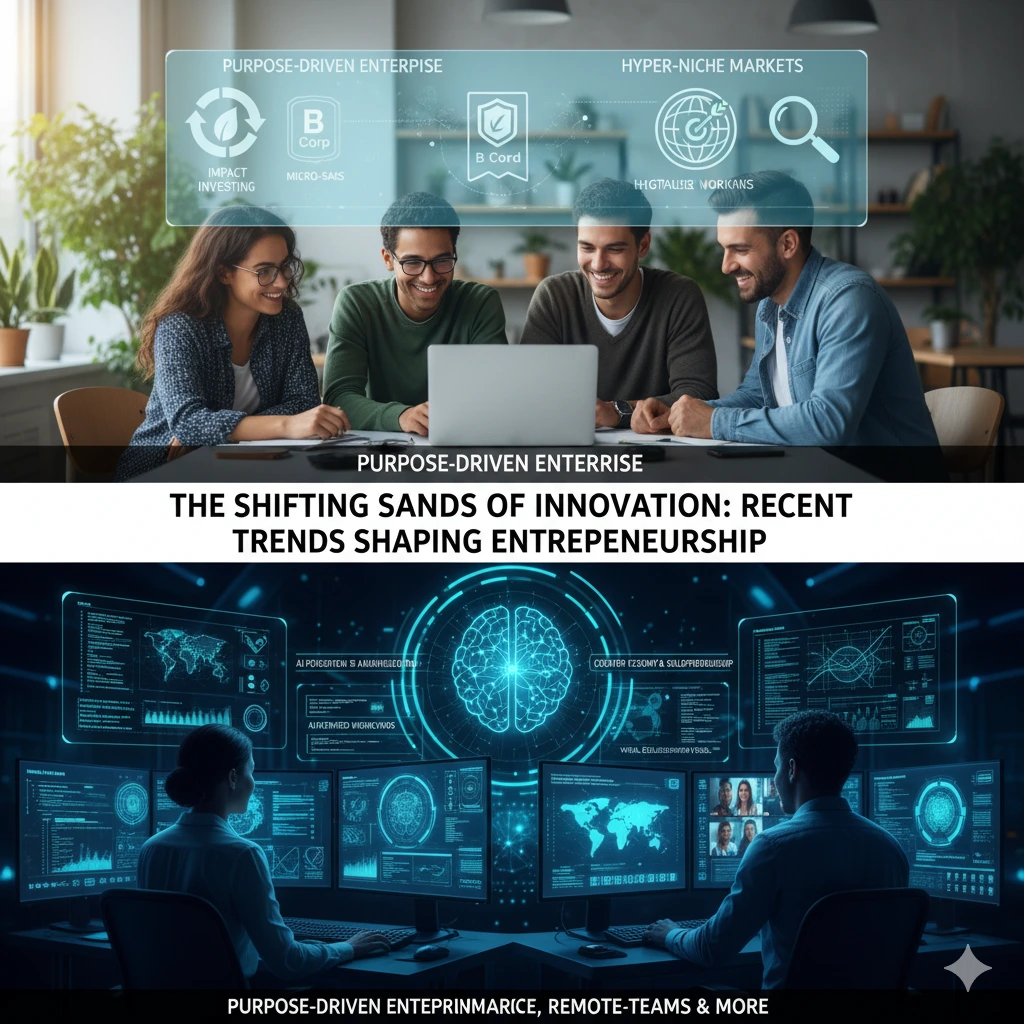
Planning your next startup? Discover the Recent Trends in Entrepreneurship shaping modern business: AI integration, niche markets, and remote-first models.
The Shifting Sands of Innovation: Recent Trends in Entrepreneurship shaping modern business
The entrepreneurial landscape is in a constant state of flux, rapidly adapting to technological advancements, societal shifts, and evolving consumer behaviors. While the core spirit of innovation and risk-taking remains, how and where entrepreneurs are building their ventures has seen significant shifts in recent years. Understanding these trends is crucial for aspiring founders and investors alike.
1. The Rise of the “Purpose-Driven” Enterprise: Recent Trends in Entrepreneurship
Beyond profit margins, a growing number of entrepreneurs are building businesses with a strong social or environmental mission at their core. This “purpose-driven” trend reflects a broader consumer demand for ethical practices and sustainable solutions.
Also, read Current Affairs Today: Global Outage, India’s GDP Boom
- Impact Investing: Investors are increasingly looking for ventures that offer both financial returns and positive social or environmental impact.
- Certified B Corps: More startups are pursuing certifications like B Corp status, signaling their commitment to balancing profit and purpose.
- Circular Economy Models: Businesses focusing on reducing waste, extending product lifecycles, and sustainable sourcing are gaining traction.
This isn’t just a feel-good movement; it’s a strategic differentiator that resonates with conscious consumers and a values-driven workforce.
2. Hyper-Niche Markets and Micro-SaaS Dominance: Recent Trends in Entrepreneurship
The days of broadly appealing to “everyone” are fading. Entrepreneurs are finding immense success by diving deep into hyper-niche markets, catering to highly specific needs and pain points.
- Micro-SaaS: Software-as-a-Service (SaaS) businesses built to solve a very particular problem for a very specific type of user (e.g., project management for independent filmmakers, accounting tools for pet groomers) are thriving. These often require less initial capital and can scale efficiently.
- Specialized E-commerce: Instead of general marketplaces, online stores focusing on unique products for niche hobbies, specific dietary needs, or distinct cultural aesthetics are capturing loyal customer bases.
The internet’s ability to connect fragmented audiences globally makes these niche ventures viable and often highly profitable.
3. The Creator Economy and Solopreneurship Boom: Recent Trends in Entrepreneurship
The explosion of social media platforms, content creation tools, and direct monetization options has fueled a new wave of entrepreneurship: the creator economy.
- Influencers as Founders: Individuals with significant online followings are leveraging their audience to launch their own brands, products, and services, effectively bypassing traditional gatekeepers.
- Digital Products & Services: Courses, e-books, templates, and subscription-based content are becoming primary revenue streams for individuals who are experts in their field.
- Tools for Solopreneurs: The market is burgeoning with tools designed to help solo founders manage everything from marketing and sales to operations and finance, making it easier than ever to run a business without a large team.
This trend empowers individuals to monetize their expertise, passions, and unique voices directly.
4. AI Integration and Automation as Core Pillars: Recent Trends in Entrepreneurship
Artificial intelligence and automation are no longer just buzzwords; they are fundamental tools being integrated into nearly every aspect of new ventures.
- AI-Powered Personalization: Startups are using AI to offer highly personalized customer experiences, from product recommendations to tailored content.
- Automated Workflows: Automation is streamlining operations, reducing manual tasks in customer service, marketing, data analysis, and even product development.
- AI as a Product: Many new businesses are building AI directly into their core product offering, solving problems with intelligent algorithms (e.g., AI-driven legal tech, healthcare diagnostics).
Entrepreneurs who effectively leverage AI and automation gain significant competitive advantages in efficiency, scalability, and innovation.
5. The Flexible Workforce & Remote-First Models: Recent Trends in Entrepreneurship
The pandemic accelerated a shift towards remote work, and entrepreneurs are building their companies with this flexibility baked in from day one.
- Distributed Teams: Founders are tapping into a global talent pool, hiring the best individuals regardless of their geographic location.
- Gig Economy Integration: Many startups are built on a hybrid model, utilizing a core remote team supplemented by skilled freelancers and gig workers for specific projects.
- Virtual Collaboration Tools: The reliance on sophisticated virtual collaboration and project management tools is paramount for managing these geographically dispersed teams effectively.
This trend offers cost savings, access to diverse talent, and increased work-life balance for employees, making startups more agile and attractive.
The entrepreneurial journey remains challenging, but these evolving trends provide exciting new avenues for innovation, impact, and success. As technology continues its relentless march forward, the definition of entrepreneurship will undoubtedly continue to expand and adapt, fostering a dynamic future of business creation.