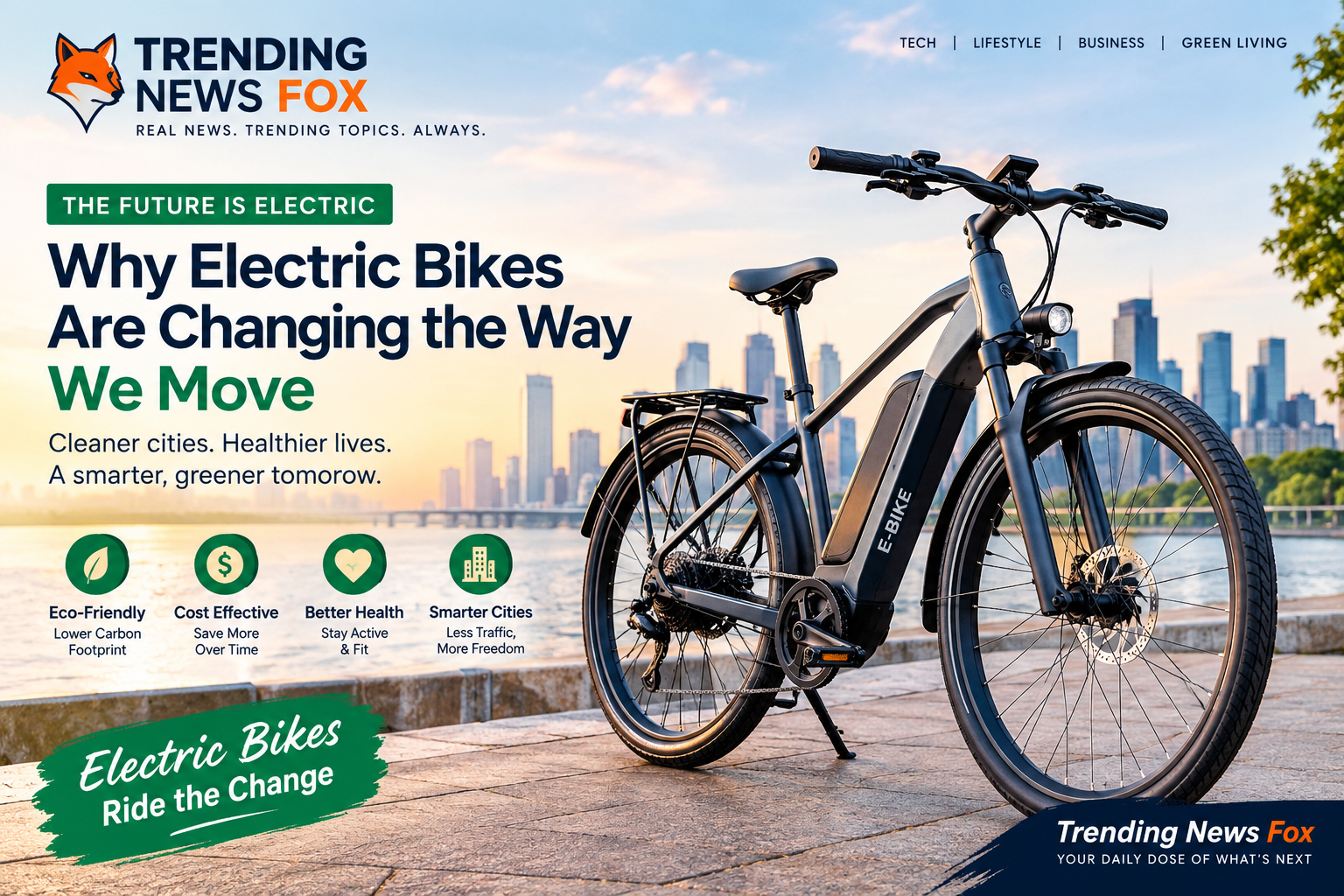
Electric bike India 2026 guide covering range, battery, charging, running cost, safety, government support and essential tips before buying an electric two-wheeler.
By Trending News Fox Automobiles Desk | Kolkata, October 3, 2026
Electric Bikes in India 2026: Benefits, Range, Cost, Charging and What Buyers Should Know
Electric bikes and electric scooters are becoming an increasingly visible part of India’s two-wheeler market. Rising fuel costs, interest in cleaner transportation, improvements in battery technology and expanding EV infrastructure are encouraging more commuters to consider switching from petrol-powered vehicles to electric mobility.
For daily city travel, an electric two-wheeler can offer a different ownership experience, with quiet operation, fewer conventional mechanical components and the convenience of home charging. At the same time, buyers need to consider battery capacity, real-world range, charging availability, after-sales support, warranty coverage and total ownership cost before making a purchase.
India’s electric two-wheeler ecosystem is also being supported by government policy. The PM E-DRIVE scheme has been designed to accelerate electric mobility and strengthen the domestic EV manufacturing ecosystem. The Ministry of Heavy Industries says the scheme’s e-2W component has targeted millions of electric two-wheelers, while the scheme’s broader implementation has been extended through March 2028 for relevant segments.
What Is an Electric Bike?
An electric bike is a two-wheeler powered primarily by an electric motor and rechargeable battery rather than an internal-combustion engine.
Depending on the model, an electric two-wheeler may use a hub motor or a centrally mounted motor. The battery stores electrical energy, while an electronic controller manages power delivery to the motor.
Modern electric two-wheelers can also include features such as:
- Digital instrument displays
- Smartphone connectivity
- Navigation
- Ride modes
- Regenerative braking
- Connected vehicle technology
- Anti-theft functions
- Fast-charging capability on selected models
The exact features vary considerably between manufacturers and price segments.
Why Are Electric Bikes Becoming Popular?
One of the biggest attractions is the potential reduction in everyday running costs.
A petrol motorcycle requires regular fuel purchases, while an electric bike primarily requires electricity for charging. The actual cost advantage depends on electricity tariffs, battery efficiency, riding conditions, vehicle weight and charging habits.
Electric powertrains can also deliver instant torque, giving many electric two-wheelers smooth acceleration from a standstill.
For urban commuters travelling relatively predictable daily distances, this can make an electric two-wheeler particularly convenient.
Another attraction is quieter operation. Electric motors generally produce considerably less mechanical noise than conventional petrol engines.
India’s Electric Two-Wheeler Market Is Expanding
Government data shows the scale of India’s transition toward electric mobility.
According to the Ministry of Heavy Industries, 20,52,448 electric two-wheelers had been sold under the PM E-DRIVE scheme as of March 16, 2026. The figure illustrates the substantial volume of electric two-wheelers supported through the programme.
The government has also maintained an official database of approved electric two-wheeler models under PM E-DRIVE. Current listings demonstrate that manufacturers are introducing models across different specifications, including variations in battery capacity, range, speed and energy consumption.
This growing range gives consumers more choices, but it also means buyers should compare specifications carefully rather than choosing an electric bike solely on headline range or price.
Battery Capacity and Real-World Range
Battery capacity is normally expressed in kilowatt-hours (kWh).
A larger battery can potentially provide greater range, but battery size alone does not determine how far an electric bike will travel.
Real-world range can be affected by:
- Rider weight
- Riding speed
- Traffic conditions
- Road gradients
- Weather
- Tyre pressure
- Use of headlights and accessories
- Ride mode
- Acceleration patterns
- Battery age
Therefore, the manufacturer’s claimed range should not automatically be treated as the range a rider will achieve in every situation.
For daily commuters, calculating the expected daily distance is more useful than simply choosing the model with the largest advertised range.
Charging: Home Convenience vs Public Infrastructure
Charging is one of the most important factors in electric-bike ownership.
Many electric two-wheelers can be charged at home using compatible equipment. This can be particularly convenient for owners who have a secure parking location with access to electricity.
Some models support faster charging, which can reduce waiting time. However, charging speed depends on the vehicle, charger, battery system and electrical infrastructure.
India is also developing public EV charging infrastructure. The Ministry of Heavy Industries issued operational guidelines for deployment of EV Public Charging Stations under PM E-DRIVE in September 2025.
For buyers who regularly travel long distances, checking the availability of compatible charging facilities along frequently used routes can be just as important as checking the vehicle’s battery capacity.
Electric Bike Running Cost
Electric bikes can have a lower energy cost per kilometre than petrol-powered two-wheelers, but the total ownership cost involves much more than electricity consumption.
Potential expenses include:
- Purchase price
- Electricity
- Insurance
- Tyres
- Brake components
- Servicing
- Battery-related costs
- Accessories
- Financing charges
- Charging equipment
Electric vehicles generally have fewer conventional powertrain components than petrol vehicles, but they still require maintenance.
The battery is one of the most important components because it is expensive and central to the vehicle’s performance.
Buyers should therefore carefully examine the manufacturer’s battery warranty, warranty duration, mileage limits and conditions.
Electric Bike Safety: What Buyers Should Check
Safety should be a priority when purchasing an electric two-wheeler.
Consumers should check whether the specific model meets applicable Indian regulatory and certification requirements and whether the manufacturer provides clear information about the battery, charger and safety systems.
The Ministry of Heavy Industries states that only eligible electric two-wheelers equipped with advanced batteries qualify for demand incentives under the PM E-DRIVE programme.
Consumers should also follow basic charging precautions:
- Use the manufacturer’s recommended charger.
- Avoid damaged charging cables or connectors.
- Keep charging equipment away from water unless specifically designed for the environment.
- Follow the manufacturer’s battery-storage instructions.
- Do not modify the battery or electrical system without authorised technical support.
- Pay attention to unusual heat, swelling, smell or other abnormal battery behaviour.
A reputable service network can also be important because EV troubleshooting may require specialised equipment and trained technicians.
Government Support for Electric Mobility
India’s EV policy landscape continues to evolve.
The PM E-DRIVE scheme was launched with an overall outlay of ₹10,900 crore to support electric mobility, charging infrastructure and the EV manufacturing ecosystem. The official scheme website currently states that the scheme has been extended until March 31, 2028 for relevant segments.
However, consumers should not assume that every electric bike automatically qualifies for an incentive.
Eligibility depends on the applicable scheme requirements, vehicle category, registration period and other conditions. Buyers should verify the current eligibility of a specific model before calculating their final purchase price.
How to Choose the Right Electric Bike
There is no single electric bike that is suitable for every rider.
Before buying, consider these questions:
1. How far do you travel every day?
If your daily commute is short, a smaller battery may be sufficient. Long-distance commuters may need greater usable range.
2. Where will you charge it?
Home charging can be convenient, but apartment residents should confirm whether they have suitable parking and charging access.
3. What is the after-sales network like?
A good service network can become important when software, battery or electronic components require attention.
4. What is the warranty?
Read the battery and vehicle warranty carefully. Check both duration and mileage conditions.
5. What is the real purchase price?
Compare the on-road price rather than only the advertised ex-showroom price.
6. What are the long-term costs?
Consider insurance, servicing, electricity, tyres, battery warranty and financing.
Electric Bike vs Petrol Bike
Electric and petrol two-wheelers have different advantages and trade-offs.
An electric bike can offer quiet operation, potentially lower energy costs and convenient home charging. A petrol motorcycle can provide established refuelling infrastructure and a familiar ownership model.
For urban commuters with predictable travel patterns and convenient charging, an electric two-wheeler may be particularly practical.
For riders who frequently travel long distances through areas with limited charging access, charging availability becomes a more important consideration.
The right choice ultimately depends on the individual’s daily travel requirements, budget and access to charging.
The Road Ahead for Electric Two-Wheelers
The electric two-wheeler industry is moving beyond the early stage of simply replacing petrol engines with electric motors.
Future developments are likely to focus on battery efficiency, software, connected features, charging technology, manufacturing localisation and improved energy management.
India’s policy framework is also continuing to evolve. Official PM E-DRIVE documents show ongoing amendments and updates covering electric mobility and charging infrastructure.
For consumers, this means the electric-bike market is likely to remain dynamic. New models, battery technologies and ownership options can change the buying equation quickly.
Final Takeaway
Electric bikes are becoming an important part of India’s changing mobility landscape. Their appeal comes from a combination of electric power, potentially lower running costs, quiet operation, connected technology and increasing consumer choice.
However, purchasing an electric bike should involve more than comparing advertised range and price. Battery warranty, charging access, service support, safety, real-world range and total ownership cost are all important.
As India’s EV ecosystem develops, informed buyers who compare the complete ownership experience—not just the headline specifications—will be better positioned to choose a two-wheeler that matches their everyday needs.
Trending News Fox will continue to track developments in electric vehicles, automobile technology, mobility trends and the wider Indian automotive industry.
Electric Bike: Frequently Asked Questions
Q1. Is an electric bike good for daily commuting?
Yes, it can be suitable for daily commuting, particularly when the travel distance is predictable and convenient charging is available.
Q2. How long does an electric bike battery last?
Battery life varies according to battery chemistry, usage, charging patterns, temperature and manufacturer design. Always check the manufacturer’s warranty and battery specifications.
Q3. Can an electric bike be charged at home?
Many electric two-wheelers support home charging, but charging requirements vary by model. Buyers should check the manufacturer’s recommended charging equipment and electrical requirements.
Q4. Is an electric bike cheaper to run than a petrol bike?
Electricity costs can be lower than petrol fuel costs per kilometre, but actual savings depend on electricity rates, efficiency, usage and maintenance.
Q5. Are electric bikes eligible for government incentives?
Some eligible electric two-wheelers can qualify under applicable government schemes, subject to the scheme’s current requirements. Buyers should verify the specific model’s eligibility before purchase.
Q6. What should I check before buying an electric bike?
Check real-world range, battery capacity, charging time, warranty, service network, safety compliance, on-road price and charging availability.