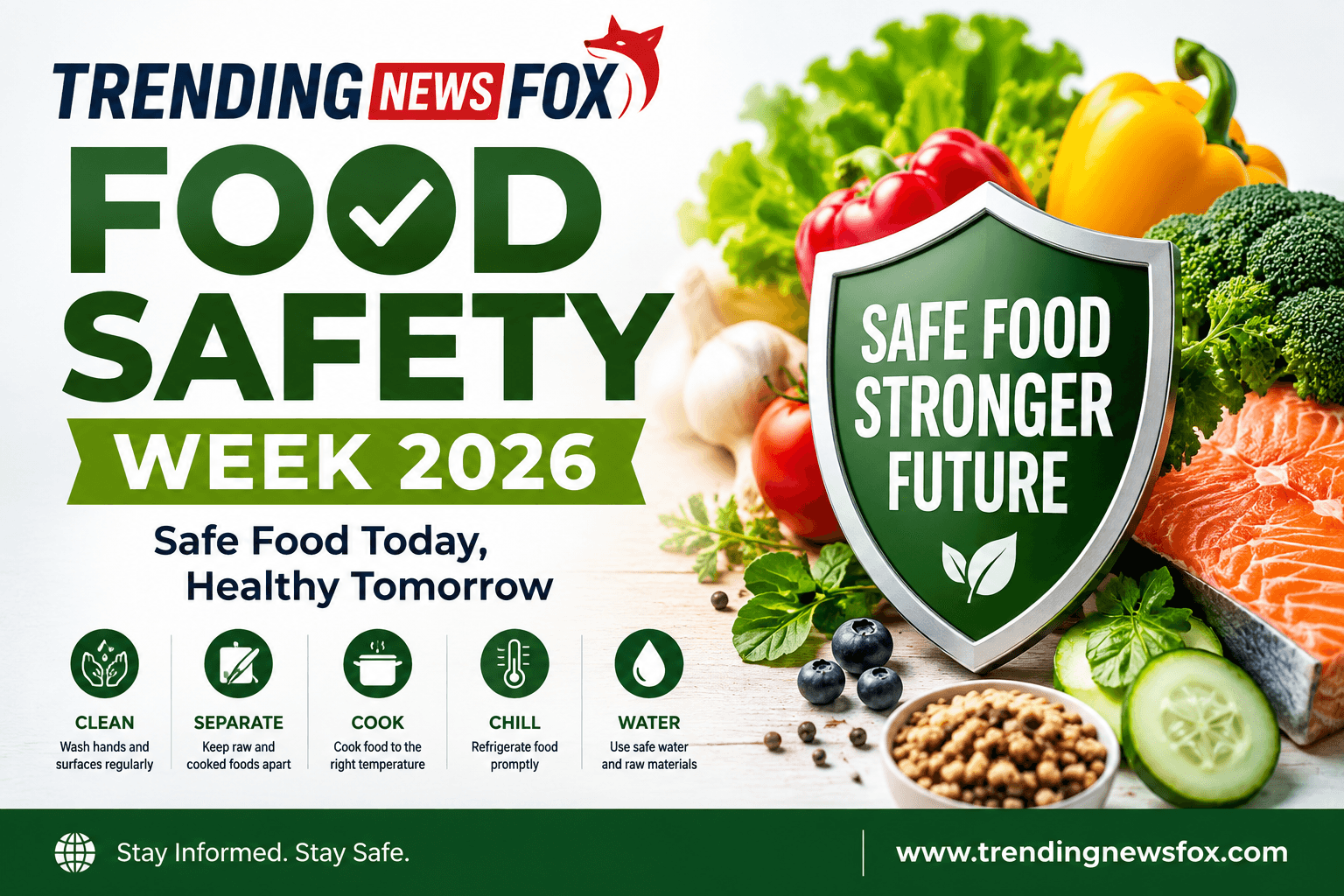
Food Safety Week 2026 highlights safe food, hygiene and healthy eating. Know the theme, importance, food safety tips and ways to prevent foodborne diseases.
Trending News Fox brings you an in-depth report on Food Safety Week and World Food Safety Day 2026.
Food Safety Week 2026: The Global Push “From Burden to Solutions” for Every Kitchen
Every year, millions of people worldwide suffer from preventable foodborne illnesses. As global food supply chains grow increasingly interconnected, food safety has evolved from a basic kitchen precaution into a critical public health and economic priority.
Under the 2026 global theme “From Burden to Solutions — Safe Food Everywhere,” international health organizations, regulatory bodies, agricultural producers, and consumers are coming together to turn real-world data into actionable strategies.
Whether you manage a commercial kitchen, sell street food, or prepare meals for your family, understanding food safety protocols is essential to keeping communities healthy.
Key Overview of Food Safety Week 2026
| Feature | Global Standard Details |
| Primary Theme | “From Burden to Solutions — Safe Food Everywhere” |
| Leading Organizations | World Health Organization (WHO) & Food and Agriculture Organization (FAO) |
| Global Focus | Data-driven prevention, farm-to-table hygiene, regulatory compliance, supply chain safety |
| Primary Beneficiaries | Consumers, food industry workers, vulnerable populations, smallholder farmers |
The True Cost of Unsafe Food
According to estimates by the WHO, over 600 million people—almost 1 in 10 globally—fall ill after eating contaminated food every year, leading to 420,000 preventable deaths. Unsafe food containing harmful bacteria, viruses, parasites, or toxic chemical substances causes more than 200 distinct diseases, ranging from mild stomach distress to severe long-term neurological and kidney disorders.
┌──────────────────────────────────────────────────────────┐
│                  GLOBAL FOOD SAFETY IMPACT               │
├───────────────────────────┬──────────────────────────────┤
│ Annual Illnesses          │ ~600 Million Cases           │
│ Annual Preventable Deaths │ ~420,000 Deaths              │
│ Children Under 5 Affected │ ~125,000 Fatalities/Year     │
└───────────────────────────┴──────────────────────────────┘
The economic toll is equally severe. Low- and middle-income economies lose over $110 billion annually in lost productivity and medical expenses stemming from unsafe food consumption.
5 Essential Pillars of Food Safety
To prevent contamination across the food chain, health authorities emphasize five foundational guidelines:
- Keep Clean: Wash hands thoroughly before handling food and frequently during preparation. Sanitize all surfaces, cutting boards, and utensils after each use.
- Separate Raw and Cooked: Keep raw meat, poultry, and seafood strictly isolated from ready-to-eat foods to prevent cross-contamination. Use separate cutting boards and knives.
- Cook Thoroughly:Ensure meats, eggs, and seafood reach safe internal temperatures. High heat kills most harmful pathogens, including Salmonella, E. coli, and Listeria.
- Keep Food at Safe Temperatures: Do not leave cooked food at room temperature for more than 2 hours. Refrigerate perishables promptly below 5°C (41°F) and maintain hot foods above 60°C (140°F).
- Use Safe Water and Raw Materials:Always source clean water for washing and cooking. Select fresh, wholesome foods and avoid consuming items past their expiration date.
Emerging Challenges in Modern Food Systems
As technology and consumer preferences shift, new compliance challenges are emerging across the food landscape:
- E-Commerce and Food Delivery: Rapid growth in dark kitchens and quick-commerce delivery services requires strict temperature controls during transit.
- Chemical and Pesticide Residues: Overuse of agricultural chemicals creates systemic risks that require stronger inspection testing infrastructure.
- Climate Impact on Storage: Rising global temperatures increase microbial growth rates, demanding enhanced cold-chain logistics from farm to retail.
- Food Adulteration:Counterfeit or mislabeled products pose severe health risks, prompting regulatory bodies to tighten traceability standards.
How to Get Involved
- For Businesses: Audit kitchen workflows, train employees on food handling protocols, and ensure strict compliance with local safety regulations.
- For Consumers: Check expiration labels, store groceries correctly, and report poor hygiene conditions at eateries to regulatory health officers.
- For Educators:Host workshops on hand hygiene and food safety practices in local community centers and schools.