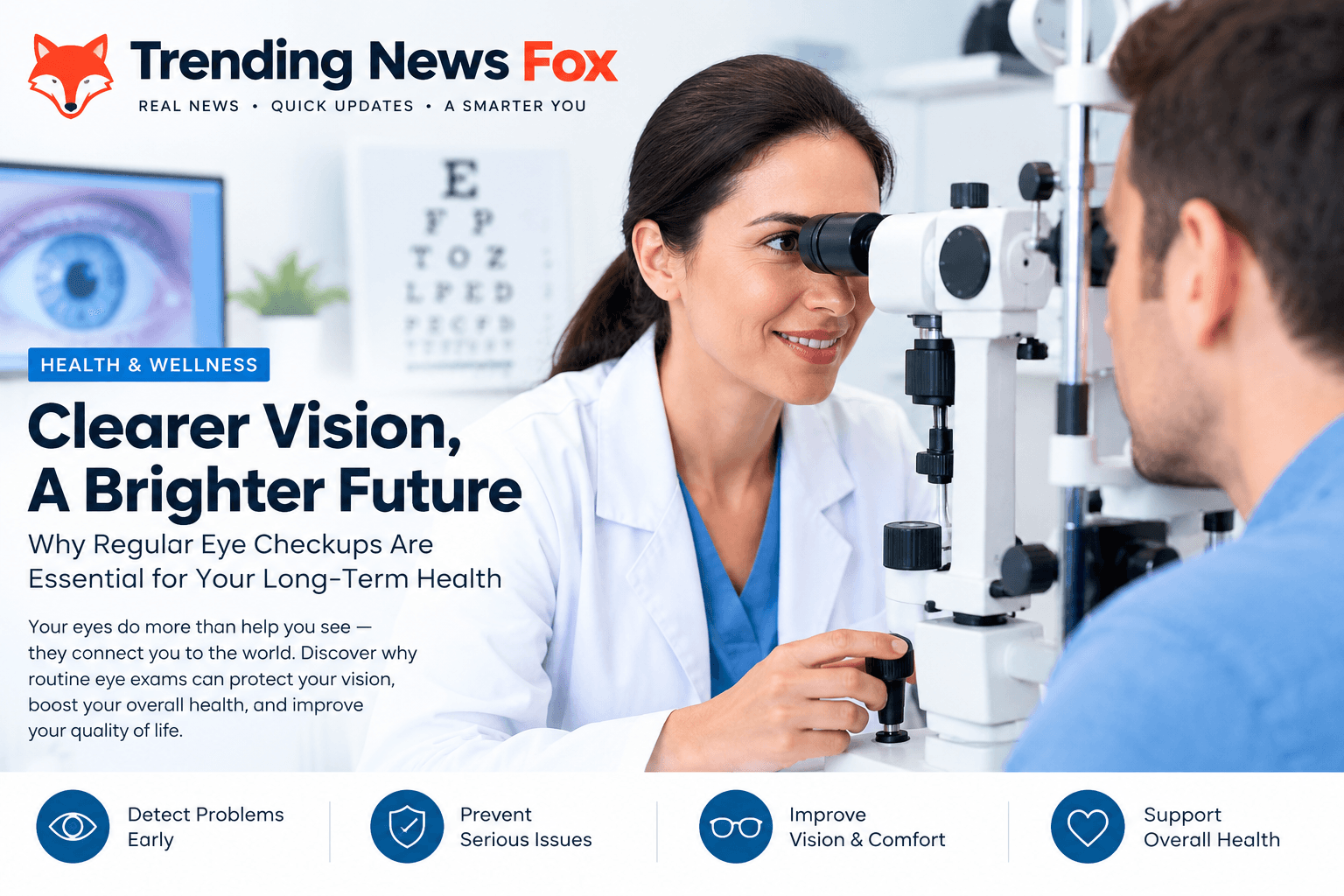
Learn when to visit an eye doctor, common vision problems, routine eye exams, and practical tips to help protect your eye health. Read the latest eye-care guide on Trending News Fox.
Eye Doctor: Complete Guide to Eye Health, Vision Tests and Choosing the Right Eye Specialist
By Trending News Fox | Health & Lifestyle
Your eyes are among the most important organs in your body, yet regular eye care is often overlooked until blurred vision, headaches, irritation or other symptoms appear. An eye doctor can help detect vision problems, monitor eye health and identify certain conditions at an early stage.
From routine eye examinations and prescription glasses to contact lenses and treatment for common eye conditions, professional eye care plays an important role in maintaining healthy vision.
In this guide, Trending News Fox explains what an eye doctor does, when you should schedule an eye examination, what happens during a vision test and how to choose an appropriate eye-care professional.
What Is an Eye Doctor?
The term eye doctor can refer to different types of eye-care professionals. The two commonly recognized categories are optometrists and ophthalmologists.
An optometrist generally provides eye examinations, evaluates vision, prescribes glasses or contact lenses where appropriate, and manages many common eye conditions.
An ophthalmologist is a medical doctor specializing in eye health. Ophthalmologists can diagnose and treat eye diseases and perform eye surgery when medically necessary.
Depending on your symptoms and healthcare needs, you may require a routine eye examination, specialist consultation or medical treatment.
Why Regular Eye Examinations Matter
Many vision and eye-health problems can develop gradually without obvious symptoms. A person may not realize that their eyesight has changed until everyday activities such as reading, driving or using a computer become difficult.
A comprehensive eye examination can assess visual acuity and examine different structures of the eye. Depending on the individual’s age, medical history and symptoms, an eye-care professional may recommend additional tests.
Regular examinations can be particularly important for people who:
- Have difficulty seeing distant or nearby objects
- Experience frequent headaches associated with visual tasks
- Spend long periods looking at digital screens
- Have a family history of certain eye diseases
- Wear glasses or contact lenses
- Have diabetes or other conditions that can affect eye health
- Notice changes in vision
- Are older adults requiring ongoing eye-health monitoring
The appropriate frequency of eye examinations varies from person to person, so patients should follow advice from their healthcare professional.
Eye Doctor Guide: When Should You See an Eye Specialist?
Common Reasons to Visit an Eye Doctor
An appointment with an eye doctor isn’t only about getting a new pair of glasses. Eye-care professionals can evaluate a wide range of vision and eye-health concerns.
1. Blurred Vision
Blurred vision can have many possible causes, including refractive errors such as myopia, hyperopia and astigmatism. Persistent or sudden changes in vision should be evaluated professionally.
2. Difficulty Reading
If words become difficult to focus on, especially at close range, an eye examination may help determine whether your prescription or vision needs have changed.
3. Eye Strain
Extended computer, smartphone or tablet use can contribute to tired or uncomfortable eyes. An eye-care professional can assess whether vision correction or other measures may help.
4. Red or Irritated Eyes
Redness and irritation can have different causes, including allergies, dryness and infections. Persistent symptoms should not simply be ignored.
5. Headaches
Some headaches can occur alongside uncorrected vision problems. If headaches repeatedly appear during reading, computer work or other visually demanding activities, an eye examination may be useful.
What Happens During an Eye Examination?
A typical eye examination may involve several steps.
First, the eye-care professional may ask about your medical history, vision concerns, medications and family history. You may then undergo tests designed to measure how clearly you can see at different distances.
The professional may also examine the eyes for signs of abnormalities or disease. Additional testing may be recommended depending on your age, symptoms and risk factors.
If you require vision correction, your eye doctor may discuss prescription glasses or contact lenses.
The exact tests performed vary according to the individual and the type of examination.
Glasses or Contact Lenses: Which Is Right for You?
For people who need vision correction, both glasses and contact lenses can be useful options.
Glasses are generally easy to use and maintain. They also provide a simple way to correct refractive errors without placing anything directly on the eye.
Contact lenses sit directly on the surface of the eye and can provide a wider field of vision without changing facial appearance. However, proper hygiene and professional fitting are important.
Your eye-care professional can discuss the advantages, limitations and care requirements of different options.
Digital Screens and Eye Comfort
Smartphones, computers and other digital devices are now part of everyday life. Long periods of screen use may be associated with symptoms such as temporary eye discomfort, dryness or difficulty focusing.
Simple habits may improve comfort. These can include taking regular breaks, adjusting screen distance and positioning, maintaining comfortable lighting and remembering to blink regularly.
If symptoms persist or interfere with daily activities, an eye examination can help determine whether another issue is involved.
Children and Eye Health
Eye care is also important during childhood. Vision plays an important role in learning, reading, sports and everyday development.
Parents and caregivers should pay attention to signs such as:
- Sitting unusually close to a television or screen
- Holding books very close to the face
- Frequent eye rubbing
- Difficulty reading the classroom board
- Squinting
- Complaints of headaches during schoolwork
- Difficulty concentrating on visual tasks
A qualified eye-care professional can advise parents about appropriate examinations and follow-up.
When Vision Changes Need Urgent Attention
Not every vision problem is an emergency, but certain sudden changes should receive prompt medical attention.
Seek urgent professional evaluation for symptoms such as sudden loss of vision, sudden significant changes in vision, severe eye pain, a sudden increase in floaters or flashes, or symptoms following a significant eye injury.
Do not rely on internet searches or self-treatment when serious or rapidly developing eye symptoms occur.
How to Choose the Right Eye Doctor
Choosing an eye-care professional involves more than looking at convenience or price.
Consider the professional’s qualifications, experience, area of specialization, clinic facilities and the types of examinations or services offered.
You can also ask about:
- Professional credentials
- Experience with your particular concern
- Available diagnostic testing
- Glasses and contact-lens services
- Follow-up arrangements
- Clinic accessibility
- Costs and insurance or payment arrangements, where applicable
For children, older adults or people with specific medical concerns, finding a professional experienced with those needs may be especially relevant.
Healthy Habits for Better Eye Care
Professional examinations are important, but everyday habits also contribute to eye health.
Consider maintaining a balanced diet, protecting your eyes from excessive sunlight with appropriate eyewear, following contact-lens hygiene instructions and avoiding smoking.
People who work with materials that could injure the eyes should use appropriate protective eyewear.
It is also important to avoid using eye drops or other treatments unnecessarily without professional guidance, particularly when symptoms are persistent or unexplained.
Frequently Asked Questions About Eye Doctors
How often should I visit an eye doctor?
The appropriate schedule depends on age, health history, vision needs and risk factors. Your eye-care professional can recommend a suitable examination interval.
Should I visit an eye doctor if I can see clearly?
Yes. Good vision does not necessarily mean that every aspect of eye health is normal. Routine examinations can help identify certain problems before noticeable symptoms develop.
Can an eye doctor prescribe glasses?
Yes. Optometrists and ophthalmologists can evaluate refractive errors and prescribe vision correction when appropriate.
Are eye examinations painful?
Most routine eye examinations are non-invasive and generally comfortable. Some diagnostic tests may cause temporary discomfort or sensitivity, depending on what is being assessed.
When should children have their eyes checked?
Children’s eye-care needs vary with age and individual risk factors. Parents should discuss appropriate screening and examinations with a qualified healthcare professional, particularly when vision problems are suspected.
Final Word
Healthy vision supports almost every part of everyday life—from reading and working to driving, learning and enjoying time with family. Regular eye examinations and professional advice can help people understand their vision needs and identify problems that may require further attention.
Whether you need a new glasses prescription, contact-lens consultation or evaluation of an eye-health concern, choosing a qualified eye doctor is an important part of responsible eye care.
Trending News Fox encourages readers to seek advice from qualified healthcare professionals for personal medical concerns. This article is intended for general educational and informational purposes and should not replace professional medical diagnosis or treatment.
Trending News Fox — Health & Lifestyle
Stay connected with Trending News Fox for more health, lifestyle, technology, business, sports and latest news updates.
Disclaimer: This article provides general health information and is not a substitute for professional medical advice, diagnosis or treatment. If you experience sudden or serious changes in vision, seek prompt medical attention.