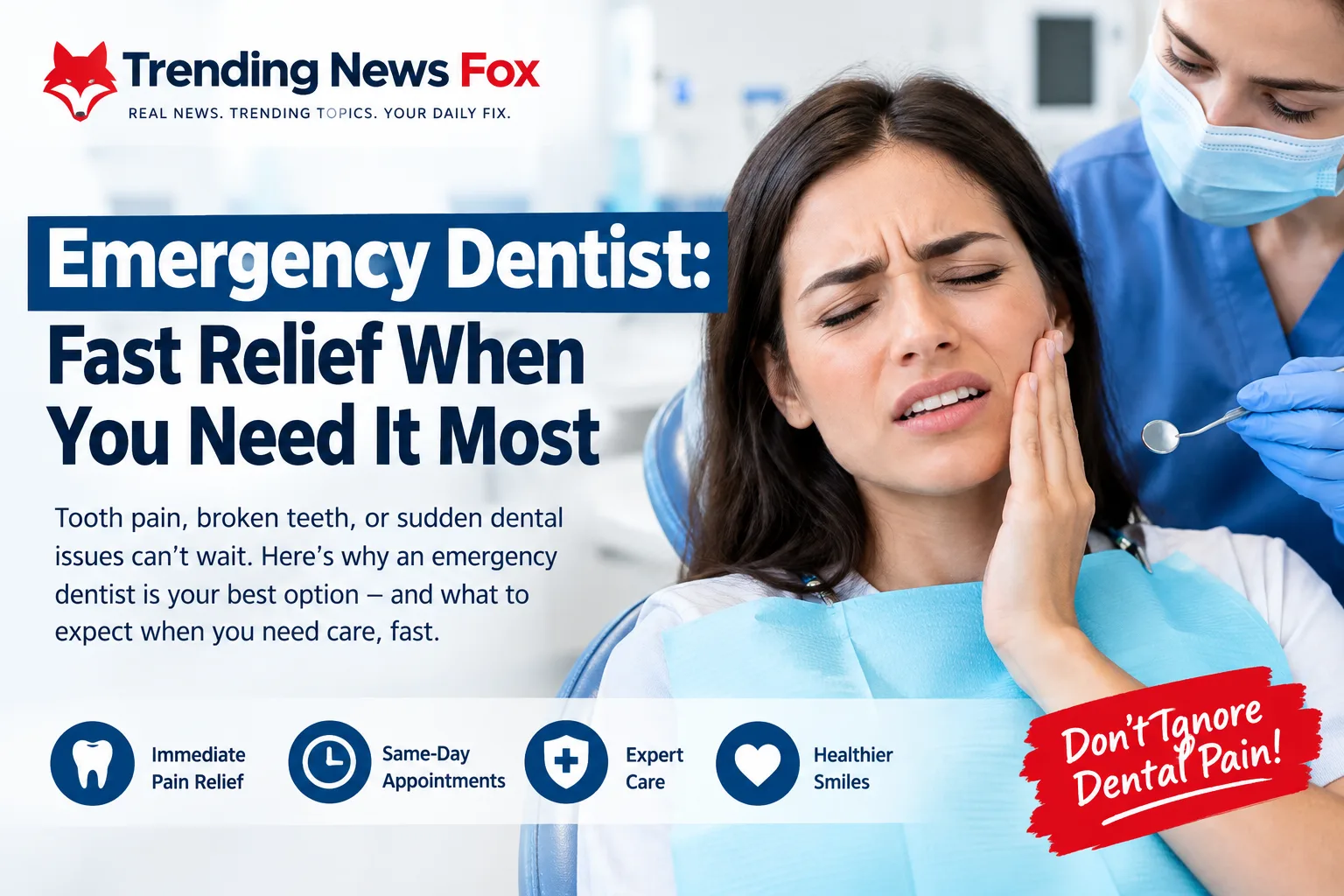
Need an emergency dentist? Learn what to do for severe toothache, broken or knocked-out teeth, dental infections, bleeding, swelling and other urgent dental problems.
Published by Trending News Fox — News, Information & Digital Media
Emergency Dentist: What to Do When You Need Urgent Dental Care
When a dental problem strikes suddenly, waiting for a routine appointment may not always be the best option. Severe tooth pain, facial swelling, a broken tooth, uncontrolled bleeding or a knocked-out permanent tooth can require urgent dental attention. Knowing when to contact an emergency dentist can help prevent complications and protect your oral health.
Dental emergencies can happen at any time—during meals, sports activities, accidents or even unexpectedly in the middle of the night. While some dental problems can safely wait for a regular appointment, others require prompt assessment by a qualified dental professional.
In this guide, Trending News Fox explains common dental emergencies, what you can do immediately, when urgent dental care is necessary and how to reduce the risk of future dental problems.
What Is an Emergency Dentist?
An emergency dentist is a dental professional who evaluates and treats urgent dental problems that need prompt attention. Emergency dental care may focus on controlling pain, managing bleeding, treating infection, repairing dental injuries and preventing a problem from becoming more serious.
The exact services available vary between dental clinics. Some emergency dental practices offer same-day appointments, while others provide urgent consultations during extended hours.
If you experience a serious dental problem, contacting a dentist as soon as possible can help determine the appropriate next step.
Common Dental Emergencies
Not every toothache is an emergency, but certain symptoms should receive prompt attention.
1. Severe or Persistent Toothache
A sudden or intense toothache can have several possible causes, including tooth decay, inflammation, a damaged filling, trauma or infection.
If pain is severe, persistent, worsening or accompanied by swelling or fever, professional dental evaluation is important.
Avoid placing aspirin directly against the tooth or gums because this can irritate the surrounding tissue. Until you receive professional advice, gentle cleaning and appropriate over-the-counter pain relief, when safe for you and used according to the label, may provide temporary comfort.
2. Broken or Cracked Tooth
A tooth can crack or break after an accident, sports injury, biting something hard or because of weakened tooth structure.
If a piece of the tooth has broken off, carefully save it and take it with you when seeing a dentist. Rinse your mouth gently with water and avoid chewing on the affected side.
A dentist can determine whether the tooth can be repaired with a filling, bonding, crown or another treatment.
3. Knocked-Out Permanent Tooth
A knocked-out permanent tooth is a time-sensitive dental emergency.
If this happens, handle the tooth carefully by the crown—the part normally visible in the mouth—and avoid touching the root. If possible, gently rinse away visible dirt without scrubbing the tooth.
Depending on the circumstances, a dentist may advise placing the tooth back into its socket or keeping it moist in an appropriate solution while seeking immediate professional care.
Do not delay contacting a dentist. The chances of successfully managing a knocked-out tooth can depend heavily on how quickly appropriate care is received.
4. Dental Infection and Facial Swelling
A dental infection can cause tooth pain, swelling, tenderness, fever or an unpleasant taste in the mouth.
Swelling around the face, jaw or neck can be particularly concerning. A spreading infection can become serious and may require urgent medical attention.
If swelling affects breathing or swallowing, or if you have difficulty opening your mouth, seek emergency medical care immediately.
Antibiotics are not appropriate for every dental problem and should not be taken without professional medical advice. In many cases, the underlying dental cause also needs treatment.
5. Uncontrolled Dental Bleeding
Minor bleeding can occur after certain dental procedures or injuries. However, bleeding that does not stop with appropriate pressure requires prompt professional assessment.
Use clean gauze or a clean cloth and apply firm, gentle pressure while arranging urgent dental care. If bleeding is heavy or associated with a serious injury, seek emergency medical assistance.
6. Dental Injuries During Sports
Sports-related accidents can damage teeth, gums, lips and the jaw. Wearing a properly fitted mouthguard can significantly reduce the risk of many dental injuries during contact and high-impact activities.
If a tooth becomes loose, displaced, cracked or knocked out, contact a dentist promptly.
When Should You See an Emergency Dentist?
Consider urgent dental care when you experience:
- Severe or worsening tooth pain
- Significant swelling around the tooth, jaw or face
- A knocked-out permanent tooth
- A badly broken or cracked tooth
- Persistent or uncontrolled oral bleeding
- A dental injury caused by an accident
- A severely loose or displaced permanent tooth
- Signs that may indicate a serious dental infection
Some symptoms require emergency medical care rather than simply a dental appointment. Difficulty breathing or swallowing, rapidly increasing facial or neck swelling, loss of consciousness, severe facial trauma or heavy uncontrolled bleeding should be treated as medical emergencies.
What Should You Do Before Reaching the Dentist?
Knowing basic first-aid steps can make a stressful situation easier to manage.
First, remain calm and assess what happened. Gently rinse your mouth with clean water if appropriate. Avoid chewing with the injured area and do not attempt complicated dental repairs yourself.
For swelling, a cold compress placed externally against the cheek may help reduce discomfort temporarily.
If a tooth has been knocked out, avoid handling the root and seek professional dental advice immediately.
Most importantly, do not allow temporary relief to replace professional evaluation when symptoms are serious or persistent.
Emergency Dentist vs. Regular Dental Appointment
The difference is primarily urgency.
A routine appointment may be suitable for issues such as a small cavity without significant pain, routine cleaning, cosmetic concerns or a regular check-up.
An emergency appointment is more appropriate when a problem involves severe pain, significant trauma, infection, uncontrolled bleeding or a risk of permanent damage.
When uncertain, calling a dental clinic and explaining your symptoms can help determine how quickly you should be seen.
How to Find an Emergency Dentist
When searching for an emergency dentist, consider several factors:
Availability: Check whether the clinic offers same-day or after-hours appointments.
Location: During an emergency, a conveniently located clinic may be preferable to travelling a long distance.
Services: Ask whether the dentist handles dental trauma, infections, severe tooth pain and other urgent conditions.
Qualifications: Choose a properly licensed and qualified dental professional.
Communication: A clinic that clearly explains what to do before arrival can be particularly helpful during an emergency.
If you have a regular dentist, keep the clinic’s emergency contact information readily available.
How Can Dental Emergencies Be Prevented?
Not every dental emergency can be prevented, but good oral-health habits can reduce the risk.
Brush your teeth regularly with fluoride toothpaste and clean between your teeth. Schedule routine dental examinations as recommended by your dentist. Avoid using your teeth to open packages or cut objects.
If you participate in contact sports, cycling or other activities where facial injuries are possible, consider using a properly fitted mouthguard.
Managing cavities and damaged teeth early can also prevent some problems from developing into painful emergencies.
The Importance of Acting Quickly
A dental emergency can be frightening, especially when pain or swelling develops suddenly. However, taking prompt and appropriate action can make a significant difference.
The most important step is recognizing when a problem needs professional attention. Severe pain, facial swelling, significant injury, uncontrolled bleeding and knocked-out permanent teeth should not simply be ignored.
Rather than relying on internet remedies or delaying treatment, contact a qualified dentist or appropriate emergency medical service based on the severity of the situation.
Final Takeaway
An emergency dentist can provide urgent assessment and treatment when sudden dental problems threaten your comfort, oral health or safety. From severe toothache and broken teeth to dental infections and knocked-out permanent teeth, knowing what to do can help you respond more effectively.
Remember that home measures are generally temporary—not substitutes for professional diagnosis and treatment. If symptoms are severe, rapidly worsening or associated with difficulty breathing, swallowing, major trauma or uncontrolled bleeding, seek emergency medical care immediately.
Your teeth and gums deserve timely attention. When a dental emergency happens, don’t wait for the problem to become worse—seek professional guidance as soon as possible.
Emergency Dentist: Frequently Asked Questions
Q1. What is considered a dental emergency?
Severe tooth pain, significant swelling, dental trauma, uncontrolled bleeding and a knocked-out permanent tooth are examples of problems that may require urgent dental care.
Q2. Is severe toothache an emergency?
Severe or persistent tooth pain should be evaluated by a dentist, particularly when accompanied by swelling, fever, trauma or other concerning symptoms.
Q3. What should I do if my permanent tooth is knocked out?
Handle the tooth carefully by the crown, avoid touching the root, keep it appropriately moist and seek urgent dental advice immediately.
Q4. Can a dental infection become serious?
Yes. Some dental infections can spread beyond the tooth and cause serious complications. Facial or neck swelling and difficulty breathing or swallowing require immediate medical attention.
Q5. Can I wait until morning to see a dentist?
That depends on the symptoms. Mild problems may sometimes wait for a routine appointment, but severe pain, major swelling, significant trauma or uncontrolled bleeding may require immediate care.
Q6. How can I prevent dental emergencies?
Maintain good oral hygiene, attend regular dental check-ups, avoid using teeth as tools and wear an appropriate mouthguard during activities with a risk of dental injury.
Medical Disclaimer: This article is intended for general educational and informational purposes and does not replace diagnosis, treatment or advice from a qualified dentist or medical professional. In a serious or potentially life-threatening emergency, contact your local emergency medical service immediately.