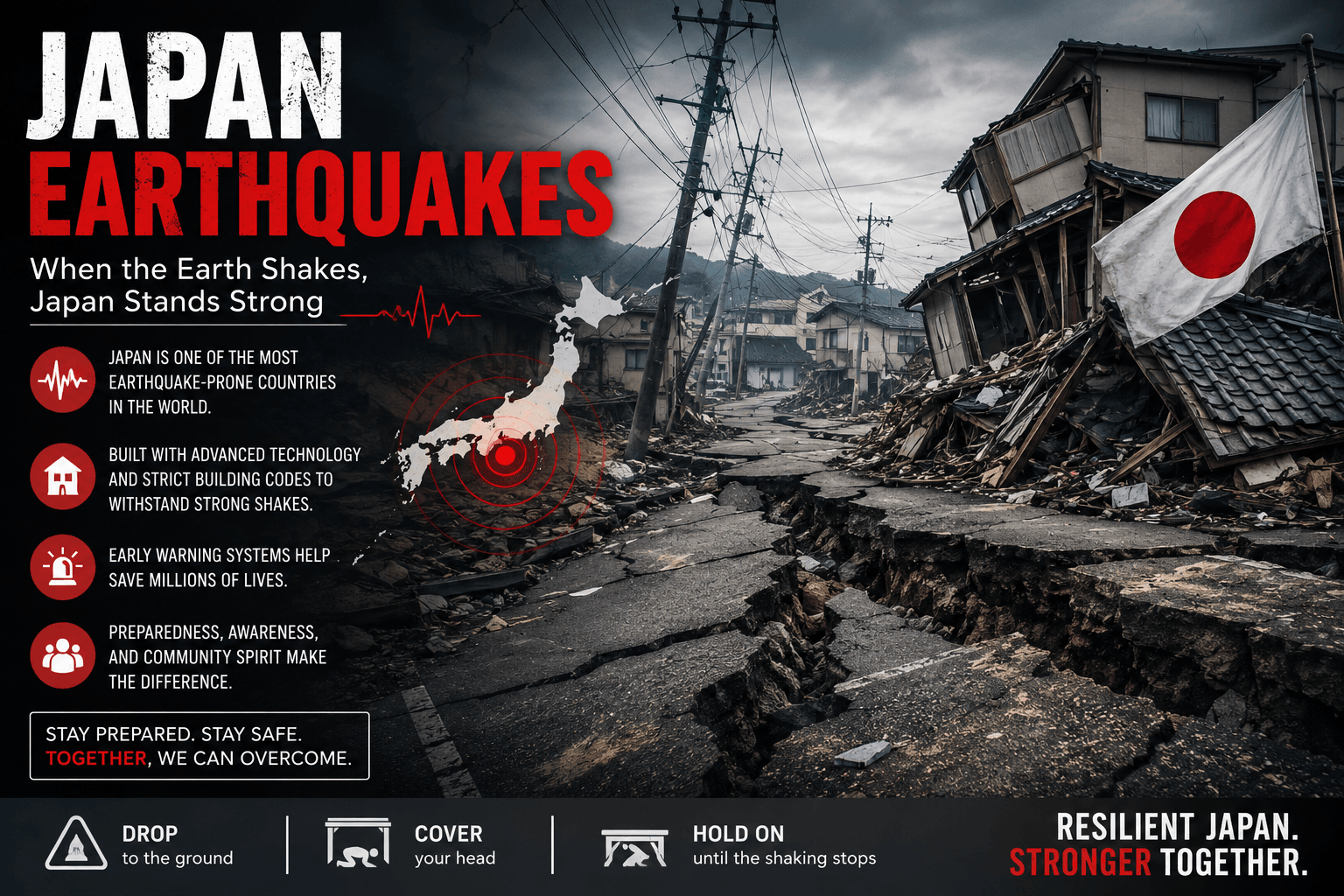
Everything you need to know about Japan earthquakes. Trending News Fox breaks down why quakes happen, early warning systems, safety tips for travelers, and the Shindo scale.
Japan Earthquakes: Real-Time Risks, Seismic Science, and Megaquake Preparedness
By TRENDING NEWS FOX Special Report
Japan remains one of the most seismically active nations on Earth, sitting directly at the volatile intersection of four major tectonic plates. From violent ground-shaking tremors in southern Kyushu to submarine thrusts off the Sanriku Coast, earthquake activity in Japan is a daily reality.
As emergency response teams respond to recent quakes in southwestern Japan and scientists closely monitor subduction fault lines along the Pacific Rim, millions of residents and tourists are asking critical questions: Why is Japan so prone to earthquakes, what is the current risk level, and how is the nation preparing for the long-feared Nankai Trough “megaquake”?
Here is an in-depth breakdown from TRENDING NEWS FOX on the geology, latest developments, structural innovations, and essential safety measures surrounding Japan’s relentless seismic landscape.
Latest Seismic Activity: Southern Japan and the Pacific Coast
Seismologists at the Japan Meteorological Agency (JMA) monitor thousands of minor and major tremors annually. However, recent months have seen heightened activity across several key regions:
- Kyushu Region (Kumamoto Prefecture): A powerful magnitude 7.1 tremor struck southern Japan near Kumamoto, disrupting infrastructure, causing power outages for tens of thousands of homes, and causing structural damage to commercial and residential properties. High-speed Shinkansen bullet train routes and airport operations were temporarily halted as emergency personnel conducted rescue operations.
- Sanriku Coast & Japan Trench: Northeastern Honshu experienced significant offshore activity earlier this year, including a magnitude 7.7 earthquake along the Japan Trench off the Sanriku coast. The quake triggered localized tsunami waves up to 79 centimeters and prompted short-term evacuation advisories across Iwate and Aomori prefectures.
- Tokara Islands Swarm: Off the southern tip of Kagoshima, hundreds of small-magnitude swarms have periodically rattled islanders, keeping local authorities on high alert for potential volcanic or fault updates.
Key Takeaway for Readers: While Japan experiences an average of one earthquake every five minutes, the vast majority are imperceptible to human senses. However, large shallow land quakes or deep offshore subduction events demand immediate readiness.
The Science: Why Japan Is the World’s Seismic Epicenter
To understand why Japan feels constant motion beneath its feet, one must examine its complex subduction architecture. Japan sits at the edge of the Pacific “Ring of Fire”—a 40,000-kilometer horse-shoe-shaped belt where approximately 90% of the world’s earthquakes occur.
Japan Earthquakes: The Four-Plate Junction
Uniquely, the Japanese archipelago is squeezed between four major tectonic plates:
- The Pacific Plate: Moving westward at roughly 8–9 centimeters per year, sliding beneath northern Japan.
- The Philippine Sea Plate: Pushing northwestward, subducting beneath southwestern Japan.
- The Eurasian Plate (Amur Microplate): Underlying western Japan and parts of the mainland.
- The North American Plate (Okhotsk Microplate): Underlying northern Japan and Hokkaido.
As these vast oceanic plates dive under the continental plates (a process called subduction), immense friction builds along the plate boundary. When the locked fault zone finally snaps under strain, decades or centuries of accumulated energy are released in seconds, driving powerful earthquakes and generating tsunamis.
The Looming Threat: The Nankai Trough Megaquake
While local fault quakes cause localized damage, government scientists and disaster agencies remain heavily focused on the Nankai Trough.
Running roughly 500 miles (800 kilometers) parallel to Japan’s southern Pacific coast, the Nankai Trough is a subduction trench where the Philippine Sea Plate slides beneath the Eurasian Plate. Historically, this fault line has produced massive earthquakes of magnitude 8.0 or greater every 100 to 200 years. The last major events occurred in 1944 (Tonankai) and 1946 (Nankai).
Japan Earthquakes: Updated Government Estimates & Scenarios
Government panels indicate that the probability of a magnitude 8.0 to 9.0 megaquake striking the Nankai Trough within the next 30 years stands between 75% and 82%.
| Parameter | Projected Impact Scenario |
| Potential Magnitude | M8.0 – M9.1 |
| Max Tsunami Height | Up to 10–30 meters along coastal areas |
| Estimated Fatalities | Up to ~300,000 without rapid evacuation |
| Economic Damage | Exceeding $2 Trillion (JPY 300+ Trillion) |
| High-Risk Zones | Tokyo, Shizuoka, Aichi, Osaka, Kochi, Miyazaki |
The JMA operates an advisory mechanism known as Nankai Trough Earthquake Extra Information. If unusual seismic tremors or “slow slip” events are detected along the trench, authorities issue stepped advisories to ensure emergency services and coastal municipalities are ready to act.
Japan Earthquakes: How Japan Engineeers Against Destruction
Japan’s survival strategy relies on strict engineering standards and cutting-edge warning technology. Following the 1995 Kobe Earthquake and the 2011 Great East Japan Earthquake, structural building codes were heavily updated.
1. Structural Engineering Standards
Buildings in Japan are constructed using three primary seismic defense methods:
- Taishin (Seismic Resistance): Thick columns and reinforced walls designed to withstand shaking without collapsing.
- Seishin (Damping Technology): Shock absorbers, rubber dampers, or hydraulic dampers built into the frame to absorb kinetic energy during swaying.
- Menshin (Base Isolation): The building rests on flexible rubber pads or ball bearings, effectively decoupling the structure from ground movement.
2. Early Warning Systems (EEW)
Japan’s Earthquake Early Warning (EEW) system, operated by the JMA, utilizes an extensive network of thousands of land and seabed seismographs. When a primary (P-wave) earthquake wave is detected, the system calculates the hypocenter and broadcasts immediate alerts to mobile phones, TV broadcasts, and public speakers seconds before the destructive secondary (S-wave) arrives.
Essential Safety Guide: What to Do During an Earthquake in Japan
Whether you are a resident or visiting Japan for travel, knowing how to react within seconds is crucial.
Japan Earthquakes: Inside a Building / Hotel
- Drop, Cover, and Hold On: Get under a sturdy desk or table to protect your head and neck from falling light fixtures or plaster.
- Stay Away from Windows: Glass panes can shatter violently under lateral shear stress.
- Do Not Rush Outside: Exiting tall buildings into crowded streets during active shaking exposes you to falling glass and facade debris.
On the Street / Outdoors
- Protect Your Head: Use a bag or jacket to shield your head from falling bricks, signboards, or glass.
- Move to Open Ground: Stay clear of concrete block walls, vending machines, and overhead power lines.
Near the Coast / Tsunami Danger
- Evacuate Immediately to High Ground: If strong shaking lasts longer than 30 seconds along the coast, move toward designated Tsunami Evacuation Towers or elevated ground without waiting for an official siren. Tsunami waves can arrive in coastal bays in as little as 2 to 10 minutes.
The Road Ahead: Balancing Preparedness and Resilience
Earthquakes cannot be prevented or precisely predicted in terms of exact time and location. However, Japan’s proactive approach—combining community disaster drills, strict building codes, sea-wall defense infrastructure, and satellite-linked monitoring—serves as the international benchmark for disaster mitigation.
As local authorities continue reinforcing infrastructure across high-vulnerability prefectures, TRENDING NEWS FOX will bring you real-time updates on global seismic trends, emergency guidelines, and breaking news.
Stay Informed with TRENDING NEWS FOX: Bookmark this page and enable alerts to receive live coverage on breaking weather, geopolitical events, and environmental safety news worldwide.
Japan Earthquakes FAQ
Trending News Fox Explainer | Published & Fact-Checked | Coverage by Trending News Fox News Desk
1. General & Geological Questions
Why does Japan experience so many earthquakes?
Japan is situated on the “Ring of Fire” at the intersection of four major tectonic plates: the Pacific, Philippine Sea, Eurasian, and North American plates. As the ocean plates move and subduct (slide underneath) the continental plates, immense strain builds up over decades. When the rock snaps to release this pressure, an earthquake occurs.
As a result, Japan accounts for approximately 20% of the world’s magnitude 6.0+ earthquakes and records over 1,500 detectable tremors annually.
What is the difference between Magnitude and Japan’s Shindo Scale?
Global news networks often report Magnitude (e.g., Richter or Moment Magnitude), but Japan uses its own system called the Shindo Scale ($0$ to $7$).
Feature Magnitude (Mw) Shindo Intensity (震度) What It Measures Total energy released at the source Intensity of shaking felt at a specific spot Number Range Single fixed number per quake (e.g., $7.1$) Scale of $0$ to $7$ (varies by location) Distance Impact Remains constant regardless of depth Decreases the further you are from the epicenter Key takeaway: An earthquake off the coast might be Magnitude 7.0 out at sea, but feel like a mild Shindo 2 in Tokyo.
2. Alerts, Safety, & Tourist Information
How does Japan’s Mobile Early Warning System work?
Japan’s Meteorological Agency (JMA) operates the world’s fastest Earthquake Early Warning (EEW) network.
When a quake occurs, non-destructive P-waves (primary) travel faster than destructive S-waves (secondary). JMA sensors detect P-waves almost instantly and broadcast a loud alert across all Japanese mobile phones, radio, and TV. This gives residents 5 to 30 seconds of advance warning to take cover under tables or step away from hazards before main shaking begins.
What should travelers do during a quake in Japan?
       ┌──────────────────────────────────────────────┐
       │     1. INDOORS: Drop, Cover, and Hold        │
       │  Protect head; step away from glass/shelves. │
       └──────────────────────┬───────────────────────┘
                              │
       ┌──────────────────────▼───────────────────────┐
       │   2. ON PUBLIC TRANSIT: Hold Rails Firmly    │
       │    Trains stop automatically; follow staff.  │
       └──────────────────────┬───────────────────────┘
                              │
       ┌──────────────────────▼───────────────────────┐
       │   3. COASTAL AREAS: Head to High Ground      │
       │ Evacuate inland immediately if advisory acts.│
       └──────────────────────────────────────────────┘
- If indoors: Get under a sturdy table or cover your head with a pillow/backpack. Stay clear of windows and tall bookcases. Do not run outside while shaking is active, as falling facade tiles present a high risk.
- If on a Bullet Train (Shinkansen) or Subway: Trains automatically trigger emergency brakes upon seismic detection. Hold straps or handrails tightly.
- If near the coast: If you feel strong shaking or hear a tsunami sirens/alerts, immediately head inland to high ground or an elevated concrete building. Do not wait for visual confirmation of water.
What apps should visitors download for real-time alerts?
If you are traveling in Japan with an international SIM card, native cell alerts might not always trigger on unlinked devices. Download these recommended apps:
- Safety Tips (Official Japan National Tourism Organization app, supports English)
- Yurekuru Call (Popular seismic push notification app in Japan)
- Japan Travel by NAVITIME (Includes disaster alert integrations)
3. Engineering & Historical Context
How do Japanese buildings survive severe quakes?
Japan’s strict building regulations mandate three primary engineering standards:
- Taishin (Resistant): Standard structural reinforcement using thicker beams, pillars, and walls to prevent collapse.
- Seishin (Damping): Shock absorbers, rubber pads, or hydraulic dampers installed inside walls to absorb seismic energy.
- Menshin (Base Isolation): The entire structure sits on flexible rubber or lead bearings separated from the ground foundation, allowing the earth beneath to shake while the building remains stable above.
What was the strongest earthquake in Japan’s history?
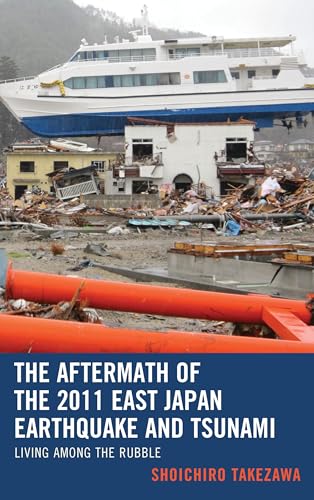
The strongest recorded quake was the Great East Japan Earthquake on March 11, 2011. Registering a magnitude of 9.0–9.1, it struck off the coast of Tohoku, triggering a massive tsunami and leading to major infrastructure challenges across eastern Japan.