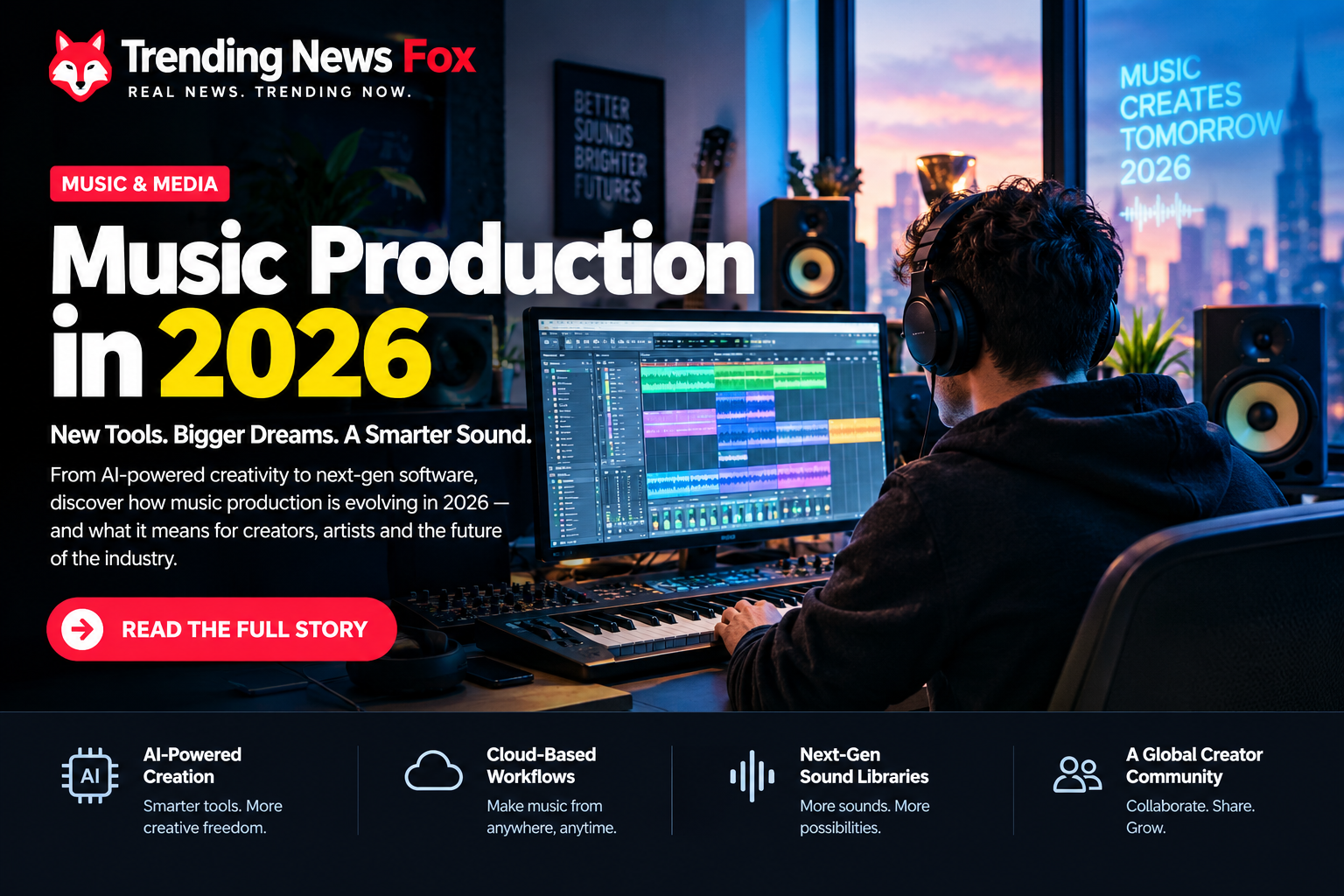
Discover music production in 2026, including the best DAWs, home studio equipment, AI music tools, recording techniques, mixing, mastering, and career opportunities.
By Trending News Fox, Music & Entertainment, October 25, 2026
Music Production in 2026: A Complete Guide to Creating Professional Music
Music production in 2026 is transforming how artists, singers, composers, DJs, and independent creators make music. With powerful digital audio workstations, artificial intelligence tools, affordable recording equipment, and online collaboration platforms, producing professional-quality music is becoming more accessible than ever. Whether you are an aspiring music producer, an independent artist, a YouTube creator, or a passionate music lover, understanding modern music production can help you turn creative ideas into impressive sound.
From recording vocals and creating electronic beats to mixing, mastering, and releasing songs online, today’s music production process combines creativity with technology. But what equipment do beginners need? Which software should aspiring producers learn? How can independent musicians improve sound quality without spending a fortune?
Trending News Fox explores the essential music production techniques, emerging technologies, practical strategies, and opportunities shaping the music industry in 2026.
What Is Music Production?
Music production is the process of developing a musical idea into a finished recording. It involves several stages, including songwriting, arranging, recording, sound design, editing, mixing, and mastering.
A music producer helps shape the overall sound and direction of a track. Depending on the project, the producer may create instrumental arrangements, guide vocal performances, select sounds, coordinate musicians, or work closely with mixing and mastering engineers.
Modern music production covers a wide range of styles, including pop, hip-hop, electronic dance music, rock, classical, independent music, film scores, advertising jingles, and regional music.
In India, digital production also offers opportunities for creators working with Bengali music, Bollywood-inspired arrangements, devotional songs, regional pop, and independent releases. Artists can combine traditional instruments and local musical influences with contemporary recording techniques to develop distinctive sounds.
Why Music Production Is Growing in 2026
The growth of digital platforms, affordable technology, and independent content creation has expanded opportunities for music producers.
1. Affordable Home Recording Studios
Musicians no longer need access to a large commercial studio for every stage of production. A computer, a suitable digital audio workstation, headphones, and a microphone can provide a practical starting point.
Home studios allow creators to experiment with arrangements, record vocals, produce beats, and revise tracks at their own pace.
However, equipment alone does not guarantee professional results. Good recording practices, thoughtful arrangements, critical listening, and consistent practice remain essential.
2. Artificial Intelligence in Music Production
Artificial intelligence is becoming an increasingly important part of modern audio workflows. Depending on the tool, AI-assisted software can help identify unwanted noise, separate audio sources, suggest musical ideas, improve vocal editing, or accelerate repetitive production tasks.
These capabilities can save time, especially for independent creators who handle multiple responsibilities.
Nevertheless, AI should support rather than automatically replace musical judgment. Original ideas, emotional expression, arrangement decisions, and artistic identity remain important differentiators.
Creators should also review the licensing terms of AI tools and the rights associated with generated or processed material before commercial release.
3. Music Creation for Digital Platforms
Music producers increasingly create tracks for streaming services, short-form videos, podcasts, games, advertisements, and YouTube channels.
This creates opportunities for producers who can deliver different formats, from full-length songs and instrumental tracks to short musical cues and background scores.
Understanding the intended audience and platform helps producers make better decisions about song length, arrangement, clarity, and overall presentation.
Best Music Production Software for Beginners and Professionals
Choosing the right music production software is one of the first major decisions for aspiring producers. These applications are commonly known as digital audio workstations, or DAWs.
Popular options include:
1. FL Studio: Widely used for beat-making, electronic music, hip-hop production, and MIDI-based composition.
2. Ableton Live: Particularly popular for electronic music, live performance, creative sound manipulation, and loop-based workflows.
3. Logic Pro: An option for compatible Apple computers, offering extensive instruments, effects, recording features, and composition tools.
4. Steinberg Cubase: Used for recording, MIDI composition, arrangement, and complex production projects.
5. GarageBand: A beginner-friendly option for supported Apple devices, allowing users to explore recording and music creation before moving to a more advanced workflow.
6. REAPER: A flexible digital audio workstation known for its customizable workflow and broad recording and editing capabilities.
There is no universally best DAW. The right choice depends on your budget, computer, musical genre, preferred workflow, and learning goals.
Pro tip: Before purchasing software, test an available trial or free option. Learn one DAW thoroughly rather than constantly switching between applications.
Essential Equipment for a Home Music Studio
Building a music production studio does not require purchasing every available piece of equipment. Start with the essentials and upgrade when your projects demand it.
Computer or Laptop
Your computer runs the DAW, virtual instruments, audio effects, and recording sessions. A system with sufficient memory, processing power, and storage helps manage larger projects smoothly.
Audio Interface
An audio interface connects microphones and instruments to your computer while converting audio signals for recording and playback. It becomes especially useful when recording vocals, guitars, or other external sources.
Studio Headphones
Good headphones help you identify timing issues, unwanted noise, vocal problems, and frequency imbalances. Choose a pair suitable for critical listening rather than relying only on consumer headphones with heavily enhanced bass.
Microphone
A suitable microphone is important for recording vocals, acoustic instruments, voice-overs, and other sound sources. Beginners should consider their recording environment, microphone type, and intended use before buying.
Studio Monitors
Studio monitors provide a way to evaluate recordings through speakers. They can help reveal problems that headphones may not make obvious, although room acoustics and speaker placement influence what you hear.
MIDI Keyboard
A MIDI keyboard can make it easier to compose melodies, program drums, play virtual instruments, and experiment with musical arrangements. It is useful but not essential for every producer.
Start with equipment that solves an actual problem. A well-organized, acoustically sensible recording space and strong production skills can be more valuable than an expensive collection of gear.
The Seven Main Stages of Music Production
Understanding the production process makes projects easier to manage and improves consistency.
Stage 1: Songwriting and Concept Development
Every successful track begins with an idea. This could be a melody, lyric, rhythm, chord progression, emotional theme, or instrumental hook.
Determine the purpose of the song and the feeling you want listeners to experience. A clear creative direction makes later production decisions easier.
Stage 2: Arrangement and Composition
Arrangement determines how different musical elements work together throughout the track.
Producers decide when instruments enter, where the chorus begins, how transitions occur, and which sections need more or less energy.
A strong arrangement creates movement and prevents the track from becoming repetitive.
Stage 3: Recording
Recording captures vocals, instruments, and other audio sources. Good microphone placement, appropriate recording levels, controlled background noise, and comfortable performances all contribute to better results.
Avoid recording so loudly that the signal clips. Digital distortion can damage the quality of a take and make later processing more difficult.
Stage 4: Editing
Editing involves removing unwanted noises, correcting timing where appropriate, selecting the best performances, and organizing audio clips.
The objective is to improve clarity while preserving the natural character and emotional impact of the performance.
Stage 5: Mixing
Mixing balances the different elements of a track. Producers adjust volume, panning, equalization, compression, reverb, delay, and other effects to help instruments occupy their own space.
Good mixing is not about making every sound equally loud. It is about ensuring that each element serves the music.
Stage 6: Mastering
Mastering prepares the final mix for distribution. It can involve tonal adjustments, dynamic control, level management, quality checks, and preparation of suitable delivery files.
Mastering cannot reliably repair every problem created during recording or mixing. A clean, balanced mix provides a stronger foundation.
Stage 7: Distribution and Promotion
Once the recording is complete, artists can prepare it for streaming platforms, social media, music videos, and other distribution channels.
Before release, confirm that you have the necessary rights to the composition, recordings, samples, and other incorporated material. Prepare accurate credits and metadata, and develop a promotional plan suited to the audience.
A finished song needs more than good audio. Discoverability, presentation, and consistent promotion can also influence its reach.
Top Music Production Trends to Watch in 2026
AI-Assisted Audio Workflows
AI-assisted audio tools are helping producers experiment with sound design, vocal processing, audio cleanup, and creative arrangements. The most useful applications are those that improve efficiency without compromising originality or control.
Independent Music Production
Independent musicians can now manage more of the creative process themselves, from recording and mixing to digital distribution. This allows artists to maintain greater creative control, although marketing, licensing, and audience development still require attention.
Immersive and Spatial Audio
Spatial audio technologies offer new ways to position sounds within a listening environment. Although adoption and compatibility vary by platform, these techniques create opportunities for producers working on selected music releases, games, films, and immersive experiences.
Short-Form Video and Creator Music
Short-form videos continue to provide opportunities for producers to create memorable musical hooks, original background scores, and short instrumental tracks. Producers should understand licensing requirements before allowing their music to be used commercially or distributed through third-party platforms.
How to Start a Music Production Career
A career in music production can begin with small projects and consistent practice. You do not necessarily need a formal music degree, although musical training, audio engineering education, and practical experience can provide valuable foundations.
Follow these steps:
- Learn the fundamentals: Understand rhythm, melody, harmony, arrangement, and basic audio concepts.
- Choose one DAW: Develop practical skills in recording, editing, mixing, and exporting audio.
- Recreate musical arrangements for practice: Study song structures and production techniques without copying or releasing copyrighted material unlawfully.
- Build a portfolio: Produce original beats, instrumental tracks, demos, and complete songs that demonstrate your abilities.
- Collaborate with artists: Work with singers, songwriters, musicians, and video creators to gain experience.
- Promote your work: Share appropriate samples, production breakdowns, and original music on relevant platforms.
- Keep learning: Improve your listening skills and stay informed about evolving tools, formats, and industry practices.
Potential career paths include music producer, recording engineer, mixing engineer, mastering engineer, beat-maker, sound designer, podcast audio editor, and composer for digital media.
Income varies considerably according to experience, location, client demand, project complexity, contractual terms, and professional reputation. Beginners should focus on developing demonstrable skills and reliable working relationships rather than expecting immediate financial success.
Common Music Production Mistakes to Avoid
New producers often make avoidable mistakes that reduce the quality of their work.
Overusing effects: Too much reverb, compression, or processing can make a track sound cluttered. Use effects with a clear purpose.
Mixing too loudly: Excessive volume can make it harder to judge balance and dynamics. Leave sufficient headroom and check the mix at different listening levels.
Ignoring room acoustics: Reflections and uneven bass response can mislead mixing decisions. Improve speaker placement and consider practical acoustic treatment where possible.
Using copyrighted samples without permission: A sample found online is not automatically free for commercial use. Check the applicable licence and obtain permission where necessary.
Skipping reference listening: Compare your mix with suitable reference tracks at matched listening levels. This can help identify problems with tonal balance, arrangement, and overall clarity.
Releasing without quality checks: Listen to the final file on headphones, speakers, and other available devices. Check for unwanted noise, clipping, missing elements, and incorrect metadata.
Small improvements at each stage can make a substantial difference to the finished recording.
Is Music Production Worth Learning in 2026?
Music production can be a rewarding creative skill for people interested in music, technology, and digital content. It offers opportunities to create original songs, support independent artists, produce audio for videos, and explore commercial projects.
However, success requires patience. Learning software is only one part of the process; developing musical judgment, understanding sound, communicating with clients, and promoting your work are equally important.
The best starting point is a manageable project. Produce a short instrumental, record a simple vocal track, or create an original background score. Finish the project, identify weaknesses, and apply those lessons to your next production.
Final Verdict: The Future of Music Production
Music production in 2026 is creating new possibilities for aspiring artists and experienced professionals alike. Accessible recording tools, digital distribution, AI-assisted workflows, and online collaboration are changing how music is created and shared.
Yet technology is only part of the equation. Strong musical ideas, thoughtful arrangements, clear recordings, balanced mixes, and original artistic expression remain essential to producing memorable music.
For beginners, the smartest strategy is to start with the basics, select suitable software, practise regularly, and build a portfolio of original work. For established creators, exploring new tools while protecting artistic identity can open additional creative opportunities.
Your next step starts today: Choose a music production tool, create your first project, and take one practical step towards improving your sound.
Stay Connected with Trending News Fox
Did you find this music production guide useful? Share this article with aspiring musicians, singers, DJs, beat-makers, and music lovers who want to understand the changing world of music production.
Visit Trending News Fox for more updates, guides, and insights covering music, technology, entertainment, digital creativity, and emerging industry trends.
Join the conversation: Which music production software do you prefer—FL Studio, Ableton Live, Logic Pro, Cubase, REAPER, or another DAW? Share your choice and tell us what you are creating in the comments!
Editorial note: Software features, pricing, licensing conditions, and platform policies may change. Verify current details with the relevant provider before making purchasing or commercial release decisions.