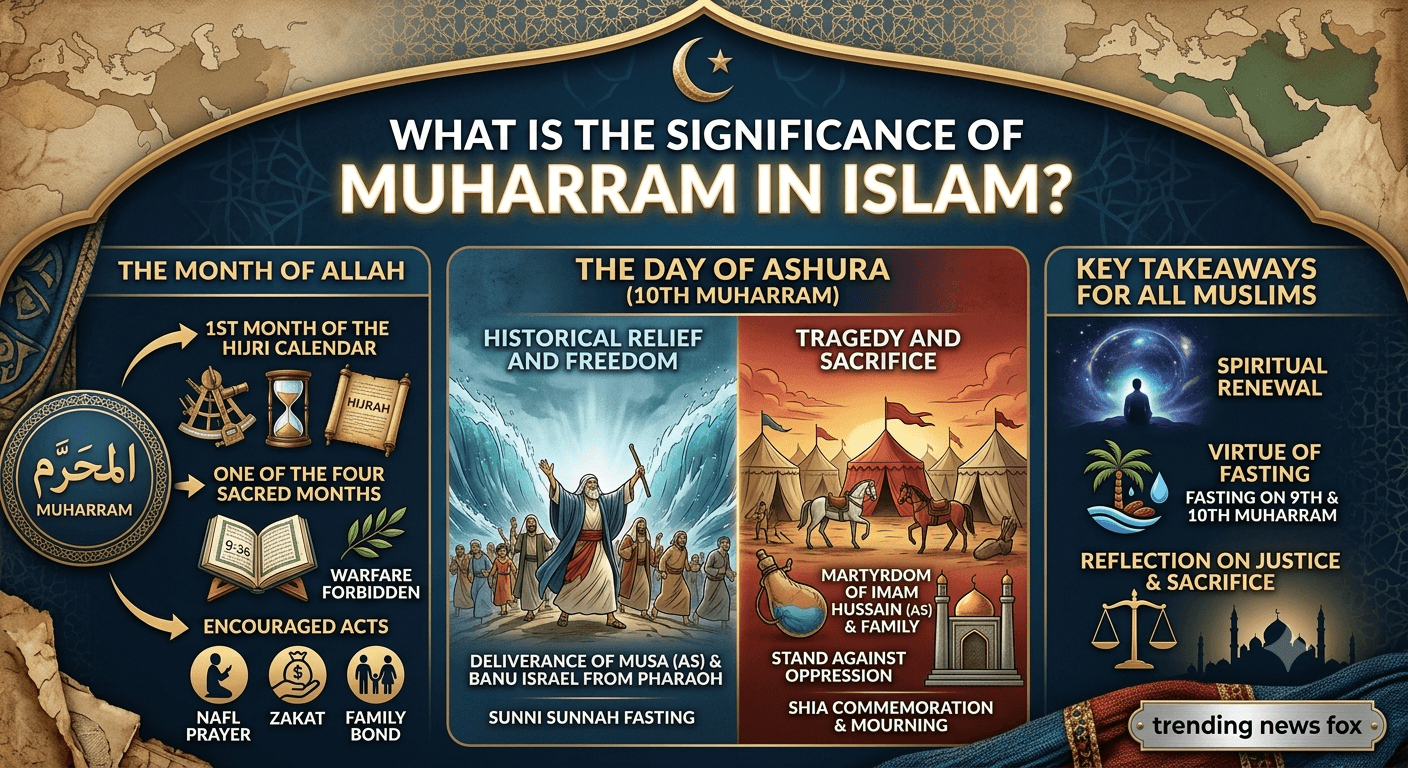
Explore the significance of Muharram, the first month of the Islamic calendar, and its cultural and religious importance in various communities worldwide.
TRENDING NEWS FOX | FAITH & CULTURE
Understanding Muharram: The Deep Spiritual and Historical Significance of the Islamic New Year
By Trending News Fox Editorial Team
Published: June 2026
As the global Muslim community welcomes the arrival of the new Hijri lunar calendar, the holy month of Muharram begins. Standing as one of the most revered periods in the Islamic faith, Muharram is not a season of commercial celebration, but rather a profound time of reflection, deep historical remembrance, and spiritual rejuvenation.
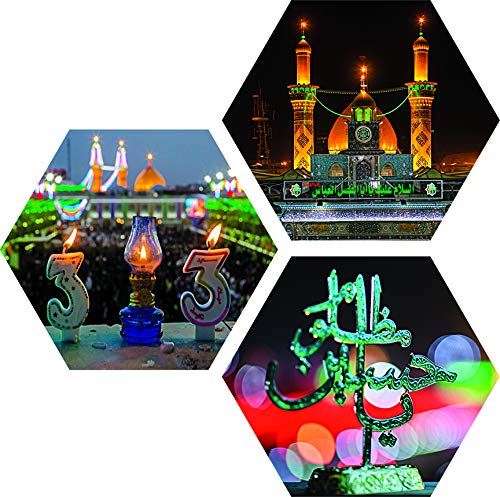
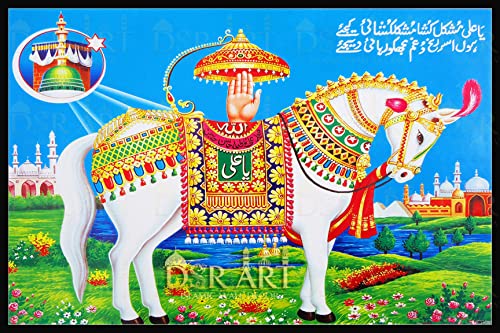
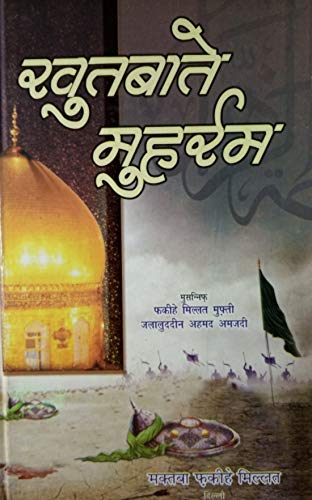
For the world’s 1.9 billion Muslims, Muharram carries multi-layered meanings that bridge ancient biblical history with defining moments of early Islam.
1. The Month of Allah: One of the Four Sacred Pillars
In the Islamic tradition, Muharram holds a distinct status. The Quran identifies it as one of the four Ashhur al-Huram (sacred months) ordained by God, during which warfare and conflict are strictly forbidden.
The Prophet Muhammad referred to it as “Shahar Allah” (the Month of Allah), signaling its elevated spiritual sanctity. It is considered the second holiest month in the Islamic calendar, surpassed only by Ramadan. Rather than celebratory fireworks, Muslims mark the start of the Islamic New Year by setting personal spiritual goals, engaging in extra prayers, and offering Sadaqah (voluntary charity).
2. The Legacy of the Hijrah (The Migration)
The very structure of the Islamic calendar is tied directly to this month. The calendar—known as the Hijri calendar—was established during the reign of the second Caliph, Umar ibn al-Khattab.
Instead of marking the calendar by the Prophet’s birth or the first Quranic revelation, Islamic history chooses the Hijrah (the migration of Muslims from Makkah to Madinah in 622 CE) as year zero.
The Significance of Hijrah: The migration represents the transition from severe persecution in Makkah to safety, freedom, and the eventual establishment of the first Islamic state in Madinah. Muharram serves as an annual reminder of the immense sacrifices made by early Muslims to preserve their faith.
3. The Day of Ashura: A Intersection of Faiths
The peak of spiritual observance occurs on the 10th day of the month, known as The Day of Ashura. This specific day holds immense historical weight for both major branches of Islam:
The Sunni Tradition: Liberation and Fasting
For Sunni Muslims, Ashura is heavily tied to the Prophet Moses (Musa). According to Islamic tradition, when the Prophet Muhammad migrated to Madinah, he found the Jewish community fasting on this day to celebrate God parting the Red Sea and liberating the Children of Israel from the tyranny of Pharaoh.
The Prophet Muhammad instructed Muslims to fast on this day as well, stating that Muslims have a closer claim to Moses. To distinguish the Islamic practice, it is highly recommended to fast on the 9th and 10th, or the 10th and 11th of Muharram. Islamic teachings state that fasting on Ashura expiates the minor sins of the preceding year.
The Shia Tradition: The Tragedy of Karbala
For Shia Muslims, Muharram—and the Day of Ashura in particular—is a time of deep, collective mourning. It commemorates the tragic martyrdom of Imam Hussain ibn Ali, the grandson of the Prophet Muhammad, at the Battle of Karbala (modern-day Iraq) in 680 CE.
Imam Hussain, along with 72 members of his family and close companions, stood against the massive, tyrannical army of the Umayyad Caliph Yazid I. Refusing to pledge allegiance to a ruler he believed was dismantling Islamic justice and ethics, Hussain was brutally besieged, deprived of water, and killed.
How Muharram is Observed Globally
Because the traditions vary, the visual and experiential reality of Muharram changes depending on where you look:
- Sermons and Reflection (Majlis): Throughout the first ten days, communities gather in mosques and assembly halls (Imambargahs or Husseinillas) to hear religious scholars recount the ethical lessons of Karbala.
- Symbols of Mourning: Many Muslims, particularly within the Shia community, wear black clothing as a sign of grief.
- Processions: On the Day of Ashura, massive solemn processions take place globally from Karbala and Najaf to cities across India, Pakistan, the UK, and the US. Mourners carry replicas of Imam Hussain’s tomb (known as Tazias or Alams).
- Acts of Public Charity: Communities set up roadside stalls called Sabeels, distributing free water, juice, and food to passersby to remember the thirst endured by the martyrs of Karbala.
Muharram: The Timeless Universal Lesson
Ultimately, Muharram transcends theological boundaries to offer a universal lesson in human dignity. The story of Karbala remains a global symbol of moral courage, demonstrating that standing up against oppression, inequality, and injustice—even against overwhelming odds—is the highest testament to true faith.
Whether through the quiet devotion of fasting or the emotional solemnity of mourning, Muharram asks the global community to look inward, correct their own shortcomings, and stand firmly on the side of justice in the year ahead.
Stay tuned to Trending News Fox for more deep-dives into global cultural and religious events.