Explore the vibrant traditions of Jamai Shashti, a festival honoring sons-in-law with love, respect, and sumptuous meals. Join the celebration today!
Pampering, Pomp, and Platters: The Timeless Traditions That Define Jamai Shashti
By Trending News Fox Culture Desk
Published: June 20, 2026
Celebrate Jamai Shashti: A Complete Guide for Families
The monsoon clouds may be gathering across Bengal, but inside Bengali households, the atmosphere is electric with a different kind of warmth. Today marks Jamai Shashti, one of the most culturally unique and fiercely preserved festivals in the Bengali calendar.



Dedicated entirely to honoring, pampering, and (gently) overfeeding the jamai (son-in-law), Jamai Shashti is a masterclass in familial bonding. Rooted in ancient folklore, this festival transforms the son-in-law into a king for a day, blending deep-seated spiritual rituals with an absolute celebration of gastronomy.
But what exactly happens behind the scenes of this beautiful tradition? Let’s break down the essential rituals, ancient folklore, and legendary feasts that define Jamai Shashti.
1. The Divine Roots: Worshipping Goddess Shashti
While the modern face of the festival is all about pampering the son-in-law, its core is deeply spiritual. The day is dedicated to Goddess Shashti, the deity of fertility and the protector of children.
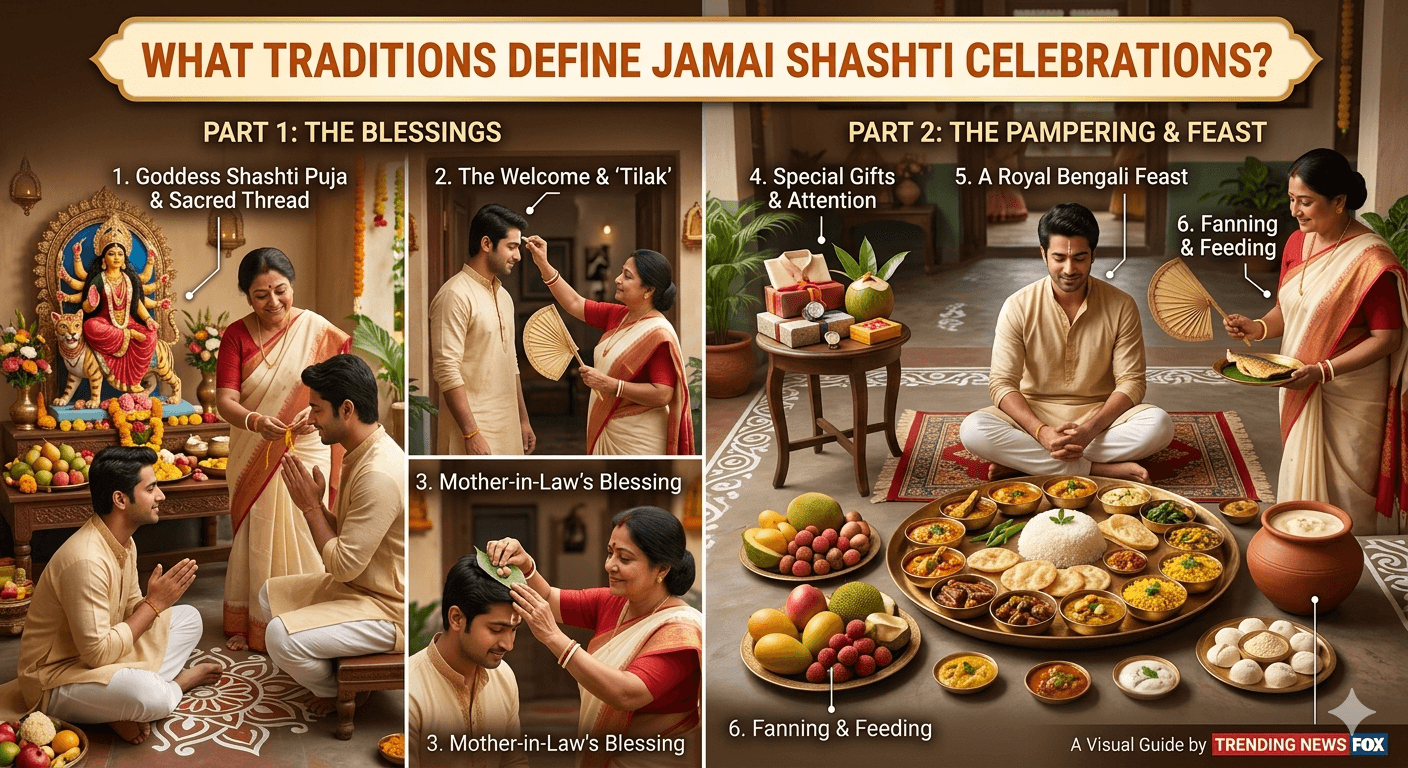
The celebrations begin early in the morning. Mothers-in-law fast and perform a special puja, arranging a copper or brass plate filled with seasonal fruits (like mango, jackfruit, and litchi), paddy (dhan), and durva grass. They pray to Goddess Shashti for the longevity, prosperity, and health of their daughters and sons-in-law, ensuring the family lineage remains blessed.
2. The Royal Welcome & The “Shashti Suto”
When the daughter and son-in-law arrive—traditionally dressed in brand-new threads—the real fanfare begins. The mother-in-law greets the jamai with an elaborate aarti, blowing conch shells (shankha) and making rhythmic ululation sounds (uludhoni) to ward off evil eyes.
Then come the core binding rituals:
- The Curd Tilak: A cooling dot of sweet curd (mishti doi) is applied to the son-in-law’s forehead for good fortune.
- The Palm Leaf Fan: The mother-in-law gently fans the jamai with a traditional hand-woven palm-leaf fan (talpata-r pakha), an ancient gesture of cooling him down from the summer heat and welcoming him with absolute comfort.
- The Sacred Thread (Shashti Suto): A yellow thread, tied with durva grass and dipped in turmeric, is bound tightly around the son-in-law’s wrist. This acts as a protective amulet, bringing him divine blessings.
3. The Legendary Jamai Bhog (The Feast)
If there is one thing Bengalis take more seriously than their rituals, it’s their food. On Jamai Shashti, the lunch thali is nothing short of an culinary marathon. The mother-in-law cooks a massive multi-course meal designed to overwhelm the jamai‘s appetite.
| Course | Traditional Dishes Served | Significance |
| Starters | Luchi (puffed bread), Shukto (bitter-sweet veggie palate cleanser), Begun Bhaja (fried eggplant) | The traditional opening to a royal Bengali meal. |
| The Fish Course | Shorshe Ilish (Hilsa in mustard gravy) or Chingri Malai Curry (Prawns in coconut milk) | Non-negotiable elements. No Bengali celebration is complete without fish. |
| The Meat Course | Kosha Mangsho (slow-cooked, rich mutton curry) | The heavy-hitting centerpiece of the meal. |
| Dessert | Mishti Doi, Rosogolla, Sandesh, and a heap of sweet seasonal mangoes | Expressing ultimate sweetness and affection. |
The Unspoken Rule: The jamai is traditionally expected to accept second (and third) helpings. Refusing food from a loving mother-in-law on this day is considered a structural impossibility!
Jamai Shashti: A Modern Twist to a Timeless Bond
In today’s fast-paced world, Jamai Shashti has beautifully adapted. While many families still cook at home, high-end restaurants across Kolkata and Dhaka now offer curated “Jamai Shashti Thalis” for families looking to celebrate without the kitchen sweat. Even for non-resident Bengalis (NRIs) living thousands of miles away, video calls and app-based gourmet thali deliveries ensure that mothers-in-law can still virtually tie the shashti suto and shower their blessings.
Ultimately, Jamai Shashti is more than just an excuse for a grand meal. In a culture that deeply values community and kinship, it serves as a beautiful, emotional reminder that a son-in-law is not just a relative by marriage—he is embraced fully as a son of the house.