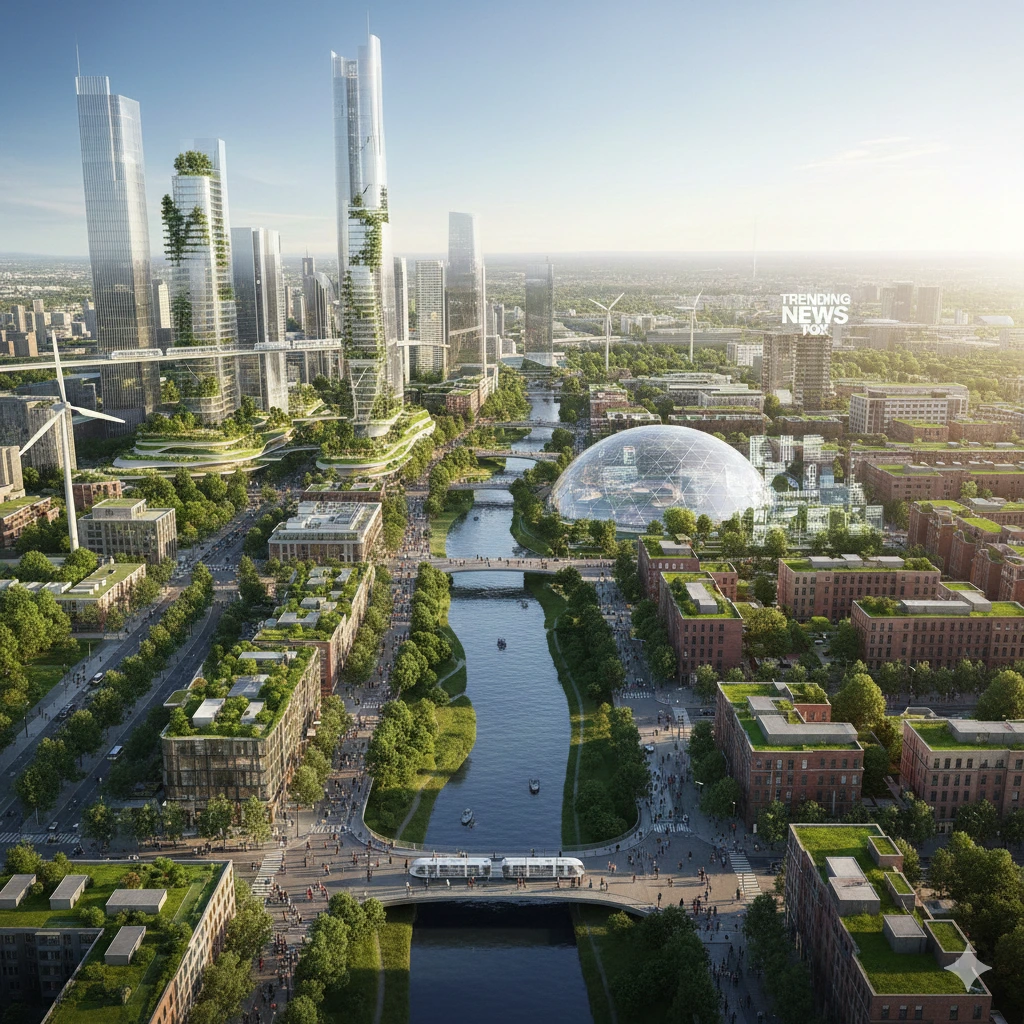
Discover What is Urban Development, why it’s vital for our future, and the top trends shaping cities in 2026. From smart infrastructure to sustainable design.
What is Urban Development? A Comprehensive Guide to Shaping Modern Cities
In an era where more than half of the global population resides in metropolitan areas, the question of what is urban development has never been more critical. As cities across the globe continue to expand, “urban development” has become a buzzword for economists, environmentalists, and everyday residents alike.
Also, read Biswa Bangla Loko Sanskriti Utsab: What to Expect?
At its core, urban development is the strategic process of planning, designing, and improving the physical, social, and economic aspects of a city. It isn’t just about building taller skyscrapers; it’s about creating sustainable, livable environments where communities can thrive.
This article explores the definition, key components, and the future of urban development in 2026 and beyond.
Understanding the Definition of Urban Development
Urban development is a multi-disciplinary field that focuses on the systematic transformation of urban spaces. It involves a combination of land-use planning, infrastructure investment, and policy-making to accommodate growing populations while enhancing the quality of life.
While the terms are often used interchangeably, it is helpful to distinguish urban development from its counterparts:
- Urban Planning: The “strategic” phase—setting regulations, zoning laws, and long-term policies.
- Urban Design: The “creative” phase—focusing on the aesthetic and functional layout of streets, parks, and buildings.
- Urban Development: The “implementation” phase—the actual execution of projects, from financing to construction, that brings the plans to life.
The 5 Core Components of Modern Urban Development
Successful urban growth is built on several foundational pillars. For a city to be truly “developed,” it must balance these five elements:
1. Sustainable Infrastructure
Infrastructure is the backbone of any city. This includes not just roads and bridges, but also smart grids, high-speed internet, and advanced water management systems. In 2026, the focus has shifted toward “green infrastructure,” which integrates natural systems like wetlands and tree canopies to manage stormwater and reduce heat.
2. Affordable and Inclusive Housing
A city cannot thrive if its workforce cannot afford to live there. Modern urban development prioritizes mixed-income housing and high-density residential zones to prevent urban sprawl. This ensures that essential workers—teachers, nurses, and service staff—can live close to their places of work.
3. Smart Transportation Systems
Reducing car dependency is a hallmark of modern development. This involves creating 15-minute cities where daily necessities are reachable by a short walk or bike ride. Integrating AI-powered transit management helps reduce congestion and lowers the carbon footprint of the urban population.
4. Economic Vitality
Urban areas are economic hubs. Development projects often include the creation of “Innovation Districts” or business incubators that provide the infrastructure needed for startups and tech companies to flourish, thereby driving local GDP.
5. Environmental Resilience
With the increasing threat of climate change, cities are now being designed to “bounce back” from disasters. This includes flood-resistant architecture, permeable pavements to prevent runoff, and the widespread adoption of renewable energy sources like solar and wind.
Why Urban Development Matters: Economy and Environment
The importance of well-planned urban growth cannot be overstated. According to the OECD, cities account for more than 70% of global CO2 emissions and 50% of global waste. However, they are also the primary engines of economic growth.
- Economic Impact: Cities provide a concentrated market for labor and goods. Efficient urban development reduces the “cost of doing business” by improving logistics and reducing commute times, which directly correlates to higher productivity.
- Social Equity: Proper development combats “urban decay” and prevents the formation of slums. By providing equitable access to parks, healthcare, and education, cities can reduce the wealth gap.
- Environmental Protection: Compact, high-density development protects the surrounding rural and agricultural land from being consumed by suburban sprawl.
Challenges Facing Urban Developers Today
Despite the benefits, the path to a perfect city is fraught with obstacles:
- Overpopulation: Rapid migration from rural areas often outpaces a city’s ability to provide housing and services.
- The “Urban Heat Island” Effect: Concentrated concrete and asphalt can make cities significantly hotter than their surroundings.
- Aging Infrastructure: Many major cities in the West are struggling to retrofit 100-year-old pipe and power systems for the digital age.
- Governance and Funding: Balancing the interests of private developers, government agencies, and community activists requires complex negotiation and significant capital.
The Future of Cities: Trends to Watch in 2026
As we move through 2026, several emerging trends are redefining the urban landscape:
- Digital Twins: Urban planners are now using AI-powered “Digital Twins”—virtual replicas of cities—to simulate the impact of new buildings or traffic changes before a single brick is laid.
- Circular Economy: Cities are implementing “closed-loop” systems where waste is recycled back into the local economy, such as using treated greywater for urban farming.
- Biophilic Design: More than just “adding plants,” this trend involves designing buildings that mimic natural processes to improve the mental health and well-being of residents.
- Decentralization: With the rise of remote work, some development is shifting toward “Regional Hubs,” reducing the pressure on over-congested city centers.
Conclusion
Urban development is more than just a construction process; it is a blueprint for the future of humanity. By focusing on sustainability, technology, and social equity, modern cities can transform from sources of environmental stress into beacons of innovation and community.
Whether you are a homeowner, a business owner, or a policymaker, understanding the mechanics of urban growth is essential for navigating the world of tomorrow.
Also, read White Label Local SEO Services: Scale Your Agency Without Overhead