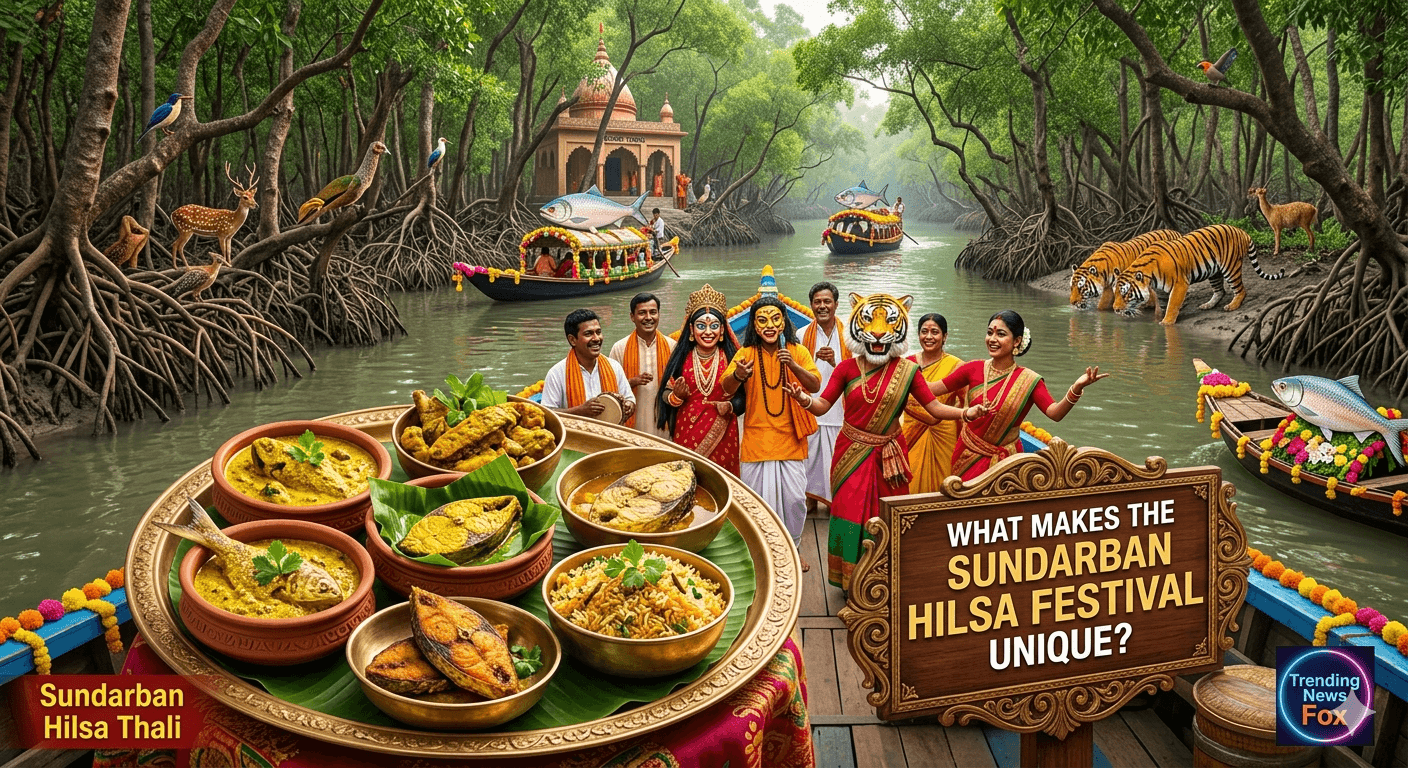
Experience the Sundarban Hilsa Festival, where tradition meets flavor. Enjoy delicious Hilsa dishes, cultural events, and the beauty of the Sundarbans.
Experience the Flavors of the Sundarban Hilsa Festival
By Trending News Fox Desk
How to Enjoy the Sundarban Hilsa Festival?
When the monsoon clouds darken the skies over West Bengal and the rivers begin to swell, a distinct wave of culinary excitement sweeps across the region. This is the time when the Ilish (Hilsa)—fondly crowned the “Queen of Fish”—makes its grand migration from the sea into the sweet, high-surging river currents. While Hilsa is celebrated in kitchens across the state, there is one place where its consumption turns into a multi-sensory adventure: the Sundarban Hilsa Festival.


Also known locally as the Sundarban Ilish Utsav, this seasonal gathering has transformed from a niche food getaway into a premium cultural phenomenon. Operating primarily through the peak monsoon months of July, August, and September, the festival offers an unparalleled convergence of ecology, wildlife, folklore, and gastronomy.
But what exactly sets the Sundarban Hilsa Festival apart from any typical food fair or urban restaurant pop-up? Let’s dive deep into the unique elements that make this event a bucket-list experience for travel enthusiasts and food connoisseurs alike.
1. A Feast on Moving Waters: The Floating Restaurant Experience
In the city, enjoying a plate of Hilsa involves navigating traffic to sit inside a concrete restaurant. At the Sundarban Hilsa Festival, your dining room is a gently rocking safari boat navigating the vast, interconnected river channels of the world’s largest mangrove delta.
The core of the festival is experienced onboard customized, multi-deck motor vessels. As the boat glides past the dense mangrove walls of the Sundarbans National Park, the aroma of sizzling fish fills the air. The onboard kitchens are staffed by local chefs who specialize in traditional riverine cooking. There is an undeniable magic to eating fresh Ilish Bhapa (steamed mustard Hilsa) while staring out at the mist-covered waters where five rivers converge at the famous Panchamukhani junction. The spatial connection between the habitat of the fish and the plate on your table creates an immersive dining atmosphere that cannot be replicated anywhere else.
2. Gastronomy Meets High-Stakes Wildlife Safari
What truly defines the uniqueness of this festival is its dual identity. It is equal parts a culinary marathon and an adrenaline-pumping wildlife safari.
Between elaborate multi-course meals, travelers disembark or steer their vessels toward the channels of the Sundarban Tiger Reserve. The monsoon season washes the mangrove forests into a vibrant, brilliant green, offering an incredibly picturesque backdrop for spotting wildlife. Tour itineraries are structured around iconic watchtowers and protected ecological zones:
- Sajnekhali Watch Tower: The primary entry point featuring a Mangrove Interpretation Centre and excellent birdwatching opportunities for spotting colorful kingfishers and egrets.
- Sudhanyakhali Watch Tower: A prime hotspot favored by nature enthusiasts for catching glimpses of spotted deer, wild boars, monitor lizards, and the elusive Royal Bengal Tiger drinking from freshwater pools.
- Dobanki Watch Tower: Famous for its gated canopy walk, allowing travelers to walk twenty feet above the ground, safely looking down onto the complex root systems of the mangrove forest floor.
The thrill of scanning the muddy banks for a hidden crocodile or the footprints of a tiger, paired with the anticipation of the next Hilsa dish, creates a uniquely contrasting itinerary of relaxation and high adventure.
3. The Culinary Symphony: An All-Inclusive Hilsa Submersion
The culinary execution of the festival is a masterclass in Bengali heritage cooking. Instead of serving Hilsa as a singular option, the festival menu treats the fish as an ongoing narrative, exploring every texture, cut, and flavor profile across a 3-Day/2-Night itinerary.
A standard festival culinary line-up demonstrates the sheer versatility of how the fish is treated:
| Dish Name | Key Elements & Preparation Style | Culinary Experience |
| Ilish Paturi | Marinated in mustard-coconut paste, wrapped tightly in banana leaves, and slow-steamed. | Smoky, tender, and deeply infused with mustard oil aroma. |
| Sorshe Ilish | Cooked in a sharp, vibrant gravy of freshly ground mustard seeds and green chilies. | The definitive, pungent classic of traditional Bengali households. |
| Ilish Bhapa | Delicately steamed fish slices with a rich blend of curd, mustard, and green chilies. | Silky texture where the natural oils of the fish melt into the sauce. |
| Ilish Biryani | Fragrant basmati rice slow-cooked (dum style) alongside pieces of seasoned Hilsa fish. | A modern heritage fusion that balances aromatic spices with rich fish oils. |
| Macher Matha diya Kachu Shak | Colocasia greens cooked thoroughly with fried Hilsa fish heads. | A rustic, no-waste delicacy showcasing intense, complex flavors. |
From morning snacks like crispy fried Amudi fish to grand lunches centered around premium cuts of Hilsa, the sheer scale of seafood options provides an unmatched gastronomic indulgence.
4. Total Cultural Immersion in the Land of Bonbibi
The Sundarban Hilsa Festival refuses to isolate travelers in luxury bubbles. Instead, it serves as a bridge to the fragile, resilient lifestyle of the island communities living on the edge of the wilderness.
When evening settles over the delta and the boats drop anchor near the eco-resorts, the festival transitions into a celebration of local folklore. Travelers are treated to open-air performances of Baul music (mystic folk songs of Bengal) and vibrant tribal dances like the Tusu dance.
Furthermore, guided village walks during the day bring tourists face-to-face with the local residents—the honey collectors (Mouli), woodcutters, and local fishermen. Travelers can visit historic landmarks like the Hamilton Bungalow and the Rabindranath Tagore Bungalow on Gosaba Island, learning how these communities have historically balanced their lives with the dangerous, wild terrain. Visitors gain a firsthand understanding of Bonbibi, the guardian deity of the forests worshipped equally by Hindus and Muslims for protection against tiger attacks, embedding a deep sense of cultural respect into the journey.
5. An Organized, Seamless Escape from Urban Life
Historically, exploring the deep nooks of the Sundarbans required rigorous planning, local permits, and navigating unpredictable water transport. The brilliance of the modern Hilsa Festival infrastructure lies in its seamless, hassle-free execution.
Major trusted travel operators handle the entire logistics pipeline. Tours typically depart straight from urban hubs like Kolkata or major transit points like the Canning Railway Station.
[Kolkata / Canning AC Transport]
               │
               ▼
[Godkhali Ferry Ghat (Boarding)]
               │
               ▼
[Mangrove Eco-Resort / Luxury Boat Safari]
               │
               ▼
[Watchtowers, Village Walks & Hilsa Dining]
Everything from entry permits for the tiger reserve and government-approved tour guides to mineral water and stay accommodations (ranging from standard non-AC cottages to premium riverside luxury resorts) is bundled into a single package. This makes it an incredibly safe, organized, and accessible vacation for multi-generational families, elderly travelers, and solo adventurers looking to escape the city with zero logistical stress.
The Verdict: More Than Just a Food Festival
The Sundarban Hilsa Festival is unique because it refuses to be just one thing. It is not merely a food event, nor is it just a routine wilderness trek. It is a sensory celebration of a region’s identity. It honors the seasonal rhythms of the monsoon, the legendary biological diversity of a UNESCO World Heritage site, and the unparalleled culinary devotion that Bengal holds for its favorite fish.
For those looking to experience the raw beauty of the monsoon, hear the haunting melodies of local folk music echoing across riverbanks, and savor world-class seafood cooked in its historical heartland, the Ilish Utsav remains a peerless travel experience.
Planning a trip? The Sundarban Hilsa Festival runs heavily through fixed weekend departures from June until late September. Ensure you book with government-registered private travel agencies to guarantee authorized forest entry and premium quality catches.
Sundarban Hilsa Festival (ইলিশ উৎসব): Frequently Asked Questions
1. What is the Sundarban Hilsa Festival?
The Sundarban Hilsa Festival (also known as the Ilish Utsab) is a highly popular seasonal travel and culinary event held in West Bengal. It beautifully combines a wildlife adventure through the UNESCO-listed mangrove forests with an authentic gastronomic celebration of Bengal’s favorite monsoon delicacy—the Hilsa (Ilish) fish.
2. When is the festival celebrated?
The festival runs strictly during the monsoon season when fresh Hilsa is bountiful and the mangrove delta looks its most vibrant. It typically takes place between July and September. Most tour operators run these as 2-Night/3-Day weekend packages with fixed Friday-to-Sunday departures.
3. What kind of Hilsa dishes can I expect on the menu?
Food is the absolute highlight of this journey! Prepared in traditional Bengali styles, the curated menu usually features iconic preparations such as:
- Sorshe Ilish (Hilsa in mustard gravy)
- Ilish Paturi (Hilsa marinated and steamed in banana leaves)
- Ilish Bhapa (Steamed Hilsa)
- Amudi Fish Fry & Crispy Hilsa Fry
- Hilsa Biryani and Kachu Shak diye Ilish Macher Matha
🥦 Note for Vegetarians: While the festival heavily spotlights fish, standard vegetarian meals and alternative non-veg options (like chicken or mutton curry) are readily available if requested in advance.
4. How do I reach the festival from Kolkata?
Most structured tours offer seamless end-to-end transport:
- By Road: AC or non-AC traveler vehicles pick up guests from fixed points in Kolkata (like Sealdah Station or Science City) and drive roughly 3 hours to Godkhali Jetty, the main gateway to the Sundarbans.
- By Train: You can take a local train from Sealdah to Canning Station (approx. 1 hour 15 mins). From Canning, local transport or autos will take you to the Godkhali ferry point to board your safari boat.
5. What activities are included besides eating Hilsa?
It is a complete travel experience! A standard itinerary includes:
- Full-Day Guided Boat Safari: Cruising through the narrow, thrilling creeks and river junctions of the Sundarban Tiger Reserve.
- Watchtower Visits: Stopping at famous vantage points like Sajnekhali, Sudhanyakhali, and Dobanki.
- The Canopy Walk: An elevated, netted walkway at Dobanki that lets you safely view wildlife from a distance.
- Cultural Programs: Evening performances of local tribal and Jhumur folk dances hosted at the resorts.
- Rural Village Walks: Walking tours through local island villages to see traditional life, paddy fields, and meet native honey collectors.
6. What wildlife can I expect to see?
While the elusive Royal Bengal Tiger is the ultimate prize, the monsoon cruise offers excellent sightings of spotted deer, wild boars, rhesus macaques, and estuarine crocodiles basking on the mudflats. It is also a paradise for birdwatchers, where you can spot diverse species of kingfishers, herons, egrets, and Brahminy kites.
7. How much does a typical Sundarban Hilsa Festival package cost?
Pricing varies depending on group sizing, room sharing, and luxury preferences (AC vs. Non-AC).
- Standard/Budget Packages: Starting around ₹2,800 to ₹3,500 per head (typically for multi-sharing non-AC cottages).
- Premium/AC Packages: Ranging between ₹4,000 to ₹5,500 per head for double sharing in premium eco-resorts with AC road transport.
8. What is usually included and excluded in the price?
- Inclusions: All meals (from Day 1 breakfast to Day 3 lunch), resort accommodation, boat safari hire, local folk entertainment, forest entry permits, and a government-approved tour guide.
- Exclusions: Camera charges imposed by the forest department, personal expenses, tips, and travel insurance.
9. Is this tour suitable for families and senior citizens?
Yes! The Hilsa Festival is very family-oriented and attracts a lot of multi-generational travelers. Since the Sundarbans safari is entirely water-based (done via boats rather than bumpy jeeps), it is physically gentle and highly comfortable for elderly travelers.
Planning to head to the mangroves for some delicious Ilish this monsoon? Let us know your thoughts or drop your questions in the comments below!